Libya, which had not been seen in the overseas construction contract countries for the past few years, has reappeared. Daewoo E&C opened the door to contracts in this area, which was difficult to enter due to civil war, and Hyundai Engineering & Construction is also preparing to reopen its local office.
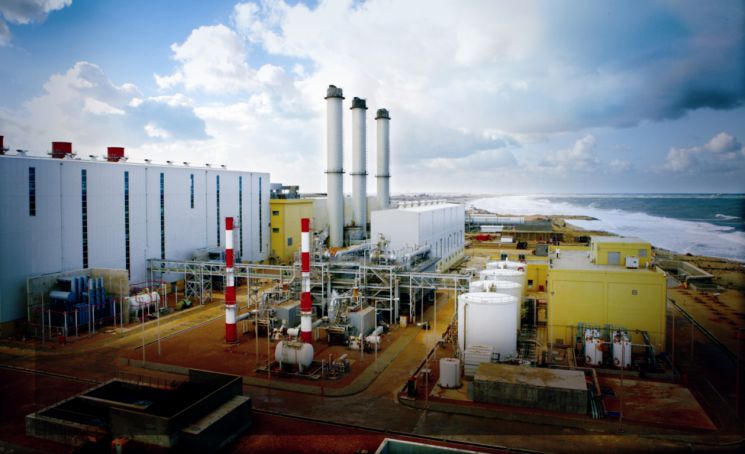 Exterior view of the Benghazi North Power Plant in Libya completed by Daewoo E&C / Photo by Daewoo E&C
According to the Overseas Construction Comprehensive Information Service of the Overseas Construction Association on the 14th, Daewoo E&C signed a contract in March this year for the Melita-Misurata Fast Track Power Plant Project ordered by the Libya Electricity Company (GECOL). The contract amount is $790 million (about 1 trillion KRW), and it is notable that the company participated through a negotiated contract.
Thanks to this, although it is still the first quarter, Libya ranks third in the list of contract countries following the United States and Kazakhstan. Libya's entry into the top 100 rankings is the first in eight years since 2015, when Sunjin Engineering won the contract for establishing the master plan for the Mohamed Bin Ali Al-Senoussi University campus.
The Libyan construction market is one of the contract strongholds cultivated by Korean companies when U.S. and Japanese companies were reluctant to enter due to past economic sanctions. Among them, Daewoo E&C played the biggest role. It entered Libya in 1978, before diplomatic relations with Korea were established, and has secured 163 contracts up to this recent one. In particular, starting with the Benghazi North Power Plant in 2003, it has signed four large power plant construction contracts to date.
The most recent contract before this was the restoration work of the Tripoli Hotel in Libya in 2012. However, the civil war, which was already underway at the time, intensified after the collapse of the Muammar Gaddafi regime, forcing domestic construction companies to pack up. The Korean government designated Libya as a travel ban country in August 2014.
Daewoo E&C also took steps to withdraw its personnel. However, it is reported that the local office with local employees was maintained. A Daewoo E&C official emphasized, "Not leaving Libya, which was politically unstable, and staying there led to this contract," adding, "The negotiated contract shows the Libyan government's trust in our company."
Hyundai Engineering & Construction is also monitoring the situation in Libya while promoting the reopening of its local office. Hyundai E&C first stepped into the African continent, including Libya, starting with the Ras Lanuf port construction in 1980. Since then, it has carried out 26 projects in Libya, including the Derna road construction and Misurata power plant. Before the merger, Hyundai Engineering, through Hyundai EMCO, won a $430 million contract for the Gubashi housing construction project. Gubashi is a small town about 200 km from Benghazi, Libya's second logistics and transportation hub. The project is still suspended.
While Hyundai E&C is interested in the Libyan market, it maintains a cautious view. A company official said, "It is correct to reestablish the office in Tripoli, but since the Libyan situation has not fully recovered, we intend to approach it slowly."
© The Asia Business Daily(www.asiae.co.kr). All rights reserved.

















