First to Bring Pizza Hut to Korea
Repeated Startup Failures and Battling Cancer
Sharing Stories of Failure to Offer Comfort and Hope
"Failure is not something to be ashamed of. It is a history of challenges."
Seong Sin-je, the godfather of the domestic pizza industry who first introduced Pizza Hut to Korea, and CEO of Jiji's Korea, passed away on the 2nd.
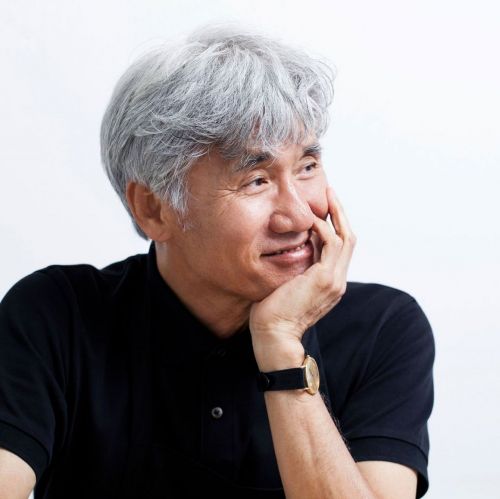
According to related industries on the 13th, the late CEO Seong, born in Seoul, graduated from Kyunggi High School and Seoul National University with a degree in Political Science. Using his severance pay as seed money, he secured the Korean distribution rights for Pizza Hut in 1983 and opened the first store in Itaewon, Yongsan-gu, Seoul in 1985.
His business prospered to the extent of expanding to 52 branches, but as the domestic pizza market grew rapidly, the U.S. Pizza Hut headquarters canceled the contract with CEO Seong and decided to enter the market directly, causing him to suffer a bitter defeat. CEO Seong fought back with lawsuits against the U.S. headquarters but ultimately had to sell the shares of Pizza Hut Korea to the U.S. headquarters for 32 billion won in 1993.
After that, CEO Seong experienced repeated failures and comebacks.
In 1996, he started the chicken specialty store Kenny Rogers with the proceeds from the share sale, but faced bankruptcy in 1997 due to the IMF crisis.
In 1998, he attempted a comeback with ‘Seong Sin-je Pizza,’ named after himself. He planned to develop Seong Sin-je Pizza into a Korean native pizza brand that could compete with Pizza Hut, introducing pizzas with Korean-style toppings such as green tea dough, kimchi, and bulgogi, capturing the taste of Korean consumers. Seong Sin-je Pizza flourished to the extent of opening 34 branches nationwide, and CEO Seong thrived, paying 11 billion won in income tax in 1994.
However, in 2007, with the emergence of latecomer competitors like Mr. Pizza and Papa John’s, his competitiveness weakened, leading to the greatest crisis in management. Sticking to dine-in rather than delivery, the business eventually went bankrupt and closed in 2007.
Subsequently, he suffered from colorectal cancer, lung cancer, liver cancer, and acute myocardial infarction, undergoing more than 20 cancer surgeries, which deteriorated his health.
After long chemotherapy, he overcame his illness, and in 2015, after market research, he decided to enter the promising cupcake business for the era of single-person households. He visited the U.S. headquarters of Jiji's Cupcake to request Korean business rights, opened the first store in Korea, and sought business expansion. However, as the cupcakes were criticized for being overly sweet for Korean tastes and their popularity waned, he closed the store the following year, experiencing failure once again.
In his later years, he shared his entrepreneurial stories and failures with the public, becoming known as the ‘icon of failure’ among prospective entrepreneurs and self-employed individuals.
In May 2019, he raised 5 million won through crowdfunding, saying, "As a member of the older generation, I want to offer a message of comfort to young people," and published a book titled ‘It’s Okay.’ In August of the same year, he was appointed as a ‘Failure Expo Ambassador’ by the Ministry of the Interior and Safety.
During the 2020 COVID-19 pandemic, when many self-employed people were closing their businesses, he published a book titled ‘Your Season Will Come’ to comfort young people and self-employed individuals.
© The Asia Business Daily(www.asiae.co.kr). All rights reserved.
![Clutching a Stolen Dior Bag, Saying "I Hate Being Poor but Real"... The Grotesque Con of a "Human Knockoff" [Slate]](https://cwcontent.asiae.co.kr/asiaresize/183/2026021902243444107_1771435474.jpg)















