Qoo10 Reorganizes After Acquiring Wemakeprice and Interpark Commerce
AliExpress Invests 100 Billion KRW to Expand Market Share
'Cross-Border E-Commerce' Continues to Grow
Competition to dominate the domestic direct purchase and reverse direct purchase markets has officially begun. The market for 'direct purchase' where domestic consumers buy goods from overseas and 'reverse direct purchase' where overseas consumers purchase products from Korean online shopping malls is rapidly growing. However, there is still no absolute leader. This is why related companies such as Qoo10 and AliExpress have recently been reorganizing their operations one after another to expand their businesses. The curtain has risen on the battle for the so-called 'cross-border e-commerce' market, which encompasses both direct and reverse direct purchases.
On the 13th, Qoo10 announced plans to strengthen organic integration among its affiliates, including Interpark Commerce, WEMAKEPRICE, which it recently acquired, and TMON, acquired last year, to build a 'global e-commerce ecosystem.' Qoo10 is an e-commerce platform founded in 2010 in Singapore by Koo Young-bae, the founder of Gmarket. It has grown through competitive Korean products and fast delivery via its affiliate Qxpress logistics network. Currently, Qoo10 operates seven localized e-commerce platforms in five countries including Singapore, Indonesia, Malaysia, and China. Qxpress has logistics infrastructure spanning 19 hubs in 11 countries. Qoo10 plans to apply this to domestic platforms such as TMON and WEMAKEPRICE, each with about 4 million monthly active users (MAU), to push forward in the direct and reverse direct purchase markets.
In fact, on TMON, direct purchase transaction volume increased by 55.9% last month compared to September of last year before Qoo10's acquisition. This was effective because overseas sellers on Qoo10 directly register products with competitive prices, and delivery times were shortened by more than 3 days to within a week based on Qxpress's logistics network. In the reverse direct purchase sector, Qoo10 also launched a service allowing sellers on domestic platforms to ship overseas using Qxpress's logistics infrastructure. Qoo10 plans to apply this strategy to WEMAKEPRICE, Interpark Commerce, and others to expand synergy.
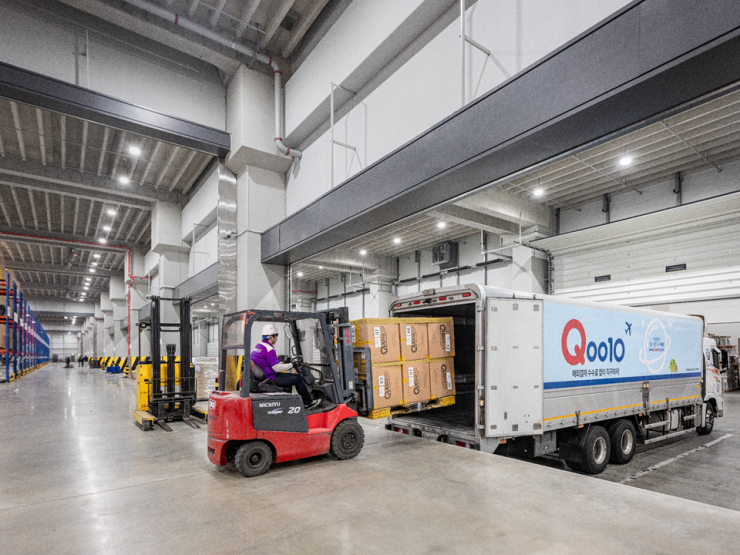
Qoo10's competitors in the domestic cross-border e-commerce market include AliExpress and Amazon. First, Alibaba Group's direct purchase platform AliExpress has decided to invest 100 billion KRW in the Korean market this year. Considering that AliExpress spent 10 billion KRW last year to increase its market share in Korea, this is an aggressive move to increase investment tenfold.
AliExpress, which started services in Korea in 2018 and laid the groundwork, sees this year as an opportunity to seize the domestic market. It has steadily increased users by breaking down barriers to direct purchase with services like '5-day delivery' and enhancing price competitiveness. Since September last year, CJ Logistics, responsible for AliExpress's Korean deliveries, currently ships over 1 million AliExpress packages per month. China-originated overseas direct purchase ranked first in terms of volume in 2020 and topped the amount for the first time last year. Ray Zhang, head of AliExpress Korea, said, "Korea is one of our strategically important markets," adding, "We will remove barriers to overseas direct purchase and provide a better customer experience."
Additionally, Amazon has invested in 11st and since 2021 has offered the 'Amazon Global Store' service, allowing customers to order U.S. Amazon products directly through the 11st app and website. The service focuses on products preferred by Korean customers among those directly purchased and sold by Amazon U.S., receiving positive responses.
The accelerated moves of companies in the cross-border e-commerce market are due to growth potential. The Korea Customs Service reported that last year, overseas direct purchases reached 96.12 million transactions worth 4.725 billion USD. The recent four-year average annual growth rate of direct purchase transactions is 32.2%. This means the era of 100 million direct purchase transactions is opening this year. Reverse direct purchases also reached 40.497 million transactions worth 1.75 billion USD as of 2021, with an average annual growth rate exceeding 50%. This contrasts with the domestic e-commerce market, where online shopping transaction volume increased by only 7.5% year-on-year in February, showing a slowdown in growth. An industry insider said, "The domestic e-commerce market is led by Naver, Coupang, etc., so expanding market share is not easy. On the other hand, the growing direct and reverse direct purchase markets seem to offer more opportunities, and related companies' growth strategies are being activated in earnest."
© The Asia Business Daily(www.asiae.co.kr). All rights reserved.
![Clutching a Stolen Dior Bag, Saying "I Hate Being Poor but Real"... The Grotesque Con of a "Human Knockoff" [Slate]](https://cwcontent.asiae.co.kr/asiaresize/183/2026021902243444107_1771435474.jpg)















