"Concerns Over Long-Term Intensification of North America Competition"
Domestic credit rating agencies have evaluated that the secondary battery industry is benefiting from the U.S. Inflation Reduction Act (IRA) and is expected to continue its high growth potential in the future.
However, there are concerns that competition in the North American region could intensify in the long term due to other countries and emerging companies.
In a report published on the 11th, NICE Credit Rating stated, "If the IRA excludes the entire electric vehicle value chain in China in the short term, the top alternative will be Korea," adding, "In this regard, a favorable environment will be created for domestic companies."
It continued, "With the application of the Advanced Manufacturing Production Credit (AMPC), net cost reduction and margin improvement are expected for secondary battery and secondary battery material companies," and "The net purchase cost will decrease due to tax credit benefits for new electric vehicle purchases, expanding the U.S. secondary battery market size."
Furthermore, it expected, "In the short term, as Chinese companies' market participation is restricted, domestic companies' market share will increase."
On the same day, Korea Credit Rating also stated in a related report, "The announcement of detailed IRA guidelines has eased the burden on domestic battery material companies to expand local production bases in North America," and "Production tax credits are expected to improve the performance of battery cell companies and reduce investment burdens."
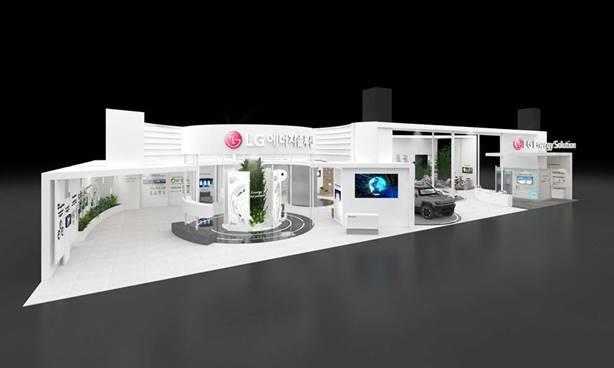
It added, "Considering the production bases already established in the U.S. and European markets and future production capacity (CAPA) expansion plans, LG Energy Solution [373220] is expected to benefit the most."
According to Korea Credit Rating, global new electric vehicle sales, which were about 10 million units with a sales share of about 13% last year, are expected to expand to about 45 million units and 43% by around 2030.
The combined sales of domestic battery cell and material companies reached about 62 trillion won last year, approximately 3.5 times higher than in 2019, and this is also expected to show high growth following market expansion.
However, investment burdens in domestic and overseas markets are expected to increase for the time being to meet demand.
NICE Credit Rating noted, "With the implementation of the IRA, investment burdens in the U.S. will increase," adding, "Since tax credit benefits are provided in proportion to production volume after prior investment, investment burdens will inevitably increase until stable production is achieved."
Korea Credit Rating said, "With the ongoing active investment expansion such as domestic and overseas facility expansions, the investment burden relative to profit generation capacity by company is heavy," but also evaluated, "Considering profit generation improvement driven by sales growth and plans for capital funding, debt-related indicators by company are expected to maintain a good level."
In the case of SK On, since profit generation stabilization is somewhat delayed compared to competitors, the need to raise funds in various forms such as attracting financial investors (FI) and borrowing until a successful initial public offering (IPO) is expected to increase.
In the long term, there are concerns that U.S. authorities will induce market participation by companies from other countries to reduce dependence on Korean companies, intensifying competition.
According to NICE Credit Rating, as of last year, the market share of five companies from Korea, China, and Japan in the non-China global secondary battery market for electric vehicles was about 93%, indicating an oligopoly.
NICE Credit Rating pointed out, "If Chinese secondary battery companies are excluded, the U.S. dependence on Korea will inevitably increase," and "To reduce dependence, market participation by new companies such as Japanese companies including Panasonic and European Northvolt will be encouraged."
It also explained, "In the long term, as intended by the IRA, there is a possibility that support for domestic companies will be concentrated similarly to China's secondary battery industry development method in terms of strengthening U.S. manufacturing and eco-friendly and security aspects."
Furthermore, it added, "The need to change the China-centered value chain, which was a competitive factor for domestic companies, is also a negative factor," and "If leading companies have to newly establish suppliers, some latecomers may quickly build supply relationships and narrow the gap."
These credit rating agencies plan to reflect changes in the performance and financial stability of secondary battery companies in their credit evaluations going forward.
© The Asia Business Daily(www.asiae.co.kr). All rights reserved.
![Clutching a Stolen Dior Bag, Saying "I Hate Being Poor but Real"... The Grotesque Con of a "Human Knockoff" [Slate]](https://cwcontent.asiae.co.kr/asiaresize/183/2026021902243444107_1771435474.jpg)
















