Corporate and Household Cash Drought
"The Credit Crunch has begun."
Dark clouds of credit crunch are looming over the U.S. financial market, which had been enjoying an unprecedented boom fueled by abundant liquidity. Following the aftermath of the banking crisis, some banks have tightened lending, causing the lifelines of companies and households to dry up, signaling the realization of the 'C risk.'
On the 10th (local time), The New York Times (NYT) reported cases of venture companies and construction firms facing financial pressure due to the credit crunch triggered by the recent bankruptcy of Silicon Valley Bank (SVB) in the U.S. BOXT, a three-year-old startup providing wine subscription services, has been experiencing financial difficulties since the bankruptcy of SVB, its main bank. Sarah Puil, CEO of BOXT, said, "It is difficult to secure funds (for company operations), and the cost of financing has increased," indicating that fundraising has virtually come to a halt.
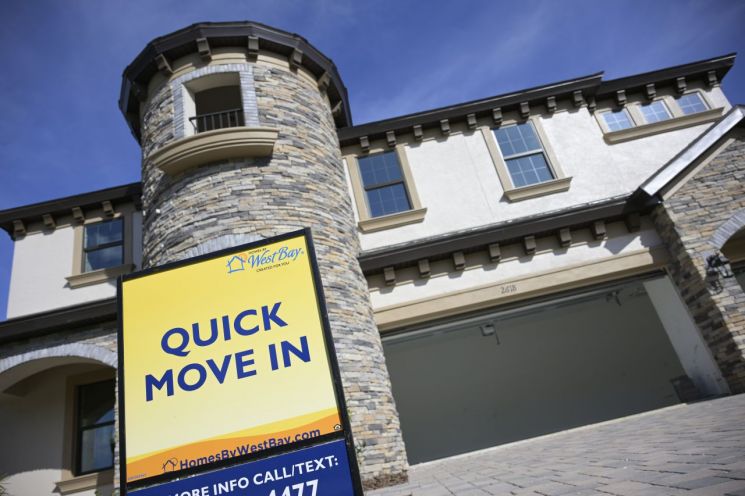
Following the SVB incident, banks have adopted a more conservative lending stance, weakening venture companies' financing conditions. The real estate loan market situation is no different. Large banks in the San Francisco area have tightened standards for residential and commercial real estate loans and recently raised interest rates on so-called 'jumbo loans,' which are high-quality secured loans, according to NYT. Anirban Basu, chief economist of the Associated Builders and Contractors (ABC), a U.S. construction trade association, pointed out, "People have started mentioning the 'C' word (credit crunch)," meaning that the credit crunch has already arrived.
Last month, interest rates on used car loans also rose sharply. Jonathan Smoke, chief economist at Cox Automotive, a U.S. automotive market information company, said, "The cost of loans for used car purchases increased by more than 0.25 percentage points in just one month." With new car loan costs also rising, there are forecasts that this will become a new negative factor for the global finished car market, which is barely recovering from the supply chain crisis.
The reduction in loan volume ultimately shifts costs to loan demanders such as companies and households, affecting industries and overall consumption, thereby accelerating economic slowdown. Matthew Luzzetti, chief U.S. economist at Deutsche Bank, cited a survey conducted by the Federal Reserve (Fed) targeting loan officers, analyzing that "if banks tightening loans increase by 10%, U.S. production is estimated to decrease by about 0.5 percentage points."
According to the Conference of State Bank Supervisors (CSBS), sentiment among regional banks has fallen to its lowest level since the survey began in 2019 following the SVB incident. Additionally, 90% of respondents (about 330 people) judged that the U.S. has already entered a recession. Although the banking crisis temporarily subsided due to the U.S. government's swift intervention, fundamental problems such as the 'side effects of high interest rates' remain unresolved, raising concerns that the banking crisis may reemerge in the short term.
The timing and severity of the recession depend on the Fed's response. The Fed's dilemma is expanding amid the increasingly imminent shadow of recession and persistently high inflation. Earlier this year, there was even a 'no-landing' scenario where inflation could be controlled without recession, but following the SVB incident, the outlook is shifting toward a 'hard landing.'
The Fed's response is proceeding along a more hawkish path than expected. It is highly likely that additional rate hikes will continue until inflation is confirmed to have stabilized at a sufficiently low level. The market expects a 0.25 percentage point rate hike at the upcoming Federal Open Market Committee (FOMC) meeting next month.
© The Asia Business Daily(www.asiae.co.kr). All rights reserved.
![Clutching a Stolen Dior Bag, Saying "I Hate Being Poor but Real"... The Grotesque Con of a "Human Knockoff" [Slate]](https://cwcontent.asiae.co.kr/asiaresize/183/2026021902243444107_1771435474.jpg)















