The prosecution is making efforts to find a breakthrough in recovering the unpaid confiscation money of former President Jeon Du-hwan.
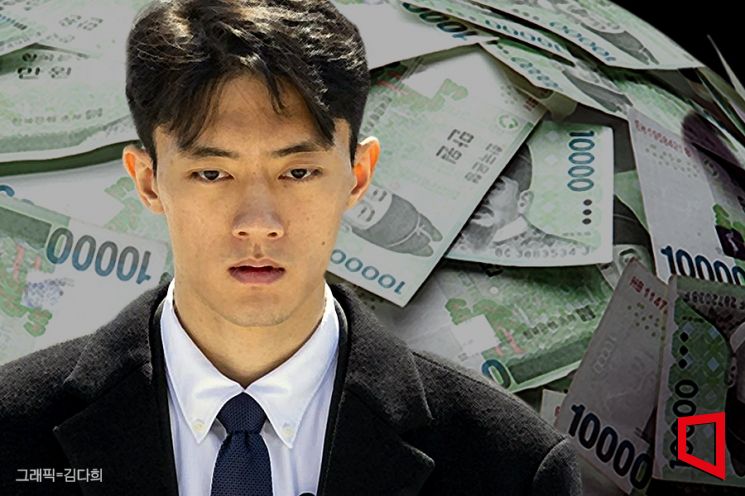
According to the legal community on the 11th, the Crime Proceeds Recovery Division of the Seoul Central District Prosecutors' Office (Chief Prosecutor Lim Se-jin) has been closely reviewing the 'slush fund allegations' against the former president's family for nearly a month. Earlier, the Committee for the Protection of Ordinary Citizens' Livelihoods (Seominwi) filed a complaint on the 20th of last month, requesting an investigation into the corruption allegations involving the former president's family. At the same time, the prosecution is also examining the disclosures made by Jeon’s grandson Woo-won and daughter-in-law Choi. A prosecution official told this paper in a phone interview, "Currently, there are no additional collection procedures underway following the court ruling on the three forest land parcels in Osan City, Gyeonggi Province," adding, "We are actively reviewing to find new areas where collection can be initiated based on the complaints and disclosures. Please watch with patience."
As of this day, the unpaid confiscation money owed by the former president amounts to 92.2 billion KRW. In 1997, he was indicted on charges including rebellion and bribery, and the Supreme Court confirmed a sentence of life imprisonment along with an order to pay 220.5 billion KRW in confiscation money. Since then, the state has recovered 128.22 billion KRW, and if the first-instance ruling from the Seoul Administrative Court on the cancellation of the distribution of auction proceeds for the three forest land parcels in Osan City is upheld, an additional 5.5 billion KRW can be recovered.
The lawsuit was filed by Kyobo Asset Trust, which was entrusted with the Osan City forest land by the former president's family, against the Korea Asset Management Corporation, seeking to cancel the disposition of distributing auction proceeds for the three forest land parcels in Osan City. In 2013, the prosecution seized five forest land parcels in Osan City to enforce the confiscation order against the former president. Subsequently, the forest land was auctioned in 2017, and 7.56 billion KRW was allocated as the confiscation money share. Of the five parcels, two were ruled by the Supreme Court in July last year to have been lawfully seized by the prosecution, resulting in 2.052 billion KRW being attributed to the state, leaving three parcels pending the lawsuit outcome.
Within the legal community, the prevailing view is that unless the prosecution finds a sharp solution, additional recovery of the former president’s confiscation money will be difficult. Under Korean criminal procedure law, the enforcement of unpaid confiscation money is halted upon the death of the liable party, and collection from inherited property is not permitted. The Supreme Court also declared in its July ruling on the administrative lawsuit regarding the seizure of the annex at the former president’s residence in Yeonhui-dong, Seodaemun-gu, Seoul, that "unless there are special provisions, confiscation cannot be enforced if the convicted person has died."
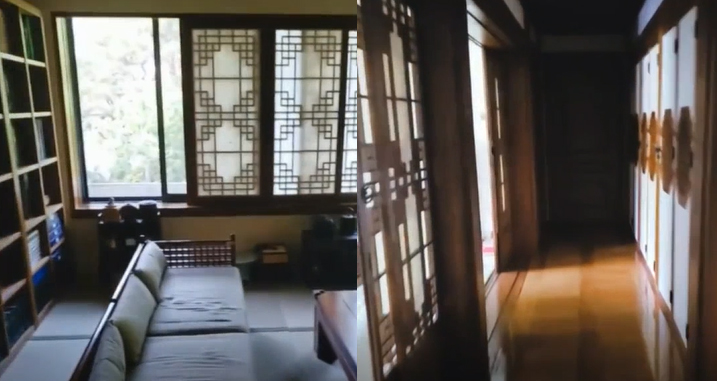
It is also unlikely that the disclosures by Jeon Woo-won and Choi will create a dramatic turnaround. Although they confessed to the public that the family amassed and concealed massive illegal funds and lived a luxurious life through them, most of these acts occurred 30 years ago before the former president’s retirement, and the statute of limitations (five years) has expired, making investigation difficult. It is also challenging to secure related evidence.
Ultimately, there is growing support for expecting a solution through legislation. However, there are still many hurdles to overcome. In the National Assembly, the 'Jeon Du-hwan Property Confiscation Three Acts,' primarily aimed at enabling the recovery of unpaid confiscation money even after the former president’s death, was introduced by Representative Yoo Ki-hong of the Democratic Party of Korea in June 2020 and is currently pending. However, even if the law passes, there may be controversies regarding retroactive legislation.
On the 3rd, Prosecutor General Lee Won-seok met with Raja Kumar, Chair of the Financial Action Task Force (FATF), to discuss the necessity of introducing an 'independent confiscation system.' This system allows for the confiscation of criminal proceeds even in cases where trials cannot proceed due to the death of the criminal or where a final guilty verdict has not been rendered. Currently, countries such as the United States, Germany, and Australia, which are members of FATF, have implemented this system, but South Korea has not yet adopted it. FATF is considering including the independent confiscation system as a mandatory requirement for member countries. Opinions within the Korean legal community are divided. Some argue that the introduction is urgent as it would expedite the recovery of criminal proceeds and the restoration of victims’ damages, while others oppose it, stating that confiscation itself is a punishment and deciding confiscation before a guilty verdict violates the presumption of innocence.
© The Asia Business Daily(www.asiae.co.kr). All rights reserved.



















