- Diverse facilities enhance living convenience... Challenges in small complexes
- Increasing complexes offering various services through economies of scale
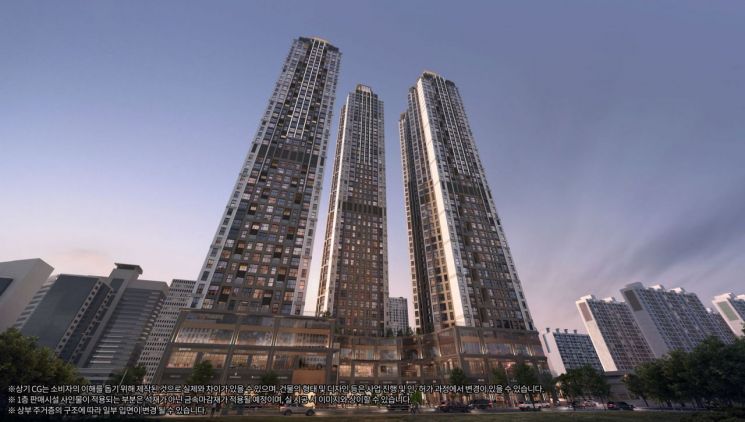
The popularity of large-scale complexes remains strong in the real estate market. As the size of the complex increases, economies of scale can be realized, making the advantages more apparent.
A representative example of achieving economies of scale is the development of large-scale luxury residential products. While small-scale luxury officetel residences offer various amenities and services, their maintenance fees tend to be high. In contrast, large-scale officetel complexes with similar levels of service often charge relatively lower maintenance fees due to the greater number of units.
In addition to costs imposed by additional facilities and services, recent significant increases in basic maintenance fees such as electricity and heating have led to growing interest in large-scale residential products that can reduce fixed maintenance expenses.
According to data from the Korea Real Estate Apartment Information System (K-APT), as of November 2022, the common maintenance fee per 1㎡ was 1,363 KRW for complexes with 150?299 households, 1,223 KRW for 300?499 households, and 1,135 KRW for complexes with over 1,000 households, showing that maintenance fees decrease as the number of households increases.
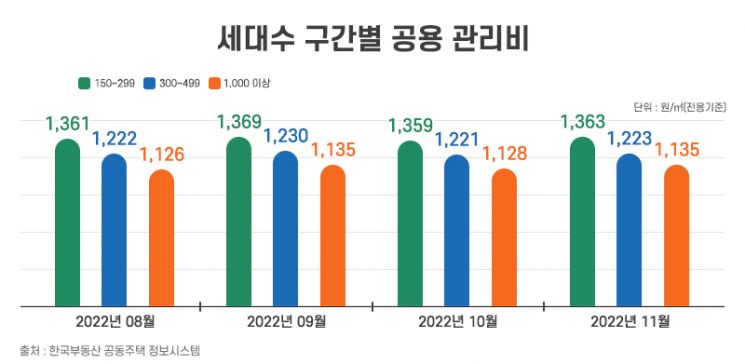
Regardless of the size of the complex, various personnel such as professional managers for housing and electrical facilities and security staff are required, and maintenance costs for facilities are added to the maintenance fees. When the number of households increases, these burdens are shared, resulting in lower maintenance fees.
Large complexes often feature various community facilities, specialized services, and well-developed environments, making them local landmarks. Such landmark complexes attract not only relocation demand within the area but also new incoming demand, leading to abundant sales and rental demand, which enhances liquidity.
Amid this, 'Grand Le Pied,' a large-scale complex with outstanding product value, is scheduled to be supplied in Dunsan-dong, a representative affluent area in Daejeon Metropolitan City.
Grand Le Pied will be developed on the site of Dunsan Homeplus, one of the prime locations in Dunsan-dong, as a super high-rise large complex with 5 buildings and a total of 832 units, featuring 47 floors above ground and large unit types of 119 and 169㎡ exclusive areas. Upon completion, it will boast the tallest height in the Dunsan area.
Additionally, it will offer luxury amenities and various community facilities rarely found even in the Seoul metropolitan area. With its record height and unique product value, it is expected to become a landmark representing the local housing market and lead the region.
Given its top-tier location, the surrounding living environment is excellent. The outstanding educational infrastructure stands out the most, with prestigious elementary, middle, and high schools such as Hanbat Elementary, Seowon Elementary, Munjeong Middle, and Chungnam High School nearby. The Dunsan-dong academy district, known as the Daechi-dong of Daejeon, is also close, allowing residents to enjoy the best educational environment without distinction between public and private education.
Robust living convenience facilities are also noteworthy. The complex is located within walking distance of City Hall Station and Government Complex Station on Daejeon Subway Line 1, offering a double station area. Major administrative facilities such as the Government Daejeon Complex, Daejeon City Hall, Seo-gu Office, and Daejeon District Court are nearby. Access to Galleria Department Store, E-Mart, and Eulji University Hospital is also convenient.
In particular, a large-scale distribution facility is planned within the complex, allowing residents to handle shopping and leisure activities entirely within the complex without needing to go outside.
© The Asia Business Daily(www.asiae.co.kr). All rights reserved.


















