Korea Real Estate Board, Nationwide Apartment Transactions in February
'Loan Regulation Easing Leads to Highest Apartment Transactions Among 2030 in 2 Years 1 Month'
2030 Transaction Share Reaches 32%
Seoul at 34.7%
Apartment purchases by the 20s and 30s generation, which had cooled due to high interest rates and a slump in the housing market, are increasing again. This is attributed to the easing of loan regulations and the launch of the Special BoGeumJari Loan, which have eased funding constraints, prompting some young buyers to snap up bargain properties. Attention is focused on whether the active buying trend among young people will influence the direction of the conflicting theories about the housing price bottom.
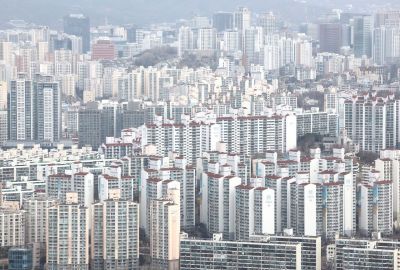
According to the Korea Real Estate Board, in February, the nationwide apartment transaction volume by the 20s and 30s generation reached 10,014 cases, accounting for 32% of the total transactions (31,377 cases). This is 2.1 percentage points higher than the previous month’s 29.9%, marking the highest level in 2 years and 1 month since January 2021 (33%).
In particular, in Seoul, one out of every three recently traded apartments was purchased by the 20s and 30s generation. In February, the share of apartment purchases by the 20s and 30s in Seoul was 34.7% (794 cases), up 3.9 percentage points from 30.8% in January. The purchase share of the 20s and 30s generation rose to 44.7% in January 2021 when housing prices soared, then fell to 26% in October last year.
However, looking only at transaction volume, it is still lower compared to the same months in 2020 and 2021 when the buying enthusiasm among young people was strong. In February 2020, the 20s and 30s generation’s apartment transactions in Seoul were 3,454 cases, dropping to 2,181 cases in 2021, and recording 506 cases last year. This February’s volume of 794 cases shows a slight increase compared to the same month last year but is about one-third of the 2021 level.
The areas where young buyers concentrated tend to have relatively affordable housing prices. This is analyzed as a result of younger generations having relatively fewer assets than middle-aged and older generations, leading to buying activity in places with lower initial entry barriers. Among Seoul’s 25 districts, Gangseo-gu had the highest purchase share by the 20s and 30s generation at 54.7%. This was followed by Seongdong-gu (45.6%), Geumcheon-gu (45.5%), Yeongdeungpo-gu (43.9%), Dongdaemun-gu (42.9%), Dobong-gu (41.4%), and Gangbuk-gu (40%), all recording purchase shares in the 40% range.
The revival of buying activity among the 20s and 30s generation is thanks to the easing of loan regulations. The Special BoGeumJari Loan, launched at the end of January, is a representative example. This loan provides up to 500 million KRW at a fixed interest rate in the 4% range for homes priced under 900 million KRW, regardless of income. For real demand buyers who hesitated to purchase due to the burden of rising loan interest, it has become possible to secure funds at relatively lower interest rates than market rates, especially in areas where housing prices have recently declined.
Interest in the Special BoGeumJari Loan among young people is also confirmed by public opinion surveys. In a recent survey conducted by Zigbang targeting app users, 8 out of 10 respondents in their 20s or younger and 30s said they either plan to use or are interested in the Special BoGeumJari Loan. Additionally, with the relaxation of the loan-to-value (LTV) ratio regulations for first-time homebuyers and an increase in loan limits, the loan barrier has lowered.
It is noteworthy whether the buying enthusiasm of the young generation this time, as in 2020 and 2021 when housing prices peaked and the 20s and 30s generation engaged in chase buying, will lead to a rise in housing prices. At that time, young buyers concentrated in relatively affordable areas such as Incheon, Nowon, Dobong, and Gangbuk, which led to significant price increases in those regions.
However, it is uncertain whether the buying momentum among young people will continue. The surrounding environment is challenging, with concerns about further housing price declines this year, the possibility of an economic recession, and issues related to interest rate hikes. Therefore, there are concerns that pursuing chase buying under these conditions carries risks.
© The Asia Business Daily(www.asiae.co.kr). All rights reserved.