"Relaxation of Regional and Material Regulations... Possible to Adjust Ratios by Item"
"From 2025, Restrictions on Chinese Minerals... Supply Chain Transition Strategy to Be Prepared"
The United States has revised the detailed guidelines of the Inflation Reduction Act (IRA) to allow electric vehicle subsidies if minerals from China and Indonesia are processed in Korea, as requested by the Korean government and the battery industry. The Korea International Trade Association (KITA) welcomed this move, saying it enables domestic battery companies to respond flexibly to the situation.
On the 3rd, KITA stated that thanks to the U.S. Treasury Department's IRA implementation guidelines, Korean battery companies can now exercise greater flexibility. The U.S. Treasury Department announced the detailed IRA guidelines on the 31st of last month (local time), which will take effect from the 18th of this month.
The key point is the expansion of the subsidy payment scope. It now allows major minerals such as lithium, cobalt, and graphite, which China has monopolized, to be processed in Korea and used for battery manufacturing. However, there is a possibility that these will be completely disallowed starting in 2025.
The guidelines stipulate that subsidies will only be granted if North American electric vehicles meet the requirements for critical minerals and battery components. When critical minerals are mined or processed in the U.S. or U.S. FTA (Free Trade Agreement) countries at a certain ratio or higher, or recycled in North America, half of the subsidy amounting to $3,750 (approximately 4.91 million KRW) is provided. As of this year, at least 40% of critical minerals must be sourced from these countries. This requirement will become stricter, increasing to 50% next year, 60% in 2025, 70% in 2026, and 80% from 2027 to 2029.
KITA emphasized the significance of expanding the subsidy-eligible regions to include countries with agreements related to critical minerals, such as Japan. Including materials like anode and cathode powders in the composition is also seen as favorable for Korean companies. This broadens the scope of critical mineral processing regions and allows anode and cathode powders to be produced domestically. By setting exclusion criteria for overseas concern entities, minerals extracted from China and others will still be eligible for subsidies until the end of next year, which is expected to reduce the burden on companies.
Cho Sung-dae, Director of KITA's Trade Support Center, said, "It is positive that the Treasury has decided to provide tax credits at least until next year if more than 50% of the value-added in either extraction or processing of critical minerals occurs in the U.S. or U.S. FTA countries." He added, "It is fortunate that Korean companies can flexibly adjust the North American manufacturing ratio of battery components and that Japanese critical minerals are also included as eligible critical minerals."
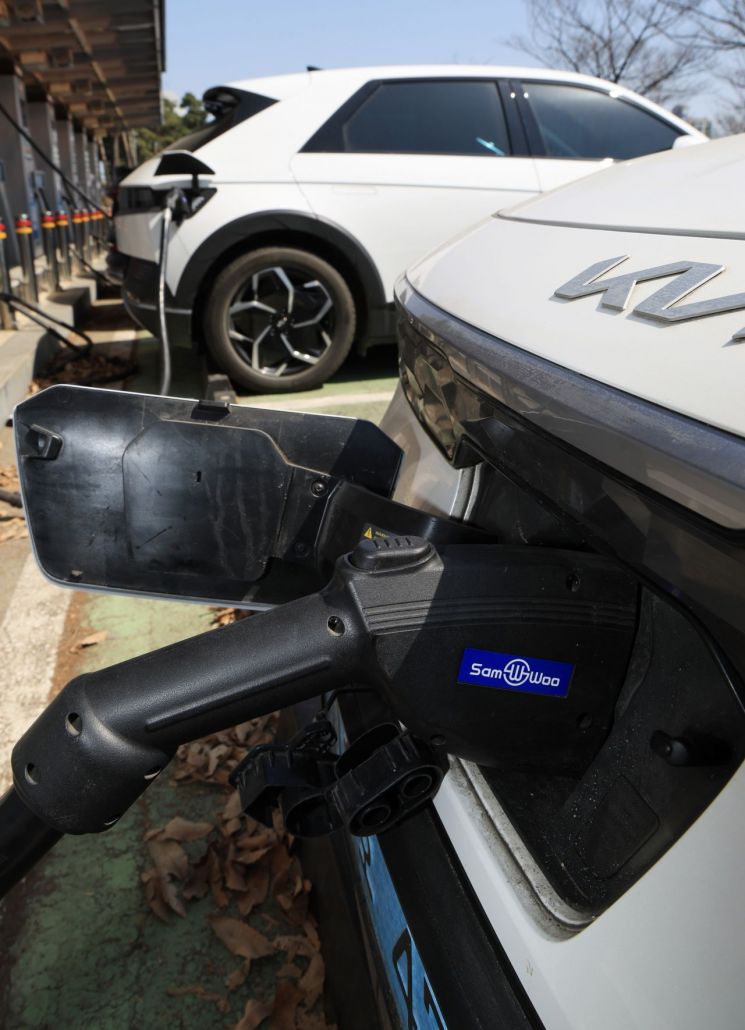
However, there are concerns about the firm stipulation that electric vehicles containing critical minerals extracted or processed by Chinese companies from 2025 onward will not receive subsidies. Overseas concern entities include terrorist organizations, individuals on the Treasury Department's Specially Designated Nationals list, and companies owned, controlled, or directed by the governments of North Korea, China, Russia, and Iran, according to the Infrastructure Investment and Jobs Act. The Treasury Department plans to announce additional guidelines.
Director Cho said, "Given the current heavy reliance on China for a significant portion of battery critical minerals and the confirmation that IRA and its implementation guidelines will provide benefits only temporarily, it is necessary to establish a systematic supply chain transition strategy."
KITA also urged not to forget that the European Union (EU) is strengthening its regional battery supply chain. KITA Vice Chairman Jung Manki said, "The EU is also working to strengthen its regional battery supply chain through laws such as the Critical Raw Materials Act (CRMA), Battery Act, and Net Zero Industry Act (NZIA). We must further enhance strategic overseas investments by Korean companies as well as government support for research and development (R&D) and facility investments."
KITA plans to hold a briefing session on the IRA implementation guidelines and CRMA for companies on the 6th at COEX in Gangnam-gu, Seoul, together with the Ministry of Trade, Industry and Energy and KOTRA. They will review upcoming guidelines and amendment trends and provide related information to the industry.
© The Asia Business Daily(www.asiae.co.kr). All rights reserved.
![Clutching a Stolen Dior Bag, Saying "I Hate Being Poor but Real"... The Grotesque Con of a "Human Knockoff" [Slate]](https://cwcontent.asiae.co.kr/asiaresize/183/2026021902243444107_1771435474.jpg)















