In 2019, suspicions were raised in court that the saplings which Gyeonggi Province decided to provide as humanitarian aid to North Korea through the Inter-Korean Exchange and Cooperation Fund might have been bribes to high-ranking North Korean officials.
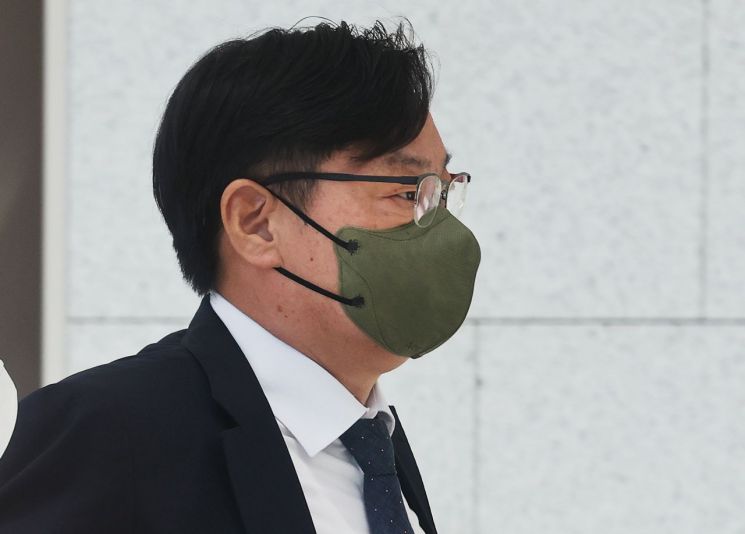
On the 31st, during the trial of former Gyeonggi Province Deputy Governor for Peace Lee Hwa-young on charges of bribery under the Act on the Aggravated Punishment of Specific Crimes and violations of the Political Funds Act, held at Suwon District Court Criminal Division 11 (Presiding Judge Shin Jin-woo), the prosecution questioned former Vice Minister of Unification A, who had served as an advisor and outside director of Ssangbangwool affiliates in 2019, regarding this matter, and A testified.
The prosecution asked former Vice Minister A about Gyeonggi Province’s 2019 plan to support North Korea with saplings for forest restoration through the Asia-Pacific Peace Exchange Association (APPEA) using the Inter-Korean Exchange and Cooperation Fund, noting that the saplings ultimately never reached North Korea, and inquired about his thoughts on this.
At that time, the province provided APPEA with 1.5 billion KRW for the North Korea sapling and flour support project, and APPEA Chairman Ahn Bu-soo is currently on trial after being arrested on charges of embezzling 800 million KRW from this fund.
APPEA purchased 110,000 saplings including Korean pine in Dandong, China, through a Korean-Chinese businessman using 500 million KRW of the remaining 700 million KRW, but the support project was halted due to a sudden notification from North Korea to stop the project.
The prosecution asked, "On January 24, 2019, despite the opposition opinion reported by the provincial forestry department stating that 'Korean pine is planted as an ornamental tree and is inappropriate for forest restoration,' the Peace Deputy Governor’s Secretariat instructed to 'request support as North Korea requested Korean pine and others.' Is it possible to provide Korean pine as humanitarian aid to North Korea just because there was a request for support?" A replied, "(This) is not a humanitarian aid project. (Korean pine) is not suitable for forest restoration."
The prosecution presented APPEA official documents from September and November 2018 in court, which stated, "We had a meeting with Deputy Governor Lee Hwa-young and achieved good results. It was concluded to immediately implement the support for Korean pine in Dandong."
Regarding this document, the prosecution said, "This is a document reported by Chairman Ahn Bu-soo to Kim Sung-hye, Deputy Director of the North Korean Korean-Asia-Pacific Committee," and asked the witness, "Have you ever seen a North Korea support project where South Korea was requested to provide specific items at a specific location and then agreed to deliver them as is?" A replied, "Well, I have not experienced that."
The prosecution then asked, "Lee Hwa-young accepted Kim Sung-hye’s request and disguised the ornamental Korean pine as forest restoration saplings, which can be seen as a kind of bribe. What do you think?" A answered, "I’m not sure if that can be called a bribe."
When the prosecution asked again, "Even if it’s not a bribe, it was given to please Kim Sung-hye by providing aid that did not meet the humanitarian aid requirements. What is your view on this?" A said, "There could be various intentions. It may reflect a desire to continue projects with North Korea in the future."
© The Asia Business Daily(www.asiae.co.kr). All rights reserved.
![Clutching a Stolen Dior Bag, Saying "I Hate Being Poor but Real"... The Grotesque Con of a "Human Knockoff" [Slate]](https://cwcontent.asiae.co.kr/asiaresize/183/2026021902243444107_1771435474.jpg)















