‘6·25 War Heroes’ Naval Torpedo Boat Squadron Defending East and West Seas
‘Independence Activists’ Lee Hee-gyeong and Na Yong-gyun Selected
The ‘June 25 War Heroes’ of April include the Navy Torpedo Boat Squadron that defended the East and West Seas, and the ‘Independence Activists’ selected are Mr. Hwang Gi-hwan from ‘Mr. Sunshine’ and Mr. Lee Hee-gyeong and Mr. Na Yong-gyun.
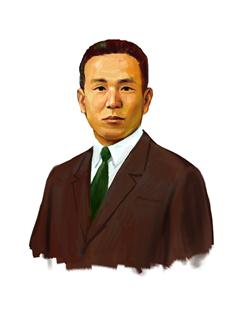 Teacher Hwang Ki-hwan, also famous as the model for Eugene Choi, the main character of the drama 'Mr. Sunshine'.
According to the Ministry of Patriots and Veterans Affairs on the 31st, the Navy Torpedo Boat Squadron selected as the ‘June 25 War Heroes’ was active around the islands of Ongjin Peninsula in Hwanghae Province and the Wonsan area in Gangwon Province during the Korean War. In January 1952, the Navy acquired four torpedo boats (PT) from a U.S. Navy base in Japan, and in February, they were named Torpedo Boat-23 (PT-23, Galmaegi), Torpedo Boat-25 (PT-25, Gireogi), Torpedo Boat-26 (PT-26, Olppaemi), and Torpedo Boat-27 (PT-27, Jebi), respectively, and the squadron was established.
The Torpedo Boat-23 and 26 (PT-23 and PT-26) squadron mainly operated on the West Coast from April 19, 1952, while the Torpedo Boat-25 and 27 (PT-25 and PT-27) squadron mainly operated on the East Coast from May 23, 1952.
The torpedo boat (PT) squadron on the West Coast was based on Daecheongdo Island and conducted covert night infiltrations targeting enemy warships operating along the coasts of Jangsan Cape in Hwanghae Province, Ongjin Peninsula, and Haeju, as well as enemy artillery batteries and supply bases installed on the coast, achieving remarkable military successes by destroying enemy military facilities. The torpedo boat (PT) squadron on the East Coast was based on Yeodo Island and destroyed enemy warships, coastal artillery, and supply bases along the coastline from Hodoban Peninsula in South Hamgyong Province to Mayangdo and Sinpo. Additionally, in the Wonsan area of Gangwon Province, they were deployed at night for enemy mine-laying interdiction operations and train destruction missions, earning many military merits.
Mr. Hwang Gi-hwan, selected as the Independence Activist of April, went to the United States in 1904 and was active in the Korean National Association, a nationalist organization led by Ahn Chang-ho. He is also famous as the model for ‘Eugene Choi,’ the protagonist of the drama ‘Mr. Sunshine.’ Upon Kim Kyu-sik’s suggestion, in June 1919, he served as secretary-general at the Paris Committee and published the ‘Communication Bulletin’ (a guide created to be sent to European media, representatives, and notable figures worldwide) to inform the international community of the legitimacy of independence.
In September 1920, he was appointed as a member of the London Committee of the Provisional Government of the Republic of Korea and conducted diplomatic activities in France and the United Kingdom. Around August 1921, at the request of Syngman Rhee, he moved to San Francisco to draft a declaration of independence to be submitted to the Washington Conference, and the following year, he was dispatched to Hawaii to raise funds for the independence movement together with Min Chan-ho.
He continued his independence activities in New York and London and passed away in April 1923 in New York, USA. The Ministry of Patriots and Veterans Affairs plans to repatriate Mr. Hwang Gi-hwan’s remains to the National Cemetery next month, marking the 100th anniversary of his martyrdom.
Mr. Lee Hee-gyeong studied at the University of Illinois Medical School and actively served as an executive of the Chicago branch of the Korean National Association from 1911. In 1916, he operated a hospital in Hawaii and helped establish a medical system for the Korean community. He contributed to the early foundation and system establishment of the Korean Red Cross and promoted the establishment of nursing schools and hospitals, dedicating efforts to training personnel necessary for the independence war. He returned to Korea in 1937 and worked as a respiratory specialist until his death in 1941.
Mr. Na Yong-gyun, during his studies at Waseda University in Japan, began independence activities in 1918 as the end of World War I and the principle of national self-determination emerged, holding meetings with Korean students abroad. Along with Kim Kyu-sik and Yeo Un-hyung, he sought new directions for the independence movement and attended the Far Eastern Peoples’ Representatives Conference hosted by the Comintern Executive Committee in Russia in 1922.
The government posthumously awarded Mr. Lee Hee-gyeong the Order of Merit for National Foundation, Independence Medal (1968), Mr. Na Yong-gyun the Order of Merit for National Foundation, Patriotic Medal (1990), and Mr. Hwang Gi-hwan the Order of Merit for National Foundation, Patriotic Medal (1995) to honor their contributions.
© The Asia Business Daily(www.asiae.co.kr). All rights reserved.
![Clutching a Stolen Dior Bag, Saying "I Hate Being Poor but Real"... The Grotesque Con of a "Human Knockoff" [Slate]](https://cwcontent.asiae.co.kr/asiaresize/183/2026021902243444107_1771435474.jpg)















