Former Philippine President Emphasizes Importance of Communication at International Forum
Chinese Foreign Ministry Proposes Sound Communication and Joint Maritime Development
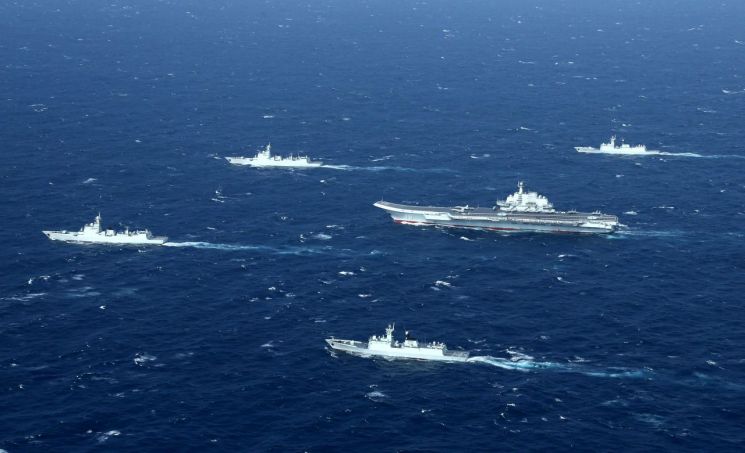
Despite conflicts between China and the Philippines over sovereignty issues in the South China Sea, both emphasized dialogue and cooperation to resolve them.
Former Philippine President Gloria Arroyo highlighted the importance of communication regarding the South China Sea issue at the Boao Forum held in Hainan Province, China, on the 30th.
She cited the 1962 Cuban Missile Crisis, when the United States and the Soviet Union came close to war. She argued that the resolution of that crisis was due to dialogue, concessions, and saving face between the US and the USSR, and proposed applying these three principles to the South China Sea conflict.
Former President Arroyo explained, "At that time, the US and the Soviet Union engaged in high-level exchanges, both sides made concessions, and they agreed to secretly withdraw missiles without causing each other to lose face."
In this regard, Nong Rong, Vice Minister of the Chinese Ministry of Foreign Affairs, also expressed in a written statement that "the South China Sea is a shared living space for regional countries," and "regional countries have long controlled disputes, promoted cooperation, and formed effective experiences," speaking with one voice.
He further proposed a sound communication system, joint maritime development, establishment of regional maritime order, and marine environmental protection to resolve the South China Sea conflict. He emphasized the need to pass on a peaceful and safe South China Sea to future generations.
In particular, he targeted the United States, stating, "Some countries are expanding military deployments in this region and deliberately escalating contradictions," and criticized, "Such actions seriously undermine the normal maritime order and negatively affect peace and stability."
However, while both China and the Philippines emphasized dialogue and cooperation, they expressed differing views regarding the ruling of the Permanent Court of Arbitration (PCA) on the South China Sea sovereignty dispute.
Previously, China claimed 90% of the South China Sea as its territorial waters, and the Philippines filed a case with the PCA in 2013. In 2016, the PCA ruled that China’s claims had no basis under international law and sided with the Philippines.
Regarding this, former President Arroyo stated, "The Philippine Department of Foreign Affairs regards the 2016 South China Sea ruling as a binding final judgment."
On the other hand, China took the position that "the so-called arbitration violates the principle of sovereign consent of states and breaches the United Nations Convention on the Law of the Sea," adding, "We cannot accept or recognize it."
© The Asia Business Daily(www.asiae.co.kr). All rights reserved.
![Clutching a Stolen Dior Bag, Saying "I Hate Being Poor but Real"... The Grotesque Con of a "Human Knockoff" [Slate]](https://cwcontent.asiae.co.kr/asiaresize/183/2026021902243444107_1771435474.jpg)















