17 Related Books Published in 2 Months
"Doubtful if There Is Depth" Skepticism Also Raised
Interest in ChatGPT is spreading to the bookstore scene as well. Over the past two months, more than 10 related books have been published. Most of these are self-help books that utilize ChatGPT for work, investment, and other purposes. However, there is also a growing number of skeptical views toward the 'AI craze.' Critics point out that much of the information is superficial and merely capitalizes on ChatGPT's popularity.
According to the online bookstore 'Yes24,' a total of 17 books related to ChatGPT have been published over the approximately two-month period from last month to the 8th of this month. The types of books vary widely, from those written using ChatGPT to books discussing the future of AI and general self-help books.
For example, KAIST Professor Kim Dae-sik published The Future of Humanity Asked to ChatGPT. Author Ban Byung-heon forecasted changes in human society due to AI adoption in ChatGPT: The Singularity Has Finally Arrived. In addition, many books related to work utilization and investment, such as Writing in the ChatGPT Era and ChatGPT: People Who Seize Opportunities, have flooded the market.
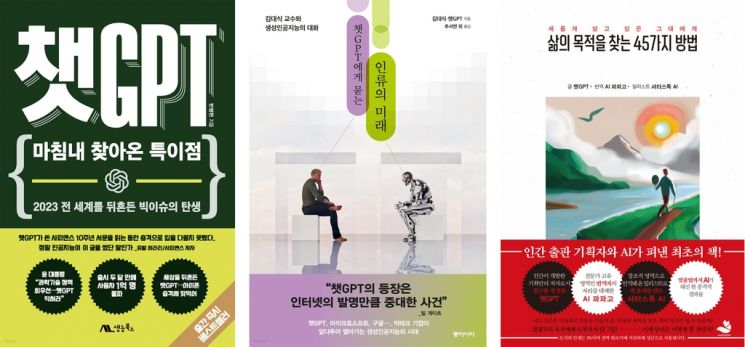
Readers' interest in ChatGPT can also be seen in bookstore rankings. As of 10 a.m. on the 30th, the keyword ChatGPT ranks second among popular online search terms at 'Kyobo Bookstore.' There are already 86 ChatGPT-related books registered at Kyobo Bookstore.
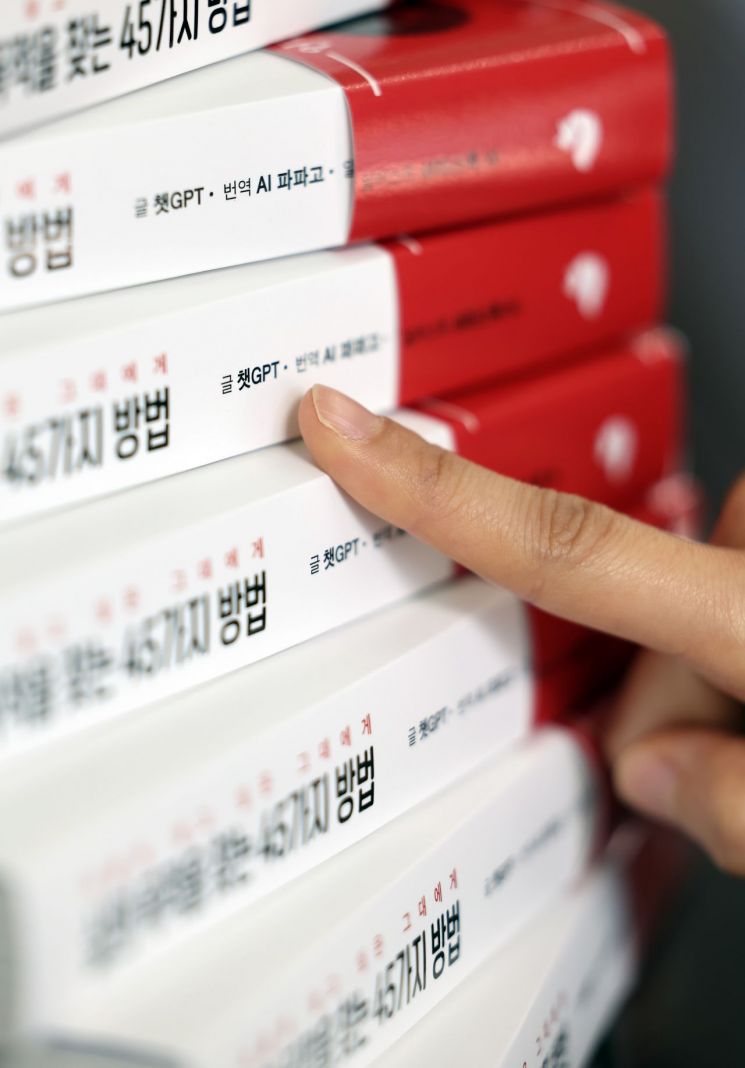
ChatGPT-dedicated sections can be easily found in offline bookstore displays as well. On the 26th, a Twitter user posted a photo of a bookstore display featuring only ChatGPT-related self-help books. This photo has recorded over 810,000 views.
However, not all readers welcome this trend. Some express skepticism, saying, "Whenever something becomes an issue, related books flood the market like a deluge," and "What's the difference from 'keyword marketing'? After Bitcoin and the Metaverse, is ChatGPT next?" There are also criticisms such as, "How substantial can the content of newly rushed professional books published in just two months be?"
One netizen even compared the ChatGPT craze to the 19th-century American 'Gold Rush.' This term refers to the period in the mid-19th century when many pioneers flocked to California after the discovery of valuable minerals including gold.
He pointed out, "During the Gold Rush, the ones who really made money were not the pioneers but those who sold pickaxes and jeans to the pioneers," expressing concern that "ChatGPT might end up the same way." In fact, Levi's, a clothing company established in the 1850s selling tents and jeans to miners, is considered the biggest beneficiary of the Gold Rush era.
Meanwhile, ChatGPT, developed by the American AI research organization OpenAI, is being used in various fields such as office work, essay writing, and programming. Interest in generative AI has increased further since OpenAI released its latest language generation model, 'GPT-4.'
However, there are opinions that the actual usefulness of AI is overly exaggerated. Noam Chomsky, a distinguished linguist at the Massachusetts Institute of Technology, criticized, "The predictions of machine learning systems are always superficial and uncertain," adding, "True intelligence is demonstrated in the ability to think and express insightful ideas, even if they are not factually accurate."
Additionally, on the 29th (local time) in the United States, over 1,300 scholars and entrepreneurs jointly signed a letter urging a halt to the development of large AI models. The reason is that the risks AI may pose to society are still unknown. In the open letter, they emphasized, "Even developers cannot understand, predict, or reliably control AI technology," and stated, "Advanced AI systems should only be developed when there is confidence that their effects are positive and their risks can be managed."
© The Asia Business Daily(www.asiae.co.kr). All rights reserved.
![Clutching a Stolen Dior Bag, Saying "I Hate Being Poor but Real"... The Grotesque Con of a "Human Knockoff" [Slate]](https://cwcontent.asiae.co.kr/asiaresize/183/2026021902243444107_1771435474.jpg)
















