-Current CEO Hyun Gyu-moh also resigns before term ends.
-Park Jong-wook, Head of Business Planning, acts as interim CEO.
-Outside directors Kim Dae-yu and Yoo Hee-yeol also resign.
-Emergency management system initiated for 5 months.
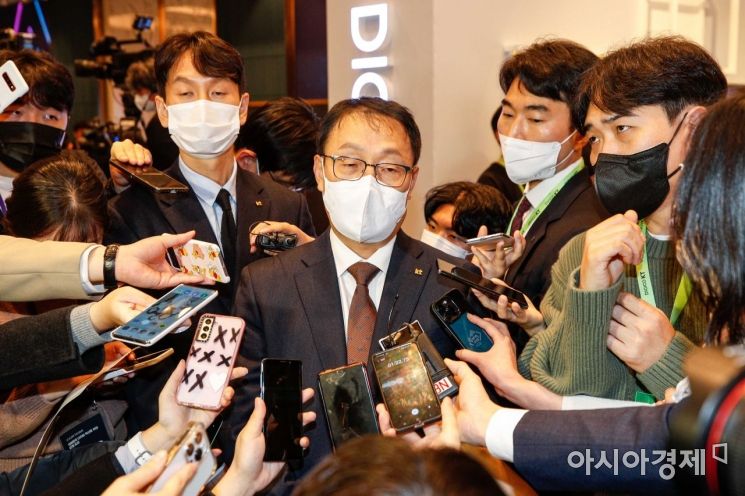 KT CEO Koo Hyun-mo is attending the 'KT AI Strategy Press Conference' held on the 16th at the Sofitel Ambassador Seoul Grand Ballroom in Songpa-gu, Seoul, answering questions from the press. Photo by Kang Jin-hyung aymsdream@
KT has entered an emergency management system. Following the resignation of Yoon Kyung-rim, head of KT Group Transformation Division (President), from the next CEO candidate position, current CEO Koo Hyun-mo also expressed his intention to resign before the end of his term. Outside directors Kim Dae-yu and Yoo Hee-yeol, who still had remaining terms, also voluntarily stepped down. Park Jong-wook, head of the Management Planning Division (President), was appointed as the acting head of the group. As the feared management vacuum has become a reality, there are criticisms that the current board of directors and the political circles bear significant responsibility for this situation.
KT announced on the 28th that CEO Koo Hyun-mo expressed his intention to resign due to personal reasons. Koo's term was until the regular shareholders' meeting on the 31st. It appears that he resigned early because it was burdensome to directly conduct the shareholders' meeting after both his reappointment and Yoon's appointment as CEO were canceled.
Outside directors with opposition party leanings, such as Kim Dae-yu, who served as the Chief of Economic Policy at the Blue House and head of the Statistics Korea during the Roh Moo-hyun administration, and Yoo Hee-yeol, who participated in Moon Jae-in's presidential campaign, also took responsibility for Koo's resignation and Yoon's mid-term departure and resigned together.
With the occurrence of a CEO vacancy, according to the articles of incorporation and organizational regulations, Park Jong-wook, head of the Management Planning Division (President), was appointed as acting CEO. Park plans to lead the company for the time being through a collective decision-making process by forming an emergency management committee composed of key executives.
Under the emergency management committee, two task forces operate: the ‘Sustainable Growth TF’ and the ‘New Governance Establishment TF.’ The ‘Sustainable Growth TF’ discusses business issues such as customer service, marketing, and network, while the ‘New Governance Establishment TF,’ which includes external experts, promotes improvements in overall governance, including CEO and outside director appointment procedures and the role of the board of directors.
In particular, the New Governance Establishment TF will be composed of external experts recommended by shareholders and will utilize professional institutions to review the current governance status and best practices domestically and internationally. Through this, it plans to promptly prepare governance improvement measures that reflect domestic and international ESG trends and various stakeholder opinions and gain external recognition.
Based on the improvements proposed by these task forces, the appointment of outside directors will be pursued, and the CEO appointment process will be conducted primarily by the newly appointed outside directors.
President Park said, "To quickly normalize the current crisis situation, all employees must cooperate and focus on their duties to alleviate the concerns of customers and shareholders who have shown interest and affection for KT." He added, "To this end, we will ensure stable operation of customer service and communication networks and promptly decide on major management and business issues centered on the emergency management committee to prevent any disruption to company management."
He added, "We will do our best to improve governance beyond global standards by fully reflecting the opinions of various stakeholders and to remain a model case of governance for domestically dispersed ownership companies."
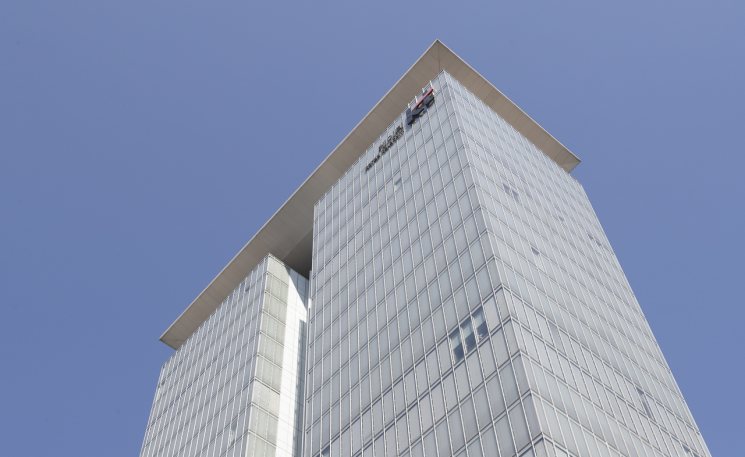
Regarding this KT management vacuum crisis, related industries point out that the current KT board of directors and political circles bear the greatest responsibility. The ruling party continuously cast distrustful eyes on the KT outside directors appointed during the Moon Jae-in administration and showed attempts to intervene in the CEO appointment, while the board failed to timely resolve these misunderstandings and distrust from the ruling party.
Among the outside directors who resigned this time, including Kim Dae-yu and Yoo Hee-yeol, there was also Lee Kang-cheol, an outside director who served as the Chief of Civil Society at the Blue House during the Roh Moo-hyun administration. Under CEO Koo Hyun-mo's leadership, many figures with old ruling party leanings were concentrated within the board, leading to political bias controversies. Although the board showed signs of change when Lee Kang-cheol resigned early in early January, it was insufficient to persuade the ruling party.
There is also an analysis that the ruling party's target was not the 'CEO' but the outside directors. Given the nature of KT's business, it is essential for outside directors to communicate smoothly with the government and understand the ruling party's values well, but KT overlooked this.
An industry insider said, "Unless the Presidential Office or the ruling party directly selects the CEO candidate, it would have been difficult to persuade the ruling party regardless of which candidate came up under the existing KT board system," adding, "The replacement of outside directors during regime change is inevitable."
Once the board composition is completed, the next task to solve is the procedure for appointing the next CEO. Since the candidate resigned, the process must start over. Considering the governance improvement work and two interim shareholders' meetings, it is expected to take about five months to complete the outside director and CEO appointment procedures.
The most anticipated issue is whether a 'parachute appointment' will be made for the next CEO. Including the reappointment suitability review of the former CEO Koo conducted in December last year, KT's CEO appointment process has been carried out four times in about four months. This is the result of the influence of the Presidential Office and ruling party, who distrust the current management and board. For rapid management normalization, it is expected that an external figure with relatively less political resistance will be appointed.
Current candidates mentioned include former KTF Vice President Kim Ki-yeol, former member of the National Assembly and former President of the Korea Information Society Agency Kim Sung-tae, former member of the National Assembly and former KT female executive Kwon Eun-hee, former Vice Minister of the Ministry of Science and ICT Yoon Jong-rok, former Samsung SDS CEO Hong Won-pyo, former KT Marketing Division head Nam Kyu-taek, former POSCO ICT President Choi Doo-hwan, and KT Skylife President Kim Cheol-soo. Former KT Corporate Division head Park Yoon-young and former KT Mass General Manager Im Heon-moon were also on the final candidate list in the previous CEO recruitment, so their chances are not low.
© The Asia Business Daily(www.asiae.co.kr). All rights reserved.
![Clutching a Stolen Dior Bag, Saying "I Hate Being Poor but Real"... The Grotesque Con of a "Human Knockoff" [Slate]](https://cwcontent.asiae.co.kr/asiaresize/183/2026021902243444107_1771435474.jpg)
















