Infectious Disease Advisory Committee Discusses Roadmap for Adjusting Crisis Levels
The government is considering shortening the mandatory isolation period for COVID-19 confirmed cases from 7 days to 5 days.
The National Infectious Disease Crisis Response Advisory Committee held a full meeting on the afternoon of the 27th to discuss the COVID-19 recovery plan, including isolation requirements.
The government plans to finalize and announce the "COVID-19 Crisis Level Adjustment Roadmap" at the Central Disaster and Safety Countermeasures Headquarters (CDSCH) meeting on the 29th.
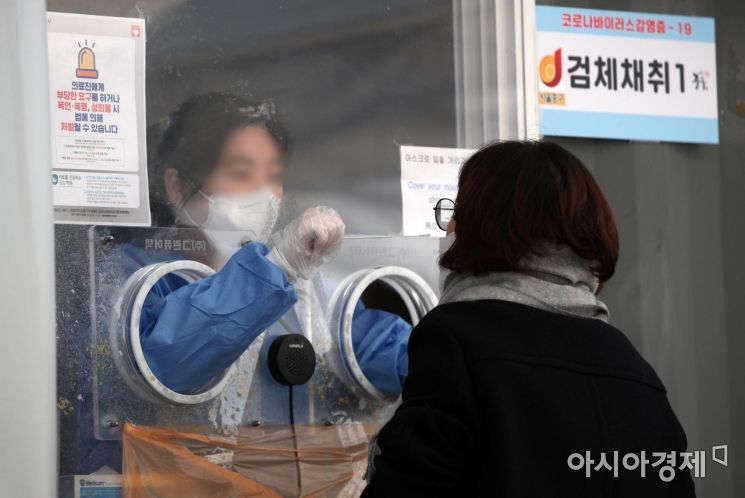 As the winter resurgence of COVID-19 continues, a citizen is being tested at the temporary screening clinic at Seoul Station on the 26th. The Central Disease Control Headquarters announced that as of midnight on the same day, the number of confirmed COVID-19 cases increased by 25,545, bringing the total to 28,684,600. Photo by Hyunmin Kim kimhyun81@
At the advisory meeting, a measure to reduce the isolation period from the current 7 days to 5 days as an intermediate step before lifting the isolation mandate was discussed.
Last June, the government also debated whether to lift or shorten the "7-day isolation mandate," but decided to maintain the mandate as it was difficult to manage the increase in confirmed cases that would result from lifting isolation.
Currently, with the administration of the updated (bivalent) vaccine targeting the Omicron variant and having experienced two additional waves of resurgence, the number of people with immunity has increased, stabilizing the situation and making it possible to shorten the isolation period.
During the meeting, in addition to the isolation mandate, measures to transition COVID-19 response to the general healthcare system were also discussed, including support for therapeutics, financial aid for confirmed cases, and fees related to rapid antigen tests at hospitals and clinics.
With mask-wearing mandates lifted in most places except some medical institutions, the policy direction is to prepare for a return from the COVID-19 "crisis" to normal daily life.
The government currently supports part of the out-of-pocket expenses incurred when COVID-19 confirmed patients receive outpatient treatment or prescriptions. The government fully covers the costs of oral therapeutics like Paxlovid and medical expenses for patients admitted to intensive care units.
Additionally, living support payments are provided to households with income below 100% of the median income (100,000 KRW for single-person households, 150,000 KRW for households with two or more people), and paid leave costs are paid to companies for employees of businesses with fewer than 30 workers (45,000 KRW per day, up to 5 days).
When rapid antigen tests are conducted at local clinics, the total fee paid to medical institutions, including consultation, testing, and prevention/management fees, amounts to 55,920 KRW.
If the COVID-19 crisis level is adjusted from the current "Severe" to "Alert" stage or if the infectious disease classification of COVID-19 is downgraded from Level 2 to Level 4, such policy support is expected to disappear or be significantly reduced.
However, if this support is suddenly and drastically reduced, there are concerns about side effects such as people avoiding testing or hiding positive results due to increased burdens of testing and treatment. Therefore, a phased reduction of support is likely to be pursued.
© The Asia Business Daily(www.asiae.co.kr). All rights reserved.
![Clutching a Stolen Dior Bag, Saying "I Hate Being Poor but Real"... The Grotesque Con of a "Human Knockoff" [Slate]](https://cwcontent.asiae.co.kr/asiaresize/183/2026021902243444107_1771435474.jpg)















