In recent years, the economies of the Southeast region, Daegu-Gyeongbuk region, and Honam region have generally lagged behind the national trend, according to a survey.
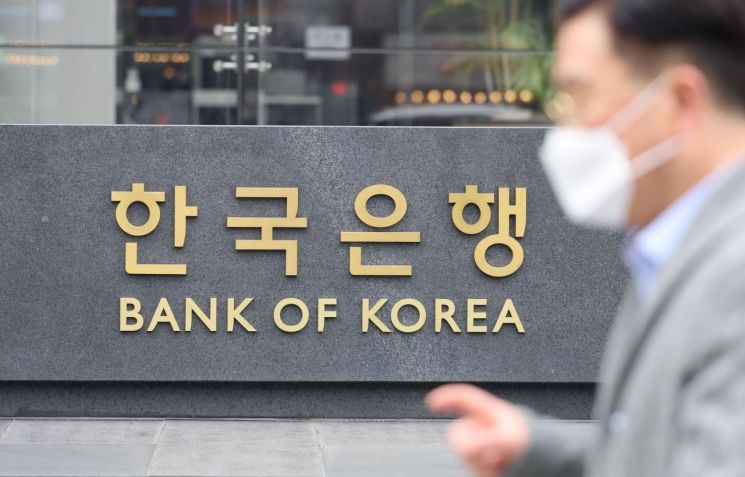
According to the BOK Issue Note titled "Development and Utilization of the Regional Economic Conditions Index (RECI)" released by the Bank of Korea on the 27th, the Bank recently developed RECI as an indicator to show quarterly regional economic conditions.
Analyzing the trends by region up to last year using RECI with 2015 as the base year (100), the Bank of Korea found that the Seoul Capital Area and Chungnam region consistently outperformed the national gross domestic product (GDP) trend, while the Southeast region, Daegu-Gyeongbuk region, and Honam region fell short.
As of the fourth quarter of last year, the Gangwon and Jeju regions were in an expansion phase, but the Southeast region appeared to be moving from expansion to contraction. The Seoul Capital Area, Daegu-Gyeongbuk region, and Honam region were entering a contraction phase.
Looking at growth rates after COVID-19, regions that were more severely impacted by the pandemic showed relatively strong recovery, and the COVID-19 crisis did not cause significant changes to the previous regional growth trends.
Correlation analysis between the nation and regions showed that the Seoul Capital Area's tendency to lead the national economic trend has recently strengthened, whereas the Southeast region, Daegu-Gyeongbuk region, Gangwon region, and Jeju region exhibited some decoupling from the national economy due to heterogeneity in industrial structures.
The Bank of Korea stated, "In the future, RECI is expected to be helpful for various studies on the impact of external shocks such as oil prices and exchange rates on regional economies, as well as the relationships among regional production, consumption, investment, employment, and population movement," adding, "It is also expected to contribute to enhancing the precision of regional economic forecasts."
© The Asia Business Daily(www.asiae.co.kr). All rights reserved.
![Clutching a Stolen Dior Bag, Saying "I Hate Being Poor but Real"... The Grotesque Con of a "Human Knockoff" [Slate]](https://cwcontent.asiae.co.kr/asiaresize/183/2026021902243444107_1771435474.jpg)















