"University Education Fails to Equip Necessary Skills for Good Jobs, Only Leads to Debt"
"Social Pessimism Spreads to Unmanageable Levels"
Eight out of ten Americans have a pessimistic view of the lives of the next generation compared to their own.
The Wall Street Journal (WSJ) reported on the 24th (local time) that a joint survey with the University of Chicago's National Opinion Research Center (NORC) revealed a growing pessimistic outlook on the future within American society.
From the 1st to the 13th of this month, WSJ and NORC conducted a survey of 1,010 Americans asking, "Are you confident that the lives of the next generation will be better than ours?" Seventy-eight percent of respondents answered negatively.
WSJ noted, "This survey has been conducted since 1990, and this time recorded the highest percentage of negative responses."
This pessimism toward the next generation appears to stem from a declining trust in college education, which has traditionally served as a gateway to success and social mobility. Fifty-six percent of respondents expressed skepticism about college education, stating, "Even after graduating from a four-year college, many are unable to acquire the skills needed for good jobs and end up with debt."
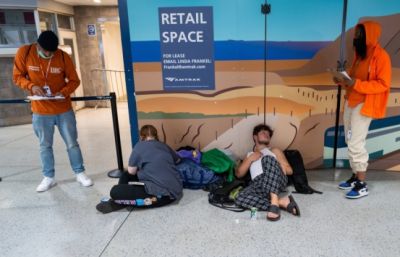
Besides concerns about their children, many respondents also held negative views about their own financial situations. Forty-four percent said, "My current financial state is worse than I expected." Thirty-nine percent said it was "about what I expected," and only 17% said it was "better than expected."
Additionally, 80% of respondents gave a negative assessment of the U.S. economy, with only 20% responding positively. Two out of three respondents expressed significant concern about inflation.
When asked whether they could find a new job with better conditions compared to their current one, more than half said it would not be easy. WSJ explained, "This is the highest level since 2010."
Recently, the U.S. unemployment rate has dropped to historic lows, and demand for labor is high, but Americans do not seem to feel the benefits of this booming job market.
Jennifer Benz, NORC's deputy director, commented, "It seems that social pessimism has spread to an unmanageable level. Even if gasoline prices drop slightly or there are small economic improvements, it does not seem to alleviate people's fundamental dissatisfaction."
© The Asia Business Daily(www.asiae.co.kr). All rights reserved.
![Clutching a Stolen Dior Bag, Saying "I Hate Being Poor but Real"... The Grotesque Con of a "Human Knockoff" [Slate]](https://cwcontent.asiae.co.kr/asiaresize/183/2026021902243444107_1771435474.jpg)















