Japan's Geothermal Power Generation Accounts for Only 0.3%
Hot Spring Village Residents Strongly Oppose Geothermal Power Development
In Japan, where volcanoes and hot springs exist throughout most of the country, controversy has arisen as geothermal power generation remains underutilized despite the deepening energy crisis. Although geothermal power is a clean energy source with low production costs and could significantly alleviate power shortages, strong opposition from local residents and hot spring operators has prevented the activation of geothermal power generation.
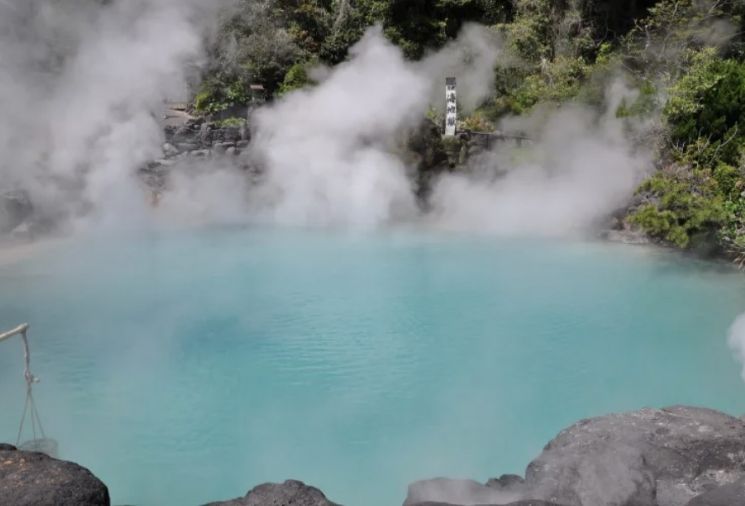
According to the New York Times (NYT) on the 22nd (local time), geothermal power accounts for only 0.3% of Japan's total power generation. Despite the abundance of volcanoes and hot springs nationwide, the NYT pointed out that it is difficult to find local governments that allow geothermal power generation, indicating a very negative stance toward it. Since the 2011 Great East Japan Earthquake and the Fukushima nuclear disaster, Japan has sharply reduced its reliance on nuclear power and mainly depended on thermal power generation. However, with fossil fuel prices soaring due to the Ukraine war, the country is facing an emergency power issue.
Nevertheless, residents in hot spring areas are known to be very opposed to geothermal power generation. A resident operating a hot spring inn in Fukushima Prefecture told the NYT in an interview, "The widespread geothermal development around us threatens our traditional culture," and asked, "Who will take responsibility if something happens to the hot springs?" The NYT reported that even the central government and power companies in Japan are struggling to install geothermal power plants due to their strong resistance.
The NYT also reported that Japan's geothermal power technology is among the best in the world. Since building the first commercial geothermal power plant in 1966, nearly 60 years of technological expertise have been accumulated. In particular, Toshiba is known to dominate the global geothermal power turbine market. Nevertheless, the expansion of geothermal power plants within Japan itself has been slow.
Japan's scientific community explains that geothermal power generation does not significantly affect hot spring inn operations or the hot springs themselves. Dr. Yuki Usa, an emeritus professor at Kyoto University and a geothermal power expert, stated, "Geothermal power generation involves drawing some of the hot spring water and using its steam to turn turbines, so it is unlikely to affect the hot springs," adding, "Changes in hot spring flow are often difficult to trace to a cause, and the problems caused by geothermal development have not been fully understood."
The Japanese government is currently working to increase geothermal power capacity to more than three times the current level by 2030, but progress has been slow. The government expects that if geothermal power generation is activated, it could account for more than 10% of the total power capacity.
© The Asia Business Daily(www.asiae.co.kr). All rights reserved.
![Clutching a Stolen Dior Bag, Saying "I Hate Being Poor but Real"... The Grotesque Con of a "Human Knockoff" [Slate]](https://cwcontent.asiae.co.kr/asiaresize/183/2026021902243444107_1771435474.jpg)















