Bank of Korea Financial Stability Report
Worsening PF Project Failures Due to Real Estate Downturn
Significant Deterioration in Securities Firms' PF Loan Asset Quality
Prompt Resolution of Troubled Projects Needed
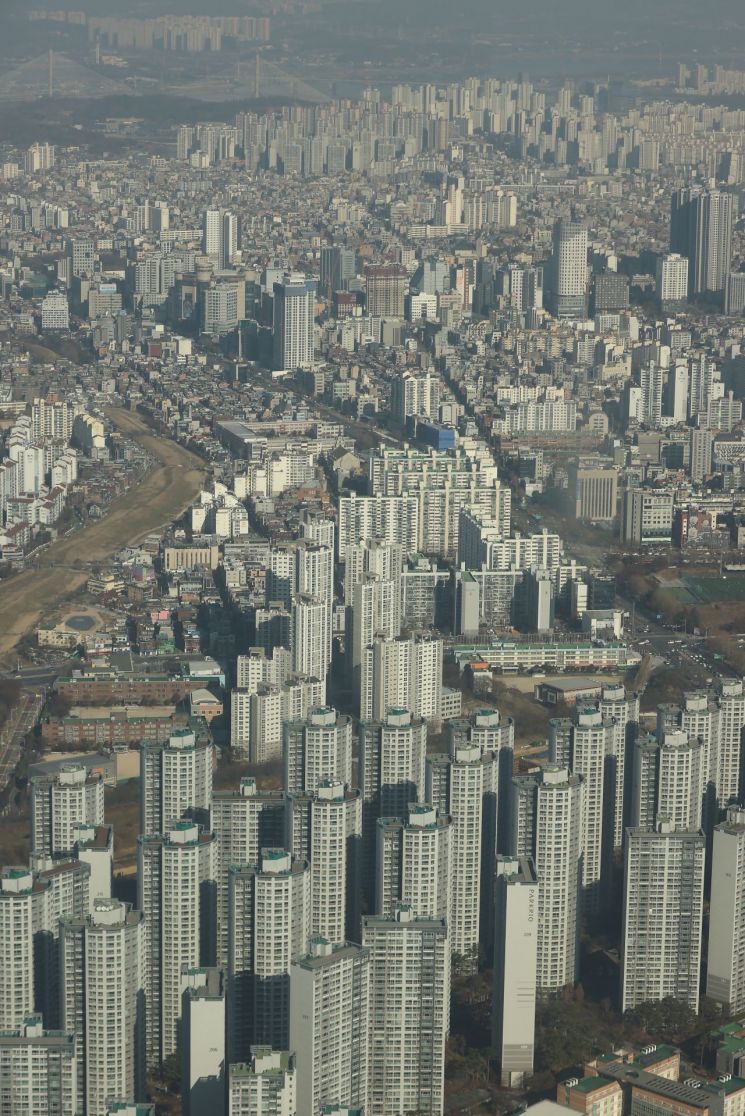
The Bank of Korea explained that if the real estate market downturn prolongs, real estate project financing (PF) businesses could suffer greater damage, potentially worsening the capital ratios of some non-bank sectors, and emphasized the need to promptly resolve PF projects at risk of insolvency.
In the Financial Stability Report released on the 22nd, the Bank of Korea assessed the recent possibility of expanding real estate PF risks among non-bank financial institutions.
Real estate PF loans are loans made for real estate projects, which, unlike general loans, are secured not by the borrower's creditworthiness but by the future profitability of the real estate development project.
Non-bank financial companies such as domestic insurance companies, specialized credit finance companies (SCFs), savings banks, and securities firms significantly increased PF loans during the real estate boom to enhance profitability. However, with last year's interest rate hikes and the real estate market downturn, the number of PF projects halted and delinquency rates rose, expanding the risks faced by these financial institutions.
According to the Bank of Korea, as of the end of September last year, the total real estate PF exposure of the non-bank sector reached 115.5 trillion KRW, comprising 91.2 trillion KRW in loans and 24.3 trillion KRW in securitized debt guarantees.
Looking specifically at real estate PF loan exposure, insurance companies held 44.1 trillion KRW, securities firms 4.5 trillion KRW (with 24.1 trillion KRW in debt guarantees), SCFs 27.1 trillion KRW (with 2 trillion KRW in debt guarantees), savings banks 10.7 trillion KRW, and mutual finance institutions (Nonghyup, Shinhan, Suhyup, Forestry Cooperatives) 4.8 trillion KRW.
Compared to the end of 2017, loans to the real estate and construction sectors increased by 4.2 times for SCFs, 3.4 times for savings banks, 3.1 times for mutual finance institutions, and 1.7 times for insurance companies.
The Bank of Korea pointed out, "The contraction of the real estate market has increased uncertainty in project execution and the rise in unsold housing has heightened repayment risks for PF loans."
In particular, securities firms' PF loans saw a sharp rise in delinquency rates, indicating a deterioration in asset quality of real estate PF loans across most sectors, with some sectors potentially facing worsening insolvency.

The Bank of Korea stated, "Since the end of 2020, the risk levels of PF projects involving non-bank sectors have been rising across all industries," adding, "Due to the increase in the comprehensive risk score, the number of projects positioned at the far right end of the risk score distribution as of September 2022 has significantly increased compared to the end of 2021."
Upon reviewing the decline in resilience of non-bank financial institutions due to PF project insolvencies, the Bank of Korea estimated that overall capital ratios would remain above regulatory thresholds, but in exceptional cases where severe scenarios materialize, some financial institutions could fall below regulatory capital ratios.
Recently, following the bankruptcy of the U.S. Silicon Valley Bank (SVB) and the crisis rumors surrounding Swiss major investment bank Credit Suisse (CS), global financial instability has intensified, raising concerns over the potential insolvency of domestic real estate-related loans.
The Bank of Korea emphasized that if the real estate market downturn prolongs, the number of PF projects that halt or become insolvent will increase, potentially lowering capital ratios in some non-bank sectors, thus necessitating stronger PF risk management.
The Bank of Korea stated, "It is necessary to establish a private-sector-led smooth restructuring environment to minimize uncertainties caused by delays in resolving PF projects at risk of insolvency," adding, "While supporting smooth funding for sustainable projects, prompt resolution of insolvent projects should be encouraged through discussions on loss-sharing among stakeholders such as developers and major creditors, and by revitalizing the non-performing loan (NPL) market."
© The Asia Business Daily(www.asiae.co.kr). All rights reserved.
![Clutching a Stolen Dior Bag, Saying "I Hate Being Poor but Real"... The Grotesque Con of a "Human Knockoff" [Slate]](https://cwcontent.asiae.co.kr/asiaresize/183/2026021902243444107_1771435474.jpg)
















