Creating a Green Healing Space to Realize a ‘Clean Living Environment in Gwanak’ and Revitalize Tired Daily Lives
Establishing Spaces for Urban Agriculture, Simultaneous Opening of Early Childhood Forest Experience Centers, Byeolbitnaerin Stream, Gwanaksan 24 Project, and More
Residents, exhausted physically and mentally due to the prolonged economic downturn and COVID-19, are finding vitality in healing spaces within the city as spring arrives.
Gwanak-gu (Mayor Park Junhee) is expanding green resting spaces with the goal of creating a ‘clean living environment’ where people and nature harmonize, implementing various projects to improve residents’ quality of life and happiness index.
To foster communication and sharing through urban agriculture, a total of six sites covering 22,755㎡ of farmland have been established, including the largest single-area farm in Seoul, Gang Gamchan Garden (13,760㎡), Gwanak Urban Agriculture Park, and Nakseongdae Garden, allowing residents to cultivate fields themselves and enjoy leisure activities with pleasure and rest while strolling.
‘Gwanak Urban Agriculture Park’ features diverse contents such as a cultivation experience center, herb and rose gardens, healing forest, and beekeeping experience center on a 15,000㎡ site. The ‘Gang Gamchan Urban Agriculture Center,’ opened in 2021, is a representative urban agriculture complex space in the southern Seoul area.
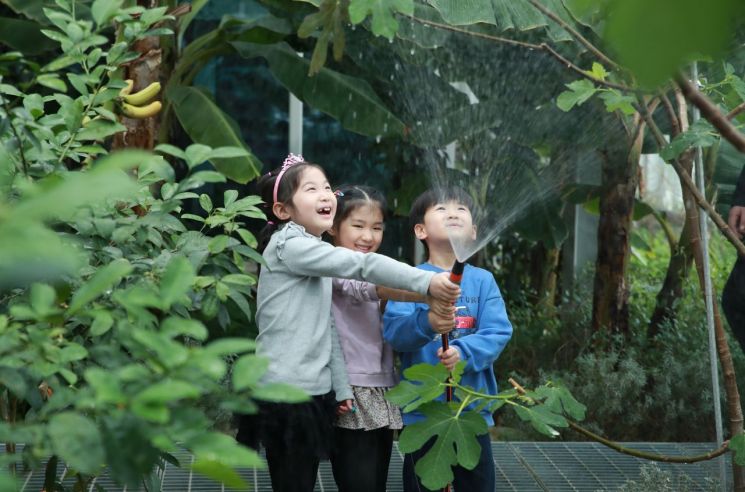
In particular, the Gang Gamchan Urban Agriculture Center supports urban agriculture activities with multipurpose spaces including an exhibition greenhouse, barrier-free garden, seed library, education room, and experience room. It offers various customized programs by age and generation, ranging from specialized agricultural education to cultural experiences such as traditional liquor appreciation, Saturday crop gourmet events, children’s special desserts, and herbal craft experiences.
Seven early childhood forest experience centers, including Cheongryongsan, have also opened simultaneously for children. The district operates the largest number of early childhood forest experience centers among Seoul’s autonomous districts to ensure children can play safely and joyfully. Adventure playgrounds, insect hotels, rock climbing, hammocks, and various forest experience and play facilities that maximize the use of natural resources are very popular among children.
Additionally, Byeolbitnaerin Stream, a representative healing space of the district, is a resting place where nature and culture can be enjoyed together. By June next year, the last unrecovered section in front of Seoul National University’s main gate will be restored as an ecological stream, completing the water zone up to Gwanaksan Mountain. It will be reborn as a specialized space linked with three stations of the Sillim Line, offering places to walk and rest, and becoming a nighttime attraction where light and water harmonize.
The ‘Gwanaksan Park 24 Project’ is being promoted intensively to allow residents to enjoy Gwanaksan anytime nearby by specializing 24 neighborhood parks at the foot of Gwanaksan into three zones: parks where life is revived, parks for emotional healing, and parks flowing with cultural elegance.
In particular, the Nangok district will complete the first phase of park construction in the first half of this year, followed by the second phase including a park golf course. This year, four new parks will be added in the Yangji, Haneul, Wonsin, and Mokgolsan districts of Gwanaksan, and efforts will be made to build a soccer-only field and a jokgu (Korean foot volleyball) court within the parks.
In November, the ‘Gwanaksan Entrance Prime Park’ and the ‘Gwanak Art Hall Art Walk’ in front of Gwanak Art Hall will be completed.
Mayor Park Junhee said, “We plan to continuously expand healing spaces so that residents can broadly enjoy nature and culture in their daily lives and recover vitality.”
Yeongdeungpo-gu Plants Dreams, Hopes, and the Future on Trees... Relay Tree Planting Event Held
Relay Tree Planting Event with Residents Held on March 22... Over 6,000 Trees Planted in Parks
Participants Hang Tags with Their Dreams and Hopes on Trees, Envisioning a Hopeful Future
Yeongdeungpo-gu (Mayor Choi Hogwon) announced that it held a ‘Relay Tree Planting Event’ with residents on the morning of March 22 at Shin-gil 9 District Neighborhood Park and other locations.
According to the Korea Forest Service, one tree reduces 35.7g of fine dust annually (equivalent to one espresso shot), and 47 trees are needed to absorb the fine dust emitted by one diesel vehicle.
Ahead of the 78th Arbor Day, the district held the relay tree planting event to raise awareness among residents about the importance of trees and to reduce fine dust and greenhouse gases.
Additionally, due to global warming causing the average temperature to rise and advancing the tree planting season, this year’s event was held two weeks earlier than usual.
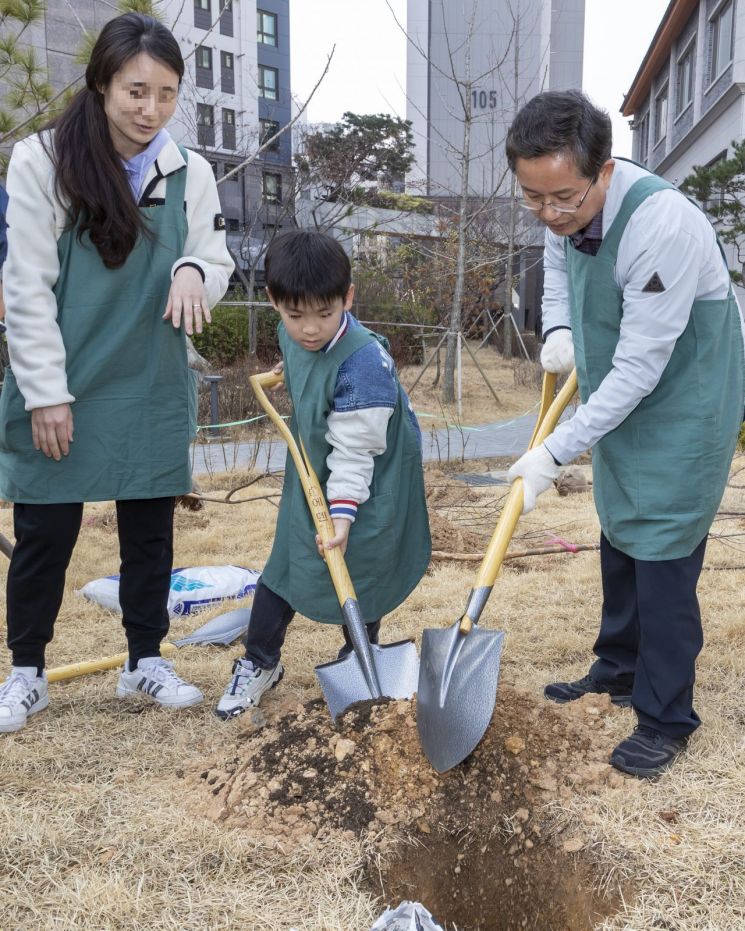
The event saw about 400 participants including Mayor Choi Hogwon, public officials, and residents, who planted trees in relay starting from Shin-gil 9 District Neighborhood Park, followed by Shin-gil Neighborhood Park, Mullae Neighborhood Park, and Yeongdeungpo-dong History Park. A total of over 6,000 trees, including Bokjagi trees, Sansuyu (Cornus officinalis) trees, and flowering crabapple trees, were planted.
Participants planted trees to commemorate special days such as birthdays and wedding anniversaries. Each tree was tagged with planting information, dreams, and hopes, wishing for a bright future. After the event, the district distributed tulip and daffodil seedlings to participants as a token of appreciation.
Furthermore, the district is conducting an Arbor Day commemorative ‘Tree Planting Challenge.’ From March 22 to 26, participants can submit certification photos and reviews after planting trees or flowers by clicking the banner on the district’s website.
Although Yeongdeungpo-gu is the only district in Seoul without mountains and lacks green space, it is committed to urban forest cultivation through tree planting.
Mayor Choi Hogwon said, “Planting trees is planting the future, dreams, and hope. I hope the trees planted with residents’ wishes will grow vigorously. The flower language of the Bokjagi tree, which was planted the most today, is ‘promise.’ Like the flower language of the Bokjagi tree, I promise to create a green Yeongdeungpo where the city and nature coexist for future generations, especially children.”
© The Asia Business Daily(www.asiae.co.kr). All rights reserved.
![Clutching a Stolen Dior Bag, Saying "I Hate Being Poor but Real"... The Grotesque Con of a "Human Knockoff" [Slate]](https://cwcontent.asiae.co.kr/asiaresize/183/2026021902243444107_1771435474.jpg)
















