On March 22, the Ministry of Justice submitted a request for consent to arrest Hayoungje Park, a member of the People Power Party, to the National Assembly. This follows the issuance of an arrest warrant for Park on charges including violations of the Political Funds Act.
Attention is now focused on what decision the Democratic Party will make, especially after it previously voted down a motion to consent to the arrest of Lee Jaemyung, leader of the Democratic Party.
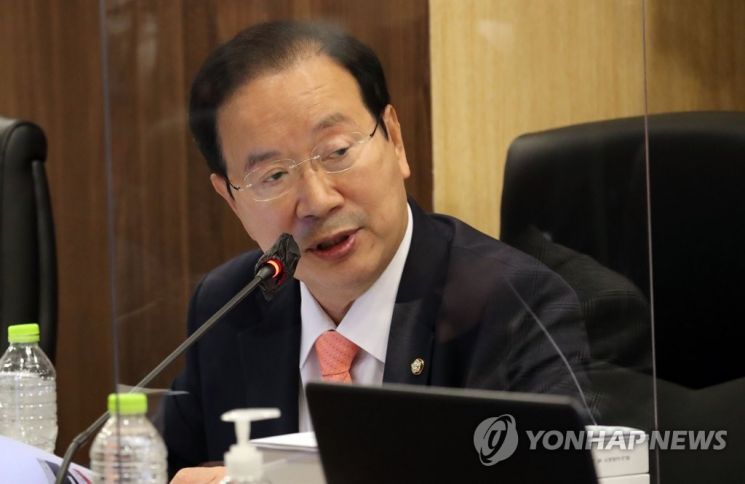
On the same day, the Ministry of Justice announced that it had submitted the request for consent to arrest Park to the National Assembly, in accordance with a request from a judge at the Changwon District Court, related to alleged violations of the Political Funds Act and the Improper Solicitation and Graft Act.
Previously, the Criminal Division 4 of the Changwon District Prosecutors’ Office (headed by Chief Prosecutor Eom Jaesang) requested an arrest warrant for Park on March 20 on charges of violating the Political Funds Act and the Improper Solicitation and Graft Act.
Park is accused of receiving 70 million won from a prospective candidate’s camp in exchange for helping secure a nomination in the Gyeongnam Provincial Council election ahead of the June 1 local elections last year, and of accepting an additional 57.5 million won from local government heads and aides under the pretext of operating expenses for his local office.
The prosecution believes that, at the time, Park was both the head of the People Power Party’s Sacheon City chapter in Gyeongnam and a sitting member of the National Assembly, and that he used his influence to solicit and receive money in exchange for promising to help with nominations.
Article 44, Paragraph 1 of the Constitution stipulates that "Except in cases of flagrante delicto, a member of the National Assembly shall not be arrested or detained during a session without the consent of the National Assembly," thereby establishing parliamentary immunity from arrest.
Article 26, Paragraph 1 of the National Assembly Act (Procedure for Requesting Consent to Arrest) states, "When seeking the consent of the National Assembly to arrest or detain a member, the judge of the competent court must submit a written request for consent to arrest to the government before issuing a warrant, and the government, upon receipt, must promptly submit a copy of the request to the National Assembly along with its own request for consent to arrest."
Furthermore, Paragraph 2 of the same article stipulates, "Upon receiving a request for consent to arrest under Paragraph 1, the Speaker shall report it at the first plenary session convened thereafter, and a vote shall be held between 24 and 72 hours after the report. If the vote does not take place within 72 hours, the motion shall be put to a vote at the next plenary session convened thereafter."
When an arrest warrant is requested, the court sends the motion for consent to arrest to the prosecution, and the Ministry of Justice receives it from the prosecution and submits it to the National Assembly.
Ahead of the plenary vote on the consent to arrest motion, Park has been sending text messages to People Power Party lawmakers, appealing for the motion to be rejected by stating that "the prosecution’s claims are greatly exaggerated" and asking for "leniency." However, the party leadership has reportedly decided not to adopt an official party position, allowing each lawmaker to vote independently. Notably, some People Power Party lawmakers are circulating pledges to renounce parliamentary immunity among their colleagues, actively promoting a movement to give up this privilege.
Floor leader Joo Ho-young told reporters at the National Assembly the previous day, "Each lawmaker, as an independent constitutional entity, will make their own judgment, but we have repeatedly stated our intention to give up parliamentary immunity, so a decision will be made along those lines," adding, "Since our position has been to forgo immunity, this is effectively the party line."
The main point of interest is what choice the Democratic Party will make.
Previously, on February 27, the motion to consent to the arrest of Lee Jaemyung was put to a secret ballot in the National Assembly, with 297 lawmakers participating. Although 139 voted in favor and 138 against, the motion failed to meet the required quorum of 149 votes and was thus rejected.
However, with 11 invalid votes and 9 abstentions, analysis suggests that there was significant defection within the Democratic Party.
If the Democratic Party, which previously rejected motions to arrest both lawmaker Noh Woongrae and leader Lee Jaemyung, votes to approve the motion for Park, it will likely face accusations of double standards. This would effectively be an admission that the party acted as a "shield" to block prosecution investigations into its own members, such as Lee and Noh.
On the other hand, it would also be burdensome for the Democratic Party to vote down the motion for Park. The party has consistently claimed that the prosecution’s investigation into Lee was "oppression of the opposition" and a "targeted investigation." If it also rejects the motion for Park, it could appear to be obstructing anti-corruption investigations by the prosecution without justification, risking a backlash in public opinion.
Meanwhile, the prosecution appears to have gained some freedom from accusations of political bias, which arose during its investigation of Lee, by requesting an arrest warrant for a ruling party lawmaker.
On March 20, the Pohang branch of the Daegu District Prosecutors’ Office also requested an arrest warrant for Lim Jongsik, the conservative-leaning Superintendent of Education for North Gyeongsang Province, on charges of violating the Public Official Election Act and accepting bribes.
Contrary to the Democratic Party’s claim that only opposition figures are being targeted, Prosecutor General Lee Wonsik has repeatedly emphasized that investigations must be conducted based on evidence and legal principles, regardless of party affiliation, whenever corruption is found.
In particular, in his inaugural address last September, Lee cited a passage from the Han Feizi, "The law does not flatter the noble, nor does the carpenter’s line bend for the crooked" (法不阿貴 繩不撓曲), stating, "There can be no exceptions, privileges, or sanctuaries in the enforcement of the law, and prosecutorial authority must be exercised solely based on evidence and legal principles."
© The Asia Business Daily(www.asiae.co.kr). All rights reserved.
![Clutching a Stolen Dior Bag, Saying "I Hate Being Poor but Real"... The Grotesque Con of a "Human Knockoff" [Slate]](https://cwcontent.asiae.co.kr/asiaresize/183/2026021902243444107_1771435474.jpg)
















