Democratic Party Gyeongbuk Provincial Party Press Conference
Appeal to Reflect the Resolution of the Electoral Reform Special Committee on Large Electoral Districts by Region
The Democratic Party of Korea's Gyeongsangbuk-do Provincial Party urged on the 22nd for discussions on the election law and the method of delineating large electoral districts by region to be applied in next year's National Assembly general election. They opposed the mixed urban-rural large electoral district system currently under discussion in the National Assembly and advocated for large electoral districts by region everywhere to break down regionalism.
The regional large electoral district system groups the 17 metropolitan cities and provinces into regions, allowing voters to select both their preferred party and candidate within the region. When voters cast their ballots, the number of seats per party in the region is first determined based on the party's vote share, and then the winning candidates for each party are decided according to the number of votes each candidate received.
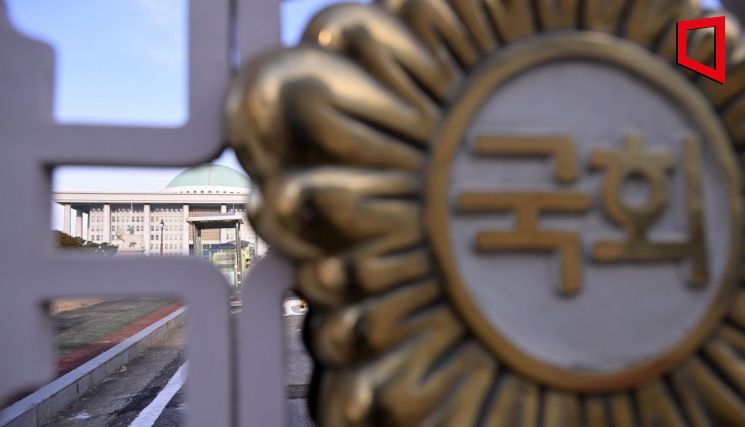
Im Mi-ae, Chairwoman of the Democratic Party's Gyeongbuk Provincial Party, along with regional committee heads, held a press conference at the National Assembly that day to appeal for "amendments to the election law to respond to regionalism and the extinction of local areas."
In their appeal, they said, "Democratic Party, let's no longer be cowardly," and asked, "How long will we only talk about Kim Dae-jung's eastward politics and Roh Moo-hyun's dream of a nationwide party?" They emphasized, "More important than bipartisan agreement is the timely demand for election law reform." They continued, "Democratic Party lawmakers should not ignore the other Roh Moo-hyuns and Heo Dae-mans who are dedicating their lives to breaking down regionalism."
They opposed the current election law discussions that ignore regionalism and neglect the extinction of local areas, stating, "The election law discussions must not end in futility again."
Chairwoman Im criticized, "Although it is clearly stated in the advisory committee's opinion to the Speaker of the National Assembly, the reason for changing the election law is to overcome regionalism, prevent wasted votes, and respond to the extinction of local areas. If the number of National Assembly members does not increase and the parallel voting system is maintained as the People Power Party insists, how can 47 proportional seats overcome regionalism and respond to the extinction of local areas?"
They appealed, "The National Assembly's plenary committee should also discuss the regional proportional large electoral district system," and added, "Knowing very well the drawbacks of the current single-member district system, we should not start discussions by fixing the single-member district system while talking about feasibility."
They said, "If you look closely, expanding the number of National Assembly members is feasible, and reducing constituencies is feasible. Let's stop blaming reality and let politics change reality."
They also clearly opposed the mixed urban-rural electoral district system currently under discussion in the National Assembly.
They pointed out, "The mixed urban-rural large electoral district system proposal, which implements the large electoral district system in metropolitan cities and above but maintains the single-member district system in rural areas of provinces, is absolutely unacceptable," adding, "The biggest victims of one-party dominant regionalism are rural areas." Furthermore, they said, "Even under the current single-member district system, rural constituencies already combine 3 to 4 counties, and during elections, regions are frequently detached and attached. As a result, areas with different living zones and broadcasting zones, which do not even share regional agendas, are grouped into a single electoral district."
They argued, "We should not be trapped by the hollow pretext of regional representation, and the large electoral district system should also be implemented in rural areas so that rural regions are no longer victims of one-party dominant regionalism."
Democratic Party lawmaker Park Ju-min, who joined the press conference, said on social media (SNS), "The National Assembly's Special Committee on Political Reform is said to be amending and passing a resolution today for election system reform," adding, "The public's opinion on the election system is clear: 'The number of National Assembly members should not increase. There are too many wasted votes, so they must be reduced. Proportional representation members should be directly chosen by voters. The regionalism system and extinction of local areas must be resolved.' A reformative plan that accepts these demands while innovating the National Assembly and political parties in the face of crisis must be included in the plenary committee's discussions."
He continued, "According to many scholars and experts, the regional proportional large electoral district system adopted by several advanced democracies is a solution that meets the public's demands and innovates proportionality, unlike the simple plurality single-member district system or large electoral district system," and requested, "Please do not cling to vested interests but actively consider reformative plans in the National Assembly that can accept the public's demands."
Previously, the regional large electoral district system was also a resolution passed by the Democratic Party's Gwangju Provincial Party. The Democratic Party's Gwangju Provincial Party proposed the regional large electoral district system despite the possibility of a reduction in seats. Byun Won-seop, Chair of the Democratic Party's Gwangju Provincial Party Political Reform Special Committee, said in an interview with this publication, "The regional large electoral district system enables party-centered policy elections and opens the door for farmers, small business owners, youth, and women to enter the legislature according to regional characteristics, while maintaining the number of National Assembly members. In the existing two-party system, good bills are often blocked by party interests, but with the introduction of the large electoral district system and a multi-party system, political culture will change through policy alliances."
© The Asia Business Daily(www.asiae.co.kr). All rights reserved.
![Clutching a Stolen Dior Bag, Saying "I Hate Being Poor but Real"... The Grotesque Con of a "Human Knockoff" [Slate]](https://cwcontent.asiae.co.kr/asiaresize/183/2026021902243444107_1771435474.jpg)















