Fed Caught Between Inflation and Financial Stability
Continues Tightening While Providing Massive Liquidity Support to Banks
US Inflation Persistence Raises Monetary Policy Uncertainty
Bank of Korea Faces Complex Calculations... Attentive to Powell's Message
As inflationary pressures, monetary policy, and uncertainties surrounding financial markets in the United States intensify, market instability is expanding. While the U.S. Federal Reserve (Fed) maintains a tight monetary policy to stabilize prices, it is also injecting massive funds into banks facing liquidity crises, making it difficult to predict how U.S. inflation and the economy will evolve. With the Fed's benchmark interest rate decision and Chairman Jerome Powell's message scheduled for the 22nd (local time), the Bank of Korea's concerns ahead of next month's Monetary Policy Committee meeting are expected to deepen.
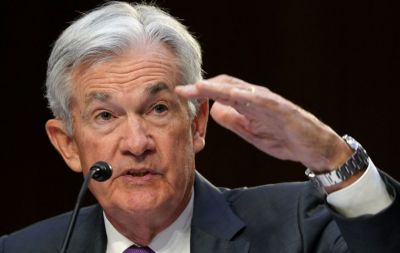
Fed Continues Rate Hikes... Inflation Concerns Persist
According to financial markets and major foreign media on the 22nd, the Fed is expected to raise its benchmark interest rate by 0.25 percentage points at the Federal Open Market Committee (FOMC) meeting on the 21st-22nd (local time). Although there were forecasts that the Fed would hold rates steady due to the bankruptcies of Silicon Valley Bank (SVB) and Signature Bank, the U.S. inflation rate remains high, and a premature pause could actually heighten market fears of a financial crisis, making a 0.25 percentage point increase to adjust the pace more likely. According to the Chicago Mercantile Exchange (CME) FedWatch, the market sees a 75.3% chance of a 0.25 percentage point hike by the Fed.
However, despite the Fed's tightening stance, there are many concerns that U.S. inflation may persist longer. In particular, the Fed's shock over the SVB collapse, caused by a bank run (massive deposit withdrawals), led to the establishment of the Bank Term Funding Program (BTFP) on the 12th to provide liquidity support to banks, reinforcing such analyses. The BTFP allows the Fed to lend money to banks using U.S. Treasury securities and mortgage-backed securities (MBS) as collateral, but the collateral is valued at face value rather than market value, which has been criticized as effectively a shift toward quantitative easing. Although this measure considers the significant drop in U.S. Treasury prices due to high-intensity tightening, valuing collateral at face value increases the amount of money supplied to banks, which is negative for price stability.
Between the 9th and 15th of this month, U.S. banks borrowed $164.8 billion (approximately 216 trillion KRW) through the Fed's discount window, marking the largest amount ever, surpassing the $111 billion (approximately 145 trillion KRW) borrowed during the 2008 financial crisis. Although the U.S. Consumer Price Index (CPI) growth slowed last month, the 'Super Core CPI' (core CPI excluding housing costs), which Chairman Powell monitors, rose 4% year-on-year in January, the same as before, indicating the concerning scale of liquidity support. Harvard Professor Near Ferguson told Bloomberg on the 19th (local time), "Depending on the scale of bank acceptance, the BTFP could prove to be quantitative easing."
Robert Kiyosaki, author of the global bestseller "Rich Dad Poor Dad," recently warned in a media interview that "if the Biden administration prints more money to bail out banks, inflation will spiral out of control."
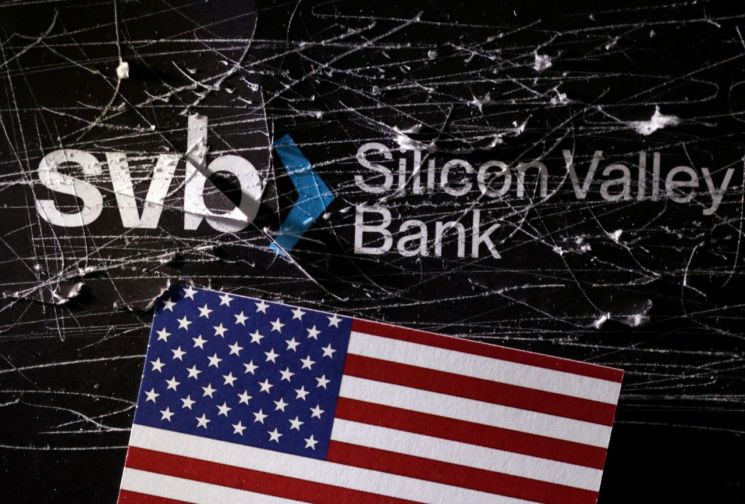
Selective Liquidity Support in the U.S. Inevitable... Financial Stability First
However, from the Fed's perspective, liquidity support is an unavoidable measure to prevent a financial crisis and is not expected to have a significant impact on inflation. Earlier, the Bank of Korea also faced controversy over a perceived 'misalignment' when it continued raising its benchmark rate late last year while launching liquidity support measures worth trillions of won alongside the government in response to the 'Legoland incident.' At that time, Bank of Korea Governor Lee Chang-yong explained, "The liquidity supplied through this support does not conflict with the monetary policy stance" and that it actually helps stabilize financial markets and supports the tightening stance.
Hwang Se-woon, Senior Research Fellow at the Korea Capital Market Institute, said, "The Fed's BTFP is not about injecting funds into the entire market but about adjusting liquidity to prevent financial institutions from failing, so it is unlikely to immediately stimulate U.S. inflation further. Korea also implemented similar liquidity supply measures last year, and it is appropriate to provide symptomatic treatment if side effects suddenly appear during the tightening process."
Professor Sung Tae-yoon of Yonsei University's Department of Economics explained, "Selective liquidity support should be provided to risky financial institutions, but the overall tightening stance through benchmark rate hikes to withdraw liquidity from the market should be maintained. However, if selective support is too excessive, the tightening effect may weaken, so the level must be controlled."
Regardless of the appropriateness of the Fed's liquidity supply measures, criticism of Chairman Powell is expected to continue. He was criticized for initially dismissing inflation in 2021 as temporary, then belatedly raising rates as prices surged, and despite aggressive tightening policies, failing to control inflation while causing financial market turmoil such as the SVB collapse. U.S. Senator Elizabeth Warren criticized in an NBC News interview, "Chairman Powell has failed in both monetary policy and financial stability missions" and said, "He should not remain Fed Chair."
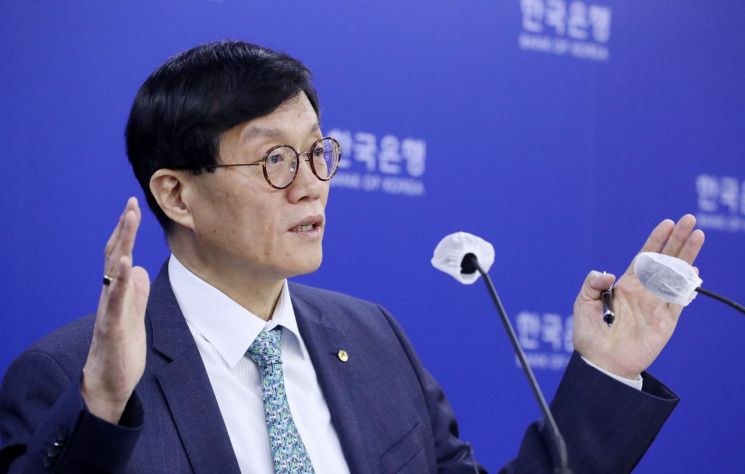
Bank of Korea Faces Dilemma Amid U.S. Turmoil... Eyes on Powell's Words
With numerous variables in the Fed's monetary policy path, the Bank of Korea's calculations have become more complicated. For the Fed, price stability is paramount, so it must continue tightening for the time being, but the Democratic Party, including U.S. President Joe Biden ahead of next year's presidential election, must also pay attention to liquidity supply to reduce the risk of a financial crisis. Senior Research Fellow Hwang said, "The Fed is expected to raise rates by 0.25 percentage points this time and possibly one more time by 0.25 percentage points, concluding the rate hike cycle at a final rate of 5.25%."
If the Fed raises rates by 0.25 percentage points as expected, the current benchmark rate in South Korea is 3.5%, widening the Korea-U.S. interest rate gap to 1.5 percentage points. Amid recent financial sector crises in the U.S., Switzerland, and others, which have strengthened safe-haven asset preferences, an unprecedented widening of the Korea-U.S. rate gap could accelerate foreign capital outflows. This poses additional pressure for the Bank of Korea to raise rates. A Bank of Korea official said, "While U.S.-originated financial instability may affect our foreign currency liquidity to some extent, the likelihood of causing large-scale instability is still low," adding, "We are strengthening market monitoring."
© The Asia Business Daily(www.asiae.co.kr). All rights reserved.



















