"Weekly Rigid Working Hours Flexibility is Key"
Regarding the 69-Hour Workweek System, "It Does Not Exist"
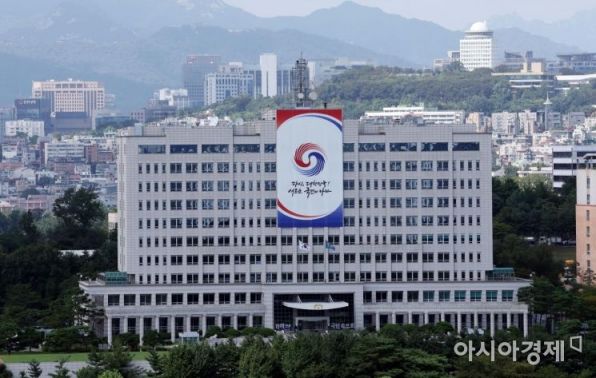
The Presidential Office once again issued a statement on the 20th regarding the controversy over the 'working hours system reform plan.' This move came after it was reported that President Yoon Seok-yeol mentioned "working more than 60 hours a week is excessive," leading some to suggest that he was setting a kind of upper limit. The Presidential Office clarified, "There was no intention to provide a guideline."
A senior official from the Presidential Office met with reporters at the Yongsan Presidential Office that afternoon and explained, "After gathering opinions, it may not be 60 hours and could be more. If imposing a cap (upper limit) is not appropriate, President Yoon has no reason to insist on it." Regarding President Yoon's earlier remark about 'working more than 60 hours a week,' the official added, "He spoke from a personal view that working that much would be difficult, not with the intention of providing a guideline for the (working hours reform) discussion."
On the 16th, Ahn Sang-hoon, Senior Secretary for Social Affairs at the Presidential Office, stated in a briefing, "President Yoon recognizes that working more than 60 hours a week, even with overtime, is excessive and has instructed to supplement the lack of an appropriate upper cap." Subsequently, there were claims that President Yoon had set an upper limit of 'less than 60 hours per week,' including overtime.
However, on this day, the Presidential Office emphasized that President Yoon's remarks at the time focused on sufficient public opinion gathering regarding the working hours reform plan. They stressed that there is no need to be fixated on the number '60 hours'; the key point is 'flexible working hours,' not '69 hours per week.' The reform plan's intent is to avoid applying uniform working hours to all companies and instead consider the nature of work, allowing for more work in the first week and less in the second week, for example.
The official added, "Even with the proposed changes, the possibility of sudden long working hours is low," and "The goal is to reduce working hours in line with global trends." The plan is to flexibilize the 52-hour workweek by dividing it into monthly, semiannual, or quarterly units. In particular, for semiannual periods, working hours could be reduced by up to 10% on average, and for quarterly periods, by up to 20%. The official explained, "If you calculate the 52-hour workweek over a month, it amounts to 225 hours. This is not about increasing that number but maintaining 225 hours per month, with a basic 40-hour normal workweek and expanding overtime during busy periods." He added, "The total monthly working hours will not increase; the idea is to flexibilize rigid weekly working hours."
Regarding criticisms that the plan is out of touch with the realities of industrial sites, the official said, "The Ministry of Employment and Labor has been cracking down since January on small businesses and places suffering from issues like lump-sum wages," and "Results are expected around April, and the system will be reformed to prevent abuse by workplaces."
Another Presidential Office official showed sensitivity to the opposition's use of the term '69-hour workweek system.' The official stated, "The 69-hour workweek system does not exist. The system is currently in the legislative notice stage for working hours flexibilization," and "This legislation is intended to protect vulnerable workers, but as it moves into the political arena, it is being distorted as weakening labor rights for the vulnerable."
© The Asia Business Daily(www.asiae.co.kr). All rights reserved.

















