Joint Investigation Conducted by Related Agencies Including Ministry of Education, Ministry of Health and Welfare, and National Police Agency
'Guidebook for Prevention and Response to Child Abuse in the Education Sector' Also Revised
A comprehensive survey will be conducted on students with long-term unexcused absences who are at high risk of child abuse. If parents or guardians refuse police accompaniment during visits, a police investigation will be initiated considering the possibility of child abuse.
On the 17th, the Ministry of Education held the 2nd Social Relations Ministers' Meeting at the Government Seoul Office and announced the "Measures to Strengthen the Management of Students with Long-term Unexcused Absences," which includes these details.
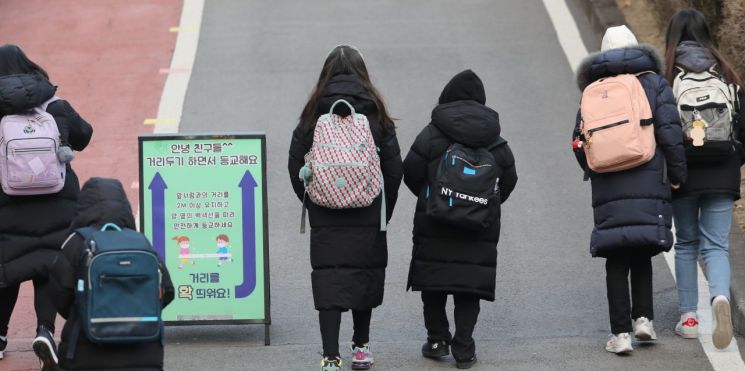
Long-term unexcused absences refer to cases where students do not attend school for more than seven days without a valid reason. Following the discovery of an elementary school student in Incheon, who was not attending school under the pretext of homeschooling and was found dead with bruises on the body, related agencies including the Ministry of Education, Ministry of Health and Welfare, and the National Police Agency decided to conduct a comprehensive survey.
This survey will be conducted until the 30th of next month and will target approximately 5,000 kindergarten, elementary, middle, and special school students with unexcused absences in March. High school students, who are not subject to compulsory education, are excluded from this survey.
First, schools will confirm the whereabouts of students by phone, then request a school visit from the guardians and conduct face-to-face counseling to ensure the students' safety. If guardians refuse to visit the school, the school will conduct a home visit accompanied by the local township or neighborhood office. If the guardians continue to refuse the joint home visit by the school and township/neighborhood office, the school will conduct a home visit together with the city/county/district office and the police.
If signs of child abuse are found during the survey or if guardians persistently refuse home visits accompanied by the city/county/district office and police, the police will initiate an investigation. For students found to be victims of abuse, counseling and other support will be provided, and if necessary, the education support office will facilitate confidential school transfers.
Confidential school transfer is a system that supports transferring or enrolling the victim student to a school near the protective facility where they reside, without changing the resident registration address, to protect the student from abusers including parents.
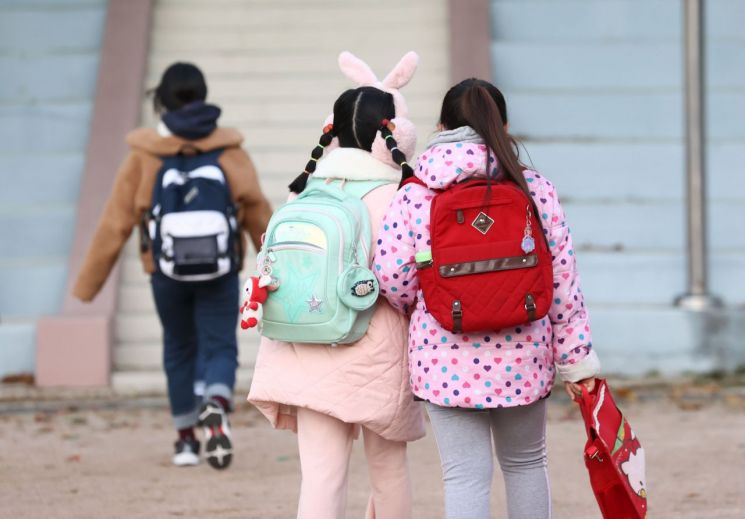
The education support office will support the victim student to attend classes at a school near the protective facility instead of the school they were enrolled in, to guarantee their right to education.
Even if no signs of abuse are detected, if the student is in crisis due to psychological, emotional, or economic difficulties, the local government and education support office will coordinate care, psychological counseling, and financial support.
Additionally, the Ministry of Education plans to revise the "Guidebook on Child Abuse Prevention and Response Education" to mandate face-to-face observation of students with long-term unexcused absences who have a history of repeated absences for various reasons such as off-campus experiential learning or illness, regardless of whether their whereabouts are confirmed.
Furthermore, information on children who have completed child abuse case management after receiving treatment or counseling from local governments will be linked with long-term unexcused absence data for management purposes. If a child who has completed abuse case management continues to have long-term unexcused absences, they will be included in the joint inspection target group for high-risk child abuse cases by related agencies.
© The Asia Business Daily(www.asiae.co.kr). All rights reserved.
![Clutching a Stolen Dior Bag, Saying "I Hate Being Poor but Real"... The Grotesque Con of a "Human Knockoff" [Slate]](https://cwcontent.asiae.co.kr/asiaresize/183/2026021902243444107_1771435474.jpg)
















