Analysis of Research Papers on Causes of School Violence
Exposure to Domestic Violence and Expression of Violence Have Major Impact
Frustration from Intense Exam Competition and Weak Punishments Also Pointed Out
The Netflix drama 'The Glory' Season 2 has served as an opportunity to socially rekindle the issue of 'school violence (hakpok).' In particular, the question of 'why school violence continues to occur without end' has become a social inquiry not only among drama viewers but also among the entire nation.
According to the 2022 'School Violence Survey (Full Survey)' conducted by the Ministry of Education targeting 3.21 million students from 4th grade in elementary school to 3rd grade in high school, the perpetrators answered the reason for committing school violence as "just because" ('without any special reason or as a joke,' multiple responses, 34.5%). This is consistent with the results from 2019 to 2021.
Individual aggressiveness, lack of empathy, and peer conformity issues are cited
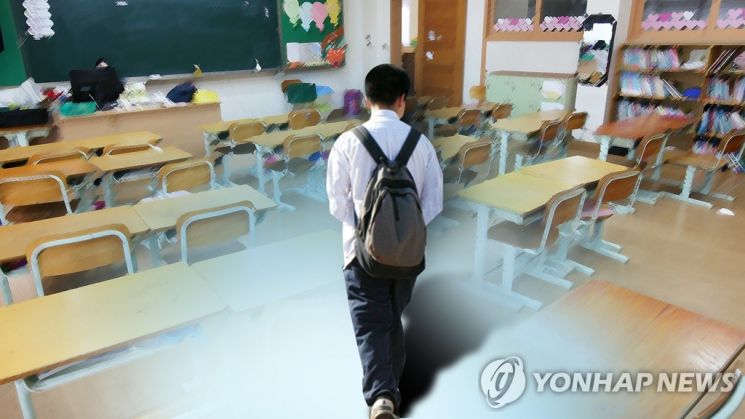
Looking into the causes of school violence, first, there are 'individual internal factors.'
Professor Hong Jong-gwan's 2012 paper explains that "adolescence is a time when mental and physical imbalance occurs." The adolescent's body is close to that of an adult, but the roles of an adult are not yet assigned. However, behaviors acceptable in childhood are no longer tolerated. Because of this, adolescents fall into a state of confusion.
The paper explains, "If this emotional instability is not resolved, adolescents may commit deviant acts or school violence as a means to satisfy their desires."
Professor Noh Seong-ho of Jeonju University pointed out in his 2004 paper that "the most common traits among school violence perpetrators are impulsiveness and aggressiveness."
As a result, perpetrators tend to exhibit self-centered behavior without considering social order or norms. They are also known to lack the ability to control anger or restrain their temper.
Additionally, perpetrator adolescents are reported to have a deficiency in empathy, making them insensitive to others' difficulties or pain.
According to a 2017 study by Professor Kim Bung-nyeon and his research team at Seoul National University, "When empathy is lacking, the ability to understand others' thoughts and recognize situations diminishes, leading to inappropriate attitudes and a higher likelihood of being driven by impulsiveness." The research team explained, "They also tend to lack the ability to care for others or feel sympathy for the weak, showing tendencies to dominate and abuse others."

Moreover, adolescence is a period when peer groups are very important.
According to Asch's 1952 conformity experiment, people tend to succumb to the influence of the majority group and conform to the group's opinions.
Even if peers are perpetrators of school violence, adolescents conform by condoning or actively participating in the perpetrators' actions to align with their peer group.
Combining the above experiment with the 2019 research by Song Yeol-mae at the National Center for Mental Health, adolescents gain self-esteem and a sense of belonging by conforming to peer groups. Protecting their own safety and deriving pleasure from exploitation or others' pain makes conformity to the perpetrator group beneficial from the adolescent's perspective.
Violent home environment and communication breakdown are also important causes

The family is the most fundamental and important community where adolescents' personality and emotions are formed. Many studies on school violence point to inappropriate factors within the family as risk factors for school violence.
In particular, many studies regard exposure to domestic violence as the strongest risk factor, which can also be explained by the social psychology modeling theory.
According to Bandura's 'Bobo doll experiment' conducted in the 1960s, children who observe aggressive behavior models exhibit more violent behavior, demonstrating the effect of imitation learning (modeling).
In 2008, Professor Kim Jae-yeop and his research team at Yonsei University reported, "Homes where child abuse or domestic violence occurs act as dysfunctional grounds that teach adolescents violence, justifying the use of violence in school environments and forming attitudes that accept violence as an effective means of problem-solving," concluding that "this increases the likelihood of school violence perpetration."
Adolescents who have learned violence at home become immersed in the logic of power, believing they must obey the strong and can bully the weak. They go through a process of attacking first before being attacked to prove that they are powerful and important.
The research team states, "The more exposed to violence at home, the higher the likelihood of exerting violence toward peers in the school environment outside the home."
Emotional poverty occurring within the family is also known as a factor in the occurrence of school violence. When communication between parents and children is not smooth, the risk of violence increases.
According to Allwoer's 1993 study, children are more likely to behave aggressively and impulsively when parents adopt authoritarian attitudes or compare them to others inappropriately.
Entrance exam-focused ranking education and widespread violence in mass media
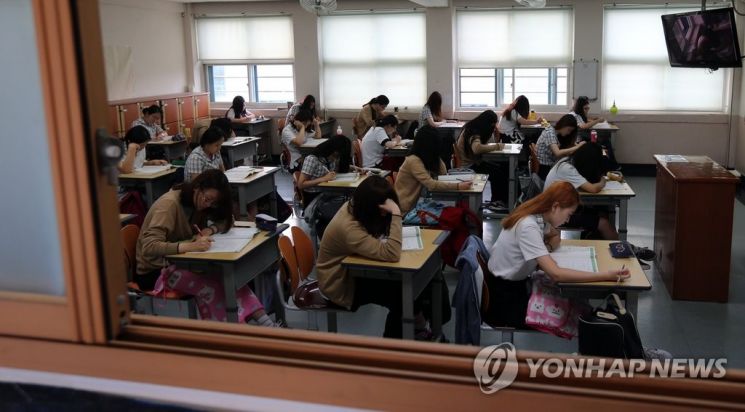
Among social factors, the harmful effects of entrance exam-focused education can be cited.
Professor Hong Jong-gwan's paper explains, "During adolescence, when identity is formed, individuals want to be recognized for their abilities by others, so they are easily hurt or shocked by trivial matters that infringe on their pride," adding, "In the atmosphere of academic competition, failure at school is perceived as failure in social life, causing great frustration and disappointment to adolescents."
In other words, "A social atmosphere that emphasizes only entrance exams deepens adolescents' anger, inferiority complex, and frustration, leading them to choose violence as a way to relieve these feelings."
Lenient punishments act as a factor in the continuation of school violence

The causes of school violence are said to be a complex combination of the above factors. However, this is still insufficient to explain why school violence continues.
In the drama 'The Glory,' the perpetrator character 'Park Yeon-jin' responds to the victim 'Moon Dong-eun' when asked why she committed the violence, saying, "I’m fine, and you’re fine too. It means no one protects you."
According to the 2022 academic journal 'Education and Science Research' published by Ewha Womans University Institute of Education Science, the main cause of school violence perceived by students is "lack of education and guidance for perpetrators (52.5%)." This is based on a survey of 7,808 middle and high school students.
Student respondents recognized the most important measures against school violence as 'strengthening responses to violence at the level of juvenile cases,' 'strengthening prompt responses when school violence is detected,' and 'establishing early intervention systems.'
School violence is not treated seriously in our society. According to the Ministry of Education's school violence status data released on the 3rd, since the introduction of the principal's self-resolution system in the second semester of 2019 until the first semester of 2022, 78,574 cases of school violence were handled by principals. This accounts for 62.6% of all school violence cases.
Schools or education offices often recommend principal-led self-resolution. Also, the measures taken by the school violence committee against perpetrators are mild, such as written apologies or bans on retaliatory acts.
Protection of victims is also inadequate. Among 30,457 cases of school violence in the first semester of 2022, only 94 cases resulted in class transfers.
As students suggest, violence must be addressed with a zero-tolerance principle early on to prevent its spread and vicious cycles.
In fact, according to the U.S. Bureau of Justice Statistics, after strengthening criminal penalties for school violence, the crime rate in schools dropped from 3% in 2019 to 1.1% in 2020. Legal punishment can serve as a means to protect potential victims and prevent the production of perpetrators.
© The Asia Business Daily(www.asiae.co.kr). All rights reserved.
![Clutching a Stolen Dior Bag, Saying "I Hate Being Poor but Real"... The Grotesque Con of a "Human Knockoff" [Slate]](https://cwcontent.asiae.co.kr/asiaresize/183/2026021902243444107_1771435474.jpg)

















