Lee Bok-hyun, Financial Supervisory Service Chief, to Visit Shinhan Bank Next Week, Pressuring for Interest Rate Cuts
Kim So-young, Vice Chair of Financial Services Commission, Checks Bank Profit Boasts
President Yoon Moves Bank Criticism into Action
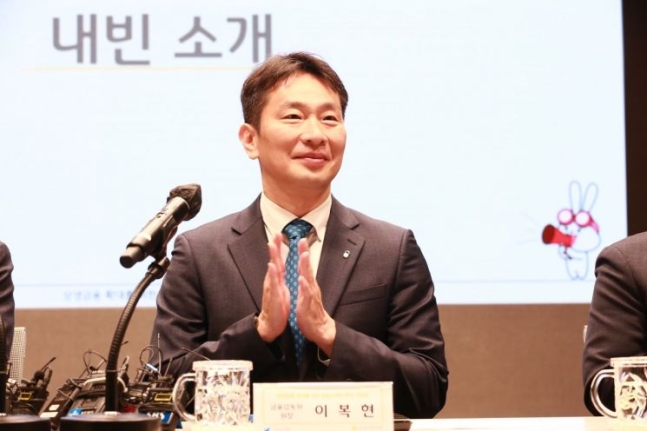
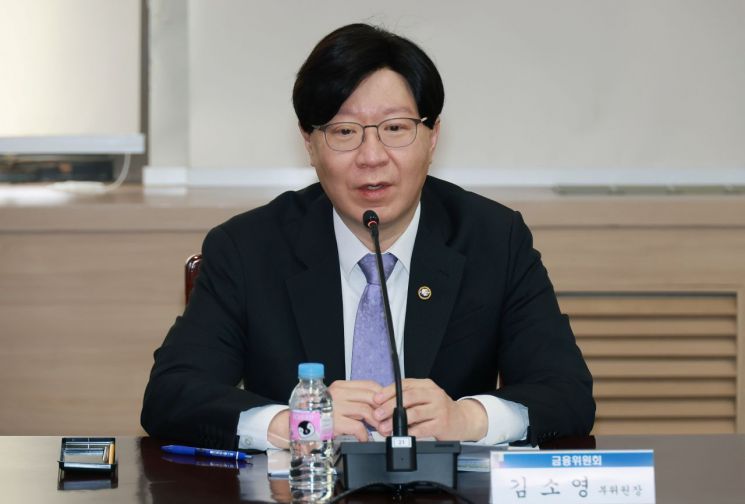
Bank branch visits, pressure to lower interest rates, control of performance bonuses, and bank capital expansion. Financial authorities are pressuring banks on all fronts. Since President Yoon Seok-yeol's 'bank money feast' remark earlier last month, Lee Bok-hyun, the Financial Supervisory Service (FSS) chief considered a close aide to the president, and Kim So-young, the Financial Services Commission (FSC) vice-chairwoman known as the president's 'economic strategist,' have been acting as the two main pillars driving these efforts.
Visit to Shinhan Bank on the 24th, Interest Rate Cut Expected
According to industry sources on the 16th, Lee Bok-hyun, the FSS chief, will visit Shinhan Bank's Namdaemun headquarters on the 24th. This will be his fourth bank visit following Kookmin Bank (on the 9th), Busan Bank (on the 8th), and Hana Bank (on February 23). Shinhan Bank is also highly likely to implement a drastic interest rate cut alongside Lee's visit.
Kookmin Bank announced it would lower interest rates on all household loan products, resulting in a reduction of interest payments by 100 billion KRW. Busan Bank also lowered interest rates on major loan products, and Hana Bank said it would provide a payback equivalent to 1% of the loan balance for customers using the 'Haetsalron15,' a financial product for low-income households.
As Lee emphasized that "this needs to spread across the entire banking sector," Shinhan Bank is preparing to join the wave of interest rate cuts. Woori Bank has yet to set a schedule due to the vacancy in its president position. Among regional banks, Daegu Bank is expected to be visited around April.
Evaluation of Voluntary Retirement Pay at General Meetings, Proposal to Delay Performance Bonus Payments
While Lee is hands-on, Vice-Chairwoman Kim is more institutional. The 'Banking Sector Management, Sales Practices, and Institutional Improvement Task Force (TF)' within the FSC, led by Kim, mentioned at a press briefing on the 16th that voluntary retirement pay from banks could be evaluated at shareholders' meetings. They also proposed delaying the timing of performance bonus payments to evaluate not only short-term but also long-term performance. Another idea discussed was giving performance bonuses in stocks or stock options instead of cash.
Taking the Silicon Valley Bank (SVB) collapse as a cautionary example, they announced plans to strengthen regulations to enhance banks' loss absorption capacity. One measure is to introduce 'countercyclical capital buffers' to banks. This system requires banks to accumulate additional capital during credit expansion periods to restrain credit growth and allows the use of this capital during credit crunches.
They also plan to implement a 'stress buffer capital system' for each bank. Until now, there was no legal basis to impose supervisory measures requiring additional capital reserves on individual banks even if stress test results were inadequate. Going forward, referencing overseas cases, banks will be required to accumulate additional capital based on their individual stress test results.
Ultimately, financial authorities appear to be swiftly following President Yoon's statement at the chief secretaries' meeting on the 12th of last month: "The public suffers greatly from high bank interest rates. Since banks have a public utility nature, their profits should be returned as 'win-win finance' benefits to vulnerable citizens, self-employed individuals, and small business owners. It is appropriate for banks to use their profits to build strong reserves in preparation for future financial market instability."
© The Asia Business Daily(www.asiae.co.kr). All rights reserved.
![Clutching a Stolen Dior Bag, Saying "I Hate Being Poor but Real"... The Grotesque Con of a "Human Knockoff" [Slate]](https://cwcontent.asiae.co.kr/asiaresize/183/2026021902243444107_1771435474.jpg)
















