Drawing the Line on "No Taxpayer Money Used" Despite Full Deposit Protection
Can the government's full repayment of deposits in bankrupt commercial banks to protect depositors be considered a bailout? Since the collapse of Silicon Valley Bank (SVB) in the United States, there has been intense debate in U.S. political circles over whether the Biden administration's depositor protection measures constitute a "bailout" or not.
The New York Times (NYT) reported on the 14th (local time) that President Biden's refusal to use the term "bailout" while swiftly responding to the SVB collapse stems from the memories of the 2008 global financial crisis.
In a national address the previous day, President Biden repeatedly emphasized that "taxpayers will not bear any losses" from the SVB support, yet he avoided using the word bailout. The NYT analyzed this as an effort to avoid repeating the painful times haunted by government intervention following the collapse of Lehman Brothers, which triggered the Great Recession.
The Barack Obama administration, launched in 2009, poured massive bailouts to resolve the global financial crisis that occurred during the George W. Bush administration, successfully preventing a systemic collapse of the financial system. However, it had to endure severe backlash. Banks were criticized for moral hazard among executives, as public funds were injected to keep them alive under the notion of "too big to fail."
Although the "fat cats" (a term used to describe greedy Wall Street bankers during the 2008 financial crisis) were bailed out by the government, ordinary citizens lost jobs, homes, and savings due to the ripple effects of the financial crisis, sparking widespread public anger across the U.S. The "Occupy Wall Street" protests that began in New York quickly spread nationwide, and even some key supporters of the Obama administration turned their backs.
Within the opposition Republican base, dissatisfaction with bailouts fueled the rise of the Tea Party, an extreme conservative voter group, and triggered the replacement of conservative politicians, causing collateral damage throughout Washington.
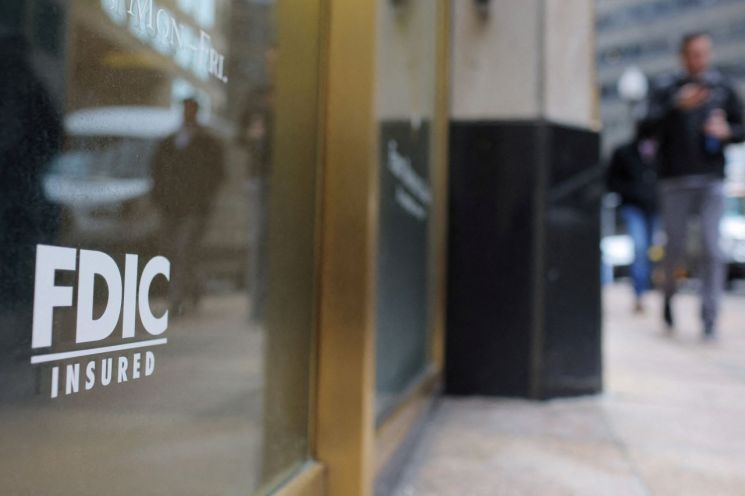
The NYT stated, "Bailouts fostered distrust of banks and corporations and solidified the belief that ordinary citizens must pay the price for the mistakes of the so-called elites," adding, "Populism has firmly taken root since 2008."
As vice president during the Obama administration, President Biden witnessed this anger among ordinary citizens up close 15 years ago and seems to remember it vividly, according to the NYT.
For this reason, he repeatedly emphasized that losses incurred in guaranteeing full deposits at SVB and New York's Signature Bank would not be covered by taxpayers, while also avoiding mentioning the word "bailout" itself.
President Biden also highlighted accountability by stating, "No one in my administration is above the law," drawing attention to the responsibility of SVB's management.
Robert Gibbs, the first White House press secretary during the Obama presidency, said, "President Biden's emphasis on holding bank executives accountable and ensuring that no taxpayer money is used to rescue banks is the right judgment and an important lesson learned 15 years ago."
However, within the Republican camp, Biden's measures have been labeled a bailout and attacked. They argue that Biden's bailout will fuel inflation and exacerbate economic turmoil.
Former U.N. Ambassador Nikki Haley, who has declared her candidacy for president, stated in a press release, "President Biden pretends it’s not a bailout, but in reality, it is," criticizing that "sound bank depositors must support SVB’s poor management with their taxes."
© The Asia Business Daily(www.asiae.co.kr). All rights reserved.
![Clutching a Stolen Dior Bag, Saying "I Hate Being Poor but Real"... The Grotesque Con of a "Human Knockoff" [Slate]](https://cwcontent.asiae.co.kr/asiaresize/183/2026021902243444107_1771435474.jpg)
















