Internal Control Failure - Significant Impact of Regulatory Evasion
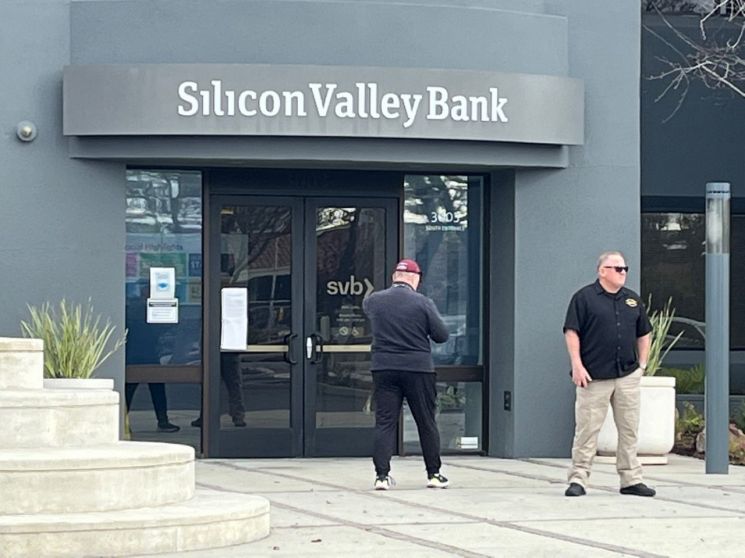
The global financial market is shaking due to the bankruptcy of Silicon Valley Bank (SVB), which ranks around 16th in the United States. The sudden bankruptcy is attributed to the rapid rise in benchmark interest rates and an 'all-in' asset management strategy, with fundamental causes including the management's moral hazard and regulatory authorities exceeding their regulatory scope.
The financial sector sees significant implications of this incident for South Korea. Discussions about new players to ease the oligopoly of major banks are active, but there is concern that such moves could undermine the 'financial stability' that has been strengthened since the global financial crisis.
According to NICE Credit Rating on the 15th, SVB's total assets amounted to $209 billion, accounting for 0.95% of total assets of U.S. commercial banks. Ranked around 16th nationwide, it is considered a 'mid-sized' bank and is the second bank to fail after Washington Mutual (a savings bank) during the global financial crisis.
The formula 'interest rate hike = increased interest income' did not apply due to the bank's characteristics. SVB functioned as a specialized bank primarily serving investment companies related to the technology industry and technology startup companies. SVB operated by investing deposits collected from these clients into safe assets such as U.S. Treasury bonds. However, due to an unexpected interest rate rally last year, it suffered significant losses and was unable to return money to depositors.
However, fundamentally, overseas major media analyses point out that the moral hazard of small and medium-sized bank management, regulatory evasion, and the resulting collapse of internal control systems also had considerable influence.
Jason Furman, former chairman of the U.S. Council of Economic Advisers, recently wrote in Fortune magazine that the root cause of this incident is the 'regulatory imbalance' caused by small and medium-sized U.S. banks, including SVB, evading the financial regulatory law 'Dodd-Frank Act' through lobbying.
The Dodd-Frank Act is a comprehensive financial regulatory law enacted in 2010 following the global financial crisis. It includes strengthening regulations on important financial companies, restructuring financial supervisory agencies, improving resolution procedures for important financial companies, and enhancing supervision of financial holding companies.
In particular, the law classifies institutions with assets over $50 billion as 'systemically important financial institutions (SIFI)' and applies 'enhanced prudential standards (EPS)' such as stress tests, integrated risk management, and liquidity requirements under the supervision of banks and regulatory authorities.
However, during the Trump administration, it is pointed out that management of small and medium-sized banks, including SVB, lobbied to raise the SIFI threshold to banks with assets over $250 billion, thus escaping regulatory oversight. Greg Becker, SVB CEO, testified before the U.S. Senate Banking Committee in 2015, stating, “SVB, like other small and medium-sized banks, is not related to systemic risk,” and that “applying the Dodd-Frank Act, designed for mega bank holding companies, is an enormous burden.”
Jason Furman argued, “Small banks escaped (regulation) too easily,” and insisted, “Existing regulations should be strengthened to cover small banks as well as Wall Street giants.”
Internal controls were also at a failing level. According to a report by The Wall Street Journal (WSJ) on the 13th (local time), SVB left the risk officer position vacant from April last year until January this year. During this period, CEO Greg Becker canceled interest rate hedges in the form of interest rate swaps while investing $14 billion in bonds last year. Despite the rapidly rising interest rates, the bank bet on rate cuts and did not hedge risks at all.
The financial sector believes SVB's case has significant implications for South Korea as well. Discussions are underway, led by financial authorities, to license small specialized banks such as small licenses (license segmentation) and challenger banks to ease the oligopoly centered on the five major banks. Previously, the authorities cited SVB as an example of a small specialized bank during the task force (TF) meetings on banking management, business practices, and system improvements.
In fact, analyses at the TF meetings seemed to foresee the SVB incident. Participants pointed out that “banks focusing only on specific loan sectors require a higher level of capital adequacy because it is difficult to absorb asset quality shocks in those sectors through loans in other sectors,” and also noted that “there is a possibility of insufficient internal control systems and infrastructure for compliance with financial regulations,” raising concerns about soundness and consumer protection.
A financial industry official said, “Ironically, our banking sector, which has a high loan-to-deposit ratio and focuses on traditional 'interest business,' is relatively far from the SVB incident,” adding, “While I agree with the argument that new players or deregulation are necessary for competition and innovation, we must not forget that bank soundness has been emphasized worldwide since the global financial crisis.”
© The Asia Business Daily(www.asiae.co.kr). All rights reserved.
![Clutching a Stolen Dior Bag, Saying "I Hate Being Poor but Real"... The Grotesque Con of a "Human Knockoff" [Slate]](https://cwcontent.asiae.co.kr/asiaresize/183/2026021902243444107_1771435474.jpg)
















