Development of 'Anti-Drone' System Against North Korean Drones and Others
Hanwha Systems has successfully demonstrated an 'anti-drone' system that detects, tracks, and captures illegal drones similar to North Korean unmanned aerial vehicles (UAVs).
On the 13th, Hanwha Systems announced that from the 2nd over an eight-day period, it successfully tested the anti-drone system that captures and neutralizes small UAVs at the Hwaseong drone-exclusive flight test site and the Army Infantry School Jangseong Comprehensive Training Ground.
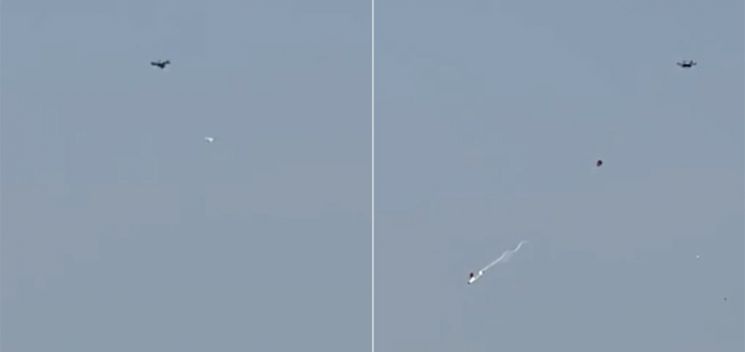
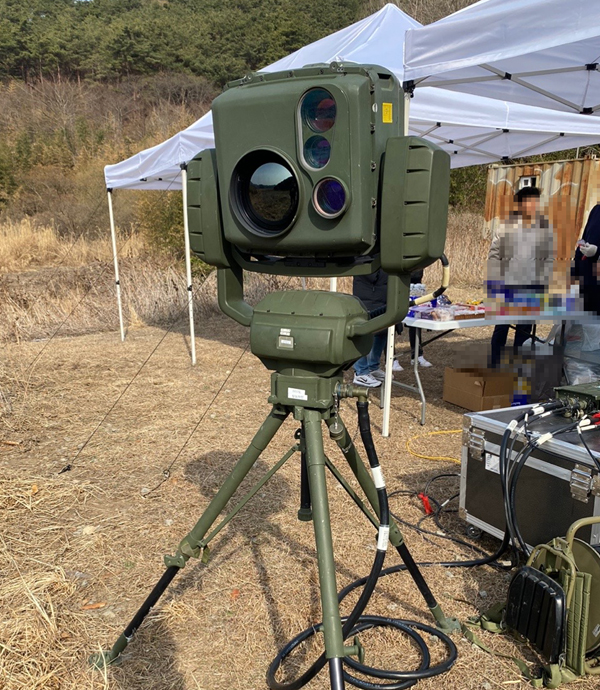
Hanwha Systems detected a fixed-wing UAV with a radar cross-section (RCS) of 0.03㎡ from 3 km away and successfully captured UAVs flying at altitudes between 300 and 800 meters using the drone defense system of Fortem Technologies, a U.S. company in which thermal imaging equipment maker Hanwha Systems and Hanwha Aerospace invested last month. A fixed-wing aircraft refers to a flying vehicle with wings fixed to the fuselage.
The threat drone used in the demonstration had a wingspan of about 2 meters, similar in size to the North Korean UAV that intruded into South Korean airspace last December. The drone defense system recorded a capture rate of over 90% while moving at a maximum speed of 90 km/h on site.
The 'anti-drone' system is divided into 'hard kill,' which directly destroys or captures drones, and 'soft kill,' which disables drones through electronic jamming or paralysis. Shooting down drones appearing over urban areas can cause civilian damage due to debris or shrapnel, and electronic interference may affect the safety of civilian aircraft using GPS and nearby electronic devices, so caution is required.
To prepare for safety accidents in major facilities and densely populated areas, Hanwha Aerospace invested in Fortem Technologies, which possesses a 'net capture-type' drone defense system (C-UAS) that is highly stable and capable of recovering target drones intact. Hanwha Systems integrates this with its own electronic-optical (EO) and infrared (IR) drone-specific sensor technology for unified operation.
Hanwha Systems plans to link and apply cutting-edge active electronically scanned array (AESA) radar technology, which enhances target tracking accuracy and detection range, to expand the scope of the 'integrated drone surveillance and defense system.' AESA is an advanced radar capable of performing various missions such as detecting and tracking air and ground targets, covering wide areas, multitasking, and engaging multiple targets simultaneously.
Seongcheol Uh, CEO of Hanwha Systems, stated, "Small UAVs with extremely low radar reflectivity and heat emissions are as difficult to detect as stealth aircraft flying at ultra-low speeds and low altitudes," adding, "By combining Hanwha Systems' world-class multifunction radar with the world's best anti-drone technology, we will contribute to strengthening national defense capabilities against UAV intrusions."
© The Asia Business Daily(www.asiae.co.kr). All rights reserved.
![Clutching a Stolen Dior Bag, Saying "I Hate Being Poor but Real"... The Grotesque Con of a "Human Knockoff" [Slate]](https://cwcontent.asiae.co.kr/asiaresize/183/2026021902243444107_1771435474.jpg)
















