Gauge Movements of Western Stock Markets Including New York
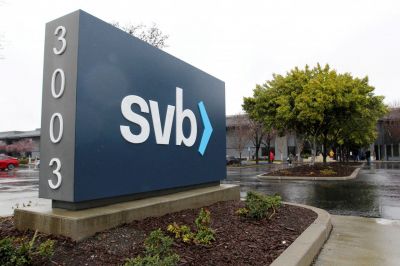
On the 12th (local time), the first stock market session after the bankruptcy decision of Silicon Valley Bank (SVB), the 'lifeline' of American startups, the Israeli stock market plunged by over 3%. Just two days after SVB fell into a liquidity crisis due to a bank run and declared bankruptcy, the global financial market was shaken, raising concerns that this could ignite the spark for a financial crisis.
On that day, at the Tel Aviv Stock Exchange (TASE), Israel's benchmark TA-125 index fell 3.31%, and the T-35 index, composed of the top 35 companies by market capitalization, dropped 3.10%. The stock index of the five major banks fell 4.01%, and the insurance and other financial services sector index plunged 4.23%, with banking and financial stocks leading the decline.
The Israeli stock market, which operates from Sunday to Thursday, opens ahead of Western markets such as Europe and the United States, where the trading week begins on Monday, allowing it to gauge market movements following SVB's bankruptcy.
In the market, concerns are growing over a 'Black Monday' shock, where stock prices plummet on the first trading day following the sudden bankruptcy of a bank with total assets amounting to $209 billion (277 trillion KRW), potentially triggering a chain reaction of shocks.
With ongoing financial tightening, there is caution that the crisis could spread globally, similar to the 2008 global financial crisis. SVB's bankruptcy is the second-largest bank failure in history since Washington Mutual Bank in 2008.
However, unlike the 2008 global financial crisis triggered by the collapse of the giant financial group Lehman Brothers, one of the four major US investment banks, due to bad mortgage-backed securities (CDOs), this SVB incident is expected to remain a sudden crisis caused by simple investment losses at a bank specialized in startups.
Janet Yellen, US Treasury Secretary, stated that there would be no federal government intervention related to the SVB bankruptcy. Appearing on CBS that day, Yellen said, "During the financial crisis 15 years ago, large bank investors and owners were bailed out," adding, "Since then, several reforms have been implemented, meaning there will be no more bailouts."
Yair Abidan, Director of Banking Supervision at the Bank of Israel, said, "We are carefully monitoring the aftermath of SVB's bankruptcy, assessing immediate impacts and potential future repercussions," and added, "The government has formed a joint team of ministries to discuss response measures."
The information technology (IT) sector is a major driver of the Israeli economy and has close ties with Silicon Valley. For this reason, SVB has a presence in Israel, and a significant number of Israeli startups hold accounts with SVB.
The Israeli Securities Authority has notified listed companies to immediately disclose any material changes that could affect stock prices, anticipating potential impacts from SVB's bankruptcy.
Israeli Prime Minister Benjamin Netanyahu said, "I have discussed the SVB crisis with the finance and economy ministers and the central bank governor, and we will see if there are necessary measures to support domestic companies facing liquidity difficulties due to this incident." He added, "We have a duty to protect companies operating and existing in Israel and their employees."
© The Asia Business Daily(www.asiae.co.kr). All rights reserved.
![Clutching a Stolen Dior Bag, Saying "I Hate Being Poor but Real"... The Grotesque Con of a "Human Knockoff" [Slate]](https://cwcontent.asiae.co.kr/asiaresize/183/2026021902243444107_1771435474.jpg)















