A study has been published applying an anti-cancer immunotherapy using interleukin (IL)-7 for the first time to patients with glioblastoma, known as the "worst cancer." IL-7 is an immune regulatory factor that promotes the proliferation of lymphocytes, the most important immune cells that attack cancer.
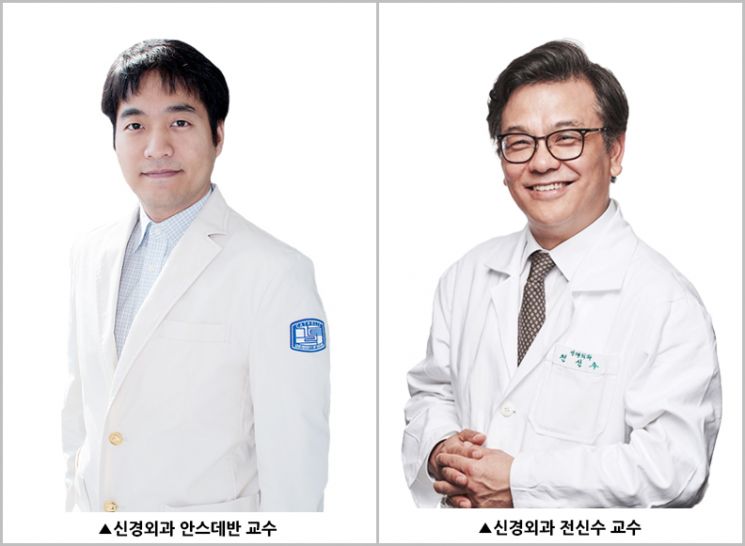
The neurosurgery team led by Professors An Seubang and Jeon Sinsu at the Catholic University Seoul St. Mary's Hospital announced on the 9th that they published the results of treating recurrent glioblastoma patients with a genetically engineered IL-7 anti-cancer immunotherapy (rhIL-7-hyFC, 'GX-17') that enables long-term survival in the body in an international academic journal.
Glioblastoma is the most common primary malignant brain tumor, and even with standard treatments including surgery, chemotherapy, and radiation therapy, the average survival rate is less than two years, making it a brain cancer with a poor prognosis. Most cases recur, requiring additional surgery or chemotherapy, but treatment outcomes are generally poor.
Currently, lymphopenia in cancer patients is known to be associated with poor prognosis, and recovering from lymphopenia is emerging as a new form of anti-cancer immunotherapy. Accordingly, anti-cancer immunotherapy using IL-7 has recently been actively researched in various cancer types.
The research team conducted the study on a total of 18 patients. Ten patients received rhIL-7-hyFC together with the oral chemotherapy drug temozolomide, five patients received rhIL-7-hyFC with the chemotherapy drug bevacizumab, one patient received rhIL-7-hyFC with PCV chemotherapy, and two patients received rhIL-7-hyFC alone.
Within four weeks of administration, patients’ lymphocyte counts increased from an average of 1,131 cells (range 330?2,989) to 4,356 cells (range 661?22,661), and lymphocyte counts remained high during repeated administration. The overall survival period after recurrence diagnosis was 387 days, and the disease-free survival period was 231 days.
Anti-cancer immunotherapy works by lymphocytes, immune cells, recognizing cancer cells and attacking them as part of a normal immune process to treat cancer. It is effective for patients who have difficulty with treatment due to chemotherapy resistance when the same treatment is reused after cancer recurrence. Professor An Seubang said, "This study is the first clinical trial using IL-7 in patients with recurrent glioblastoma, confirming that lymphocytes significantly increased without notable toxicity when combined with various chemotherapy drugs," adding, "We will examine survival improvement through large-scale clinical trials in the future."
The results of this study were published in the international academic journal Cancer Medicine.
© The Asia Business Daily(www.asiae.co.kr). All rights reserved.

















