‘Nasingeol Hangul Letter’ Estimated Written in Late 15th Century
Hangul Quickly Spread to Remote Areas, Used by Men Too
“Terms of Address and Honorifics Reveal Language Life of the Time”
The oldest existing Korean letter, the ‘Nashin-geol Korean Letter,’ will be managed as a nationally designated cultural property. On the 9th, the Cultural Heritage Administration announced that it has been designated as a treasure along with the ‘Seoul Cheongryongsa Birojanabul Samsingwaebuldo’ and the ‘Changnyeong Gwallyongsa Wooden Jizangbosal Samjon Statue and the Ten Kings Statue Set.’
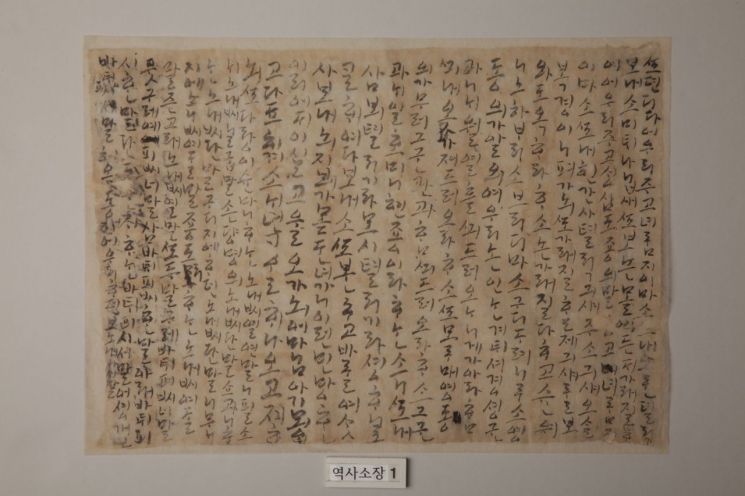
The ‘Nashin-geol Korean Letter’ consists of two letters written in Hangul by Nashin-geol (1461?1524), who served as a military officer during the Joseon Dynasty, to his wife Shin Changmaeng. It was discovered in 2011 at Shin Changmaeng’s tomb in Yuseong-gu, Daejeon. It was found folded multiple times beside the head of the deceased. Other artifacts such as a jeogori (jacket) and pants were also excavated together.
The main content of the letters expresses longing and concern for his wife. They also include requests to look after minor household matters and to send a cheollik (official military uniform) and other items. At the time of writing, Nashin-geol was serving as a low-ranking military officer in Hamgyeong Province. The letters are estimated to date from the late 15th century, as they mention ‘Yeongando (永安道),’ an old place name in Hamgyeong Province used between 1470 and 1498. Nashin-geol’s military service in Hamgyeong Province also corresponds to the 1490s.
The ‘Nashin-geol Korean Letter’ is regarded as an important document showing how Hangul was used in daily life after the promulgation of Hunminjeongeum in 1446. It demonstrates that Hangul was widely disseminated even in frontier regions just 45 years after its official announcement. It also suggests that not only women but men were familiar with using Hangul.
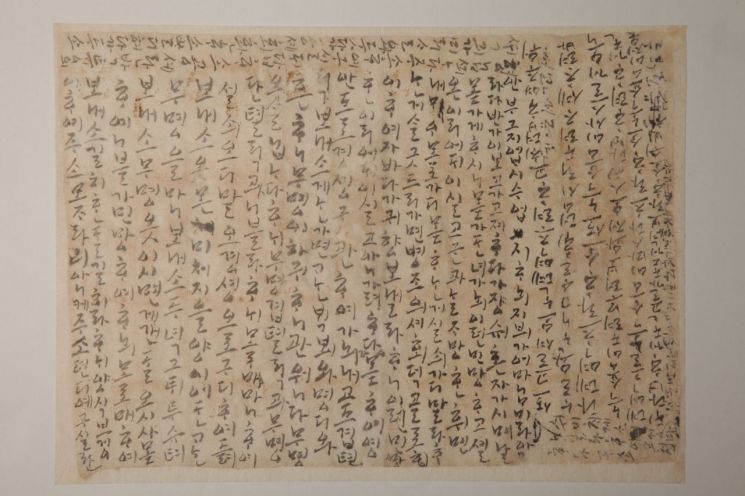
The fact that it was written about 530 years ago is another invaluable aspect. Until now, the oldest Korean letter was considered to be the ‘Clothing and Simple Letter of the Suncheon Kim Clan Excavated in Cheongju,’ held by the Chungbuk National University Museum. This letter, designated as a National Folk Cultural Property, was written in the 16th century. The ‘Nashin-geol Korean Letter’ predates this. The Cultural Heritage Administration explained, “Among the Korean letters discovered so far, this is the oldest material,” adding, “It reveals 15th-century language life, including forms of address and honorifics used toward the recipient.”
The ‘Seoul Cheongryongsa Birojanabul Samsingwaebuldo’ is a large Buddhist painting reflecting the style of the 18th to 19th centuries. It was commissioned in 1806 by Court Lady Choi to pray for the longevity of King Sunjo and Queen Sunwon. Five people, including the monk Mingwan, who was part of a group of painters responsible for Buddhist paintings in the Seoul and Gyeonggi regions, worked on it. The Cultural Heritage Administration stated, “It is the first work reflecting the new gwaebul style that emerged in the Seoul and Gyeonggi regions in the early 19th century,” and added, “It has great artistic and academic significance as it reflects both new and old styles during a period of historical transition.”
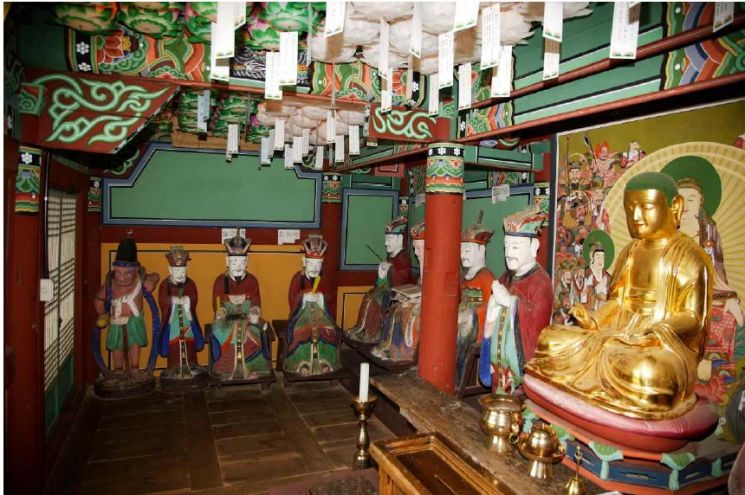
The ‘Changnyeong Gwallyongsa Wooden Jizangbosal Samjon Statue and the Ten Kings Statue Set’ are Buddhist statues enshrined in the Myeongbujeon Hall of Gwallyongsa Temple, completed in 1652 by nine monks specializing in Buddhist sculpture. The seventeen statues were made at the peak of Monk Eung-hye’s career, who was regarded as the best sculptor among those working at the time. They are highly valued for their role in establishing the composition and unique style of the Myeongbujeon statues during the late Joseon period.
© The Asia Business Daily(www.asiae.co.kr). All rights reserved.



















