Support of 10 Million KRW for Haengbok Silcheon Operating Expenses
Lim Jong-sik, Superintendent of Education, "Spreading the Culture of Happiness"
On the 8th, the Gyeongbuk Office of Education announced that it will expand the ‘Warm Happiness Education’ program this year to enhance students' positive mindset and support their experience of happiness. Applications for the contest will be accepted until the 17th.
‘Warm Happiness Education’ is a program launched in 2022 to cultivate positive perceptions in daily life through experiences of happiness and to teach and learn happiness in the classroom through concrete and practical happiness lessons.
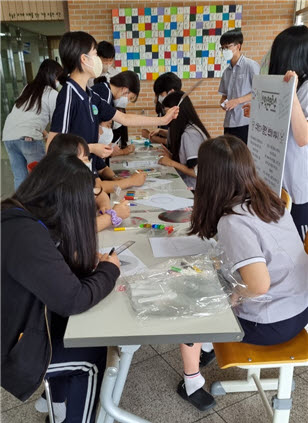
In its first year, 2022, the plan was to operate 1,000 Happiness Practice Classes and 20 Happiness Education Teacher Learning Communities, but thanks to the enthusiastic response from schools, the numbers increased to 1,683 Happiness Practice Classes and 40 Teacher Learning Communities.
Reflecting this active participation from the field, in 2023, the program will expand to 1,800 ‘Happiness Practice Classes’ and 50 ‘Happiness Education Learning Communities,’ and will newly establish and operate 200 ‘Warm Happiness Schools.’
‘Happiness Practice Classes’ can conduct happiness lessons using happiness textbooks, practice happiness education linked to the curriculum and school-specific projects, and run happiness class projects created directly by class members. Each class will receive 1 million KRW in operating expenses. In particular, the program encourages students to take the lead by setting the theme of the Happiness Practice Class themselves through class meetings and other activities.
‘Happiness Education Teacher Learning Communities’ operate based on voluntary participation of teachers, focusing on discovering cases of happiness lessons and researching the role of teachers in creating a happy school culture. Each team receives 2 million KRW in operating expenses.
‘Warm Happiness Schools,’ a newly established category this year, will operate on themes that allow schools to practice happiness at the school level, such as school-level happiness busking, school autonomy activities involving participation and communication, and educational activities involving both students and parents. Each school will receive approximately 10 million KRW in operating expenses.
Lim Jong-sik, Superintendent of Gyeongbuk Office of Education, said, “It is very important that teachers and students feel happiness themselves and grow through the process of sharing and experiencing happiness.” He added, “We will actively support the spread of a school culture where both teachers and students are happy.”
© The Asia Business Daily(www.asiae.co.kr). All rights reserved.
![Clutching a Stolen Dior Bag, Saying "I Hate Being Poor but Real"... The Grotesque Con of a "Human Knockoff" [Slate]](https://cwcontent.asiae.co.kr/asiaresize/183/2026021902243444107_1771435474.jpg)















