Lee Chang-yong, Governor of the Bank of Korea, "Possibility of a Soft Landing in Real Estate Shown"
Last Year, Nationwide Housing Sale Prices Fell by 1.8%
Early This Year, the Decline in House Prices Slowed
Market opinions are divided regarding the remarks made by Lee Chang-yong, Governor of the Bank of Korea, who forecast a soft landing for the real estate market. On one hand, a cautious optimism is emerging, noting signs of bottoming out in major areas such as Seoul and Gyeonggi. On the other hand, some voices warn against premature optimism, pointing out that the overall market still shows a mixed trend with both positive and negative factors. Experts particularly highlight that the increasingly severe reversed jeonse crisis could act as a significant downside risk factor for the sales market.
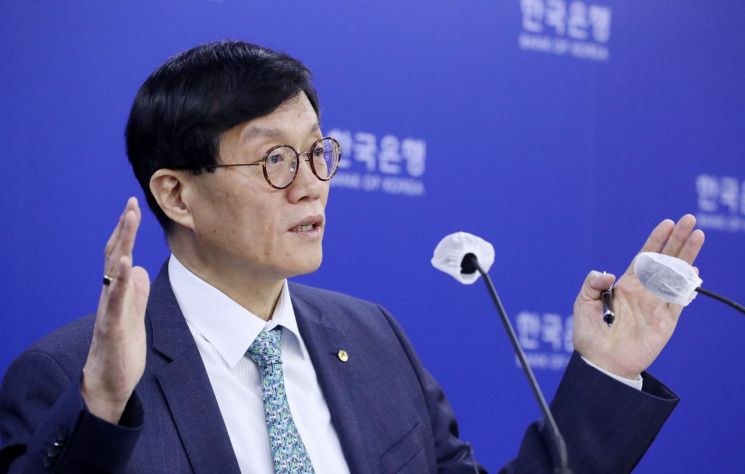
At a press club discussion on the 7th, Governor Lee said, "House prices rose by 40% over the past two years but fell by 19-20% last year, entering a correction phase. The Bank of Korea is monitoring whether the rapid decline in house prices might affect financial stability through real estate project financing (PF) and jeonse issues," adding, "In January and February this year, the pace of house price decline has slowed, increasing the likelihood of a soft landing from a financial stability perspective."
According to the ‘KB Real Estate Report’ by KB Financial Group Management Research Institute, nationwide housing sales prices fell by 1.8% in 2022. This marks the first annual decline in housing sales prices in 10 years since 2012. Housing sales transaction volume also plunged by about 50% last year. Jeonse prices dropped by 2.5% nationwide and 4.0% in the metropolitan area last year.
As warnings of a hard landing in the real estate market grew louder due to the sharp drop in housing prices, the government implemented regulatory easing on taxes, loans, and subscription systems starting with the January 3rd measures, along with freezing the base interest rate in February. As a result, the decline in Seoul apartment sales prices has slowed for three consecutive weeks. Although Seoul apartment prices have been falling for 40 weeks, the price drop has somewhat eased compared to the end of last year.
Recently, the number of declining transactions has decreased while rising transactions have increased. Analyzing actual transaction data from the Ministry of Land, Infrastructure and Transport, Zigbang found that the proportion of Seoul apartment sales with prices falling more than 5% compared to the previous transaction decreased from 55% in December last year to 30.17% in February, while transactions with price increases of more than 5% rose from 10.36% to 19.95% during the same period.
Yoon Ji-hae, Senior Researcher at Real Estate R114, explained, "The soft landing standard mentioned by Governor Lee refers to a nationwide housing price fluctuation rate within 2%. The slowdown in the pace of price decline since the end of last year and the additional easing of multi-homeowner loan regulations from this month are expected to encourage purchases mainly by real demand groups with relatively sufficient income and assets, which seems to have influenced his remarks."
However, transaction volumes, often seen as a rebound indicator, remain below average levels. The market expects a recovery effect in transaction volume due to comprehensive regulatory easing, but January’s Seoul apartment transaction volume was only 1,417 cases, about one-third of the average. Ham Young-jin, Head of Zigbang Big Data Lab, said, "While some major areas in Seoul and Gyeonggi show signs of bottoming out, Incheon and other provinces continue to experience jeonse price declines and market contraction, making it difficult to say the bottom has been reached, and further adjustments are expected within the year."
There is also analysis that the current increase in transactions is centered on some small- and medium-sized urgent sale properties. Park Won-gap, Senior Real Estate Specialist at KB, said, "Transactions will occur mainly around small- and medium-sized urgent sale properties benefiting from the special Bogeumjari Loan in areas with severe price drops," but added, "Since buying sentiment remains at a low level, even if transactions occur, a V-shaped sharp rebound is unlikely."
Experts particularly view the easing of the reversed jeonse crisis as the key to housing market recovery. Since interest rates, which had been rising continuously, have now entered a predictable range, they are considered more of a constant than a variable. Even if another rate hike occurs, its impact on the market is expected to be limited.
Park explained, "As long as the reversed jeonse crisis that pressures the market continues, the market will go through a process of digesting supply while consolidating rather than hitting a bottom quickly," adding, "The housing market will show signs of recovery only after the reversed jeonse crisis is somewhat alleviated."
© The Asia Business Daily(www.asiae.co.kr). All rights reserved.
![Clutching a Stolen Dior Bag, Saying "I Hate Being Poor but Real"... The Grotesque Con of a "Human Knockoff" [Slate]](https://cwcontent.asiae.co.kr/asiaresize/183/2026021902243444107_1771435474.jpg)











