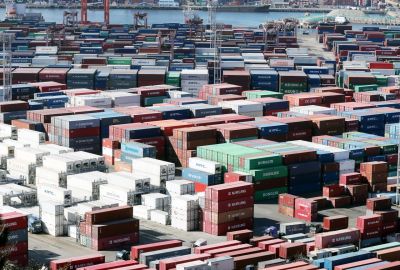
As South Korea's export economy cools down and domestic demand loses momentum, concerns have been raised that the pace of economic growth is rapidly slowing. There is also a forecast that if the unfavorable domestic and international economic conditions continue and a hard landing occurs, it may be difficult to escape the recession until the first half of next year.
On the 5th, Joo Won, head of the Economic Research Office at Hyundai Research Institute, explained in the Economic Weekly report, "Exports of key items such as semiconductors and to the main market, China, have not escaped a severe slump, suggesting that the export recession is likely to be prolonged longer than expected," adding, "Domestic demand, especially in the consumption sector, is rapidly shrinking due to high inflation and interest rates, causing the overall economic growth rate to plummet."
He identified factors that will determine the future direction of the economy, including whether the export economy recovers following growth in the G2 (U.S. and China), whether domestic demand rebounds due to changes in market interest rates, and whether household purchasing power shrinks. Since the U.S. and Chinese economies may perform better than expected, if their economic situations improve, the timing of South Korea’s export recovery could be brought forward.
He also pointed out the importance of the direction of market interest rates, as high interest rates are tightening market liquidity and shrinking the real economy. Joo said, "There is still a possibility of further policy rate hikes, but the market expects a freeze or at most one more increase," adding, "We hope that market interest rates will stabilize slightly in the future, easing the burden on markets and companies."
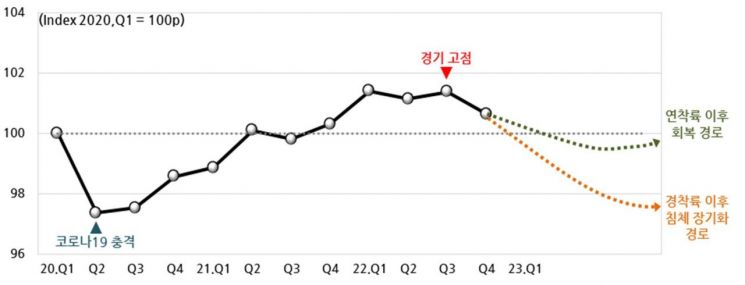
Regarding the economic outlook, he diagnosed that the situation currently stands at a crossroads between a positive (soft landing) and a pessimistic (hard landing) scenario. He warned that if the negative domestic and international conditions continue as they are, the recession following a hard landing could be prolonged. To prevent this, he argued that the focus of economic policy should shift from ‘price stability’ to ‘growth enhancement,’ with fiscal and monetary policies turning toward economic stimulus.
To prevent a decline in household purchasing power, Joo emphasized the need to prepare measures to expand employment creation capacity and to actively market in key export markets. He said, "The central bank should provide clear forward guidance, and financial authorities must strengthen their capabilities to detect localized liquidity crunches in advance and respond immediately."
© The Asia Business Daily(www.asiae.co.kr). All rights reserved.
![Clutching a Stolen Dior Bag, Saying "I Hate Being Poor but Real"... The Grotesque Con of a "Human Knockoff" [Slate]](https://cwcontent.asiae.co.kr/asiaresize/183/2026021902243444107_1771435474.jpg)
















