World Bank Releases Report Covering 190 Countries
"At Least 50 Years Until Full Legal Gender Equality Is Achieved"
A World Bank analysis revealed that the economic opportunities available to Korean women rank 65th out of 190 countries worldwide.
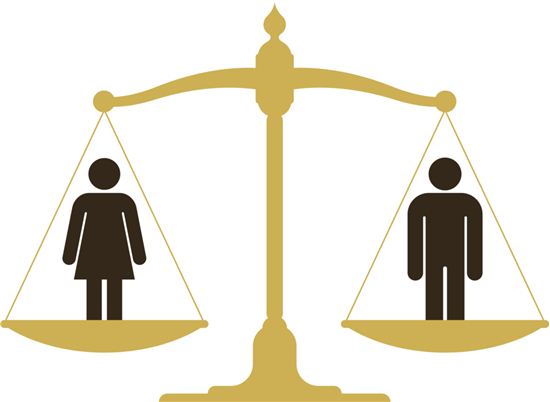
On the 3rd (local time), the World Bank (WB) published the report "Women, Business and the Law 2023" on its website. According to this report, which surveyed 190 countries, South Korea scored 85.0 out of 100 on the "Women, Business and the Law" index, which evaluates laws and regulations affecting women's economic opportunities. The global average among the 190 countries was 77.1, meaning South Korea scored 7.9 points higher than the average.
South Korea received a perfect score of 100 in categories such as "freedom of movement," "employment," "marriage," "assets," and "pensions." It scored 80 points in the "parenthood" category, which examines laws affecting the labor participation of women with children, and 75 points in "entrepreneurship."
 [Image source=Getty Images Bank]
South Korea Scores Only '25 Points' in the Wage Category
However, in the "wages" category, which evaluates laws related to women's pay, South Korea received a significantly lower score of 25 points compared to other categories, causing its overall ranking to drop sharply. Only nine countries scored lower than South Korea in this category: Afghanistan (0 points), Azerbaijan (0 points), Egypt (0 points), Guinea-Bissau (0 points), Kuwait (0 points), Sudan (0 points), Syria (0 points), Ukraine (0 points), and the West Bank and Gaza Strip (0 points).
It was revealed that fewer than 8% of all surveyed countries?only 14 nations?fully guarantee women the same legal economic rights as men. Countries that scored perfect marks in all categories, thereby achieving legal gender equality, included Belgium, Canada, Denmark, France, Germany, Greece, Iceland, Ireland, Latvia, Luxembourg, the Netherlands, Portugal, Spain, and Sweden.
The United States ranked 38th with a score of 91.3, while Japan (78.8 points) and China (78.1 points) ranked 104th and 109th, respectively.
Global Average Increased by Only '0.1 Points' in One Year
The researchers pointed out that although the global average score has increased significantly over the long term, the rate of increase has slowed recently. In fact, the average score, which was 45.8 in 1970, rose by 31.3 points to 77.1 this year over about 50 years, but this year's average score increased by only 0.1 points compared to last year (77.0 points).
Among the 190 surveyed countries, only 18 made improvements to gender-related policies last year, and some countries even saw a decline in their Women, Business and the Law index scores.
Saudi Arabia (71.3 points) saw its score drop after enacting laws restricting women's choice of residence and overseas travel and requiring obedience to their husbands. Afghanistan (31.9 points) experienced a score decline due to the Taliban's restrictions on women's career choices and education.
The WB research team stated, "2.4 billion women of working age worldwide still live under discriminatory legal systems against women," and predicted, "At the current pace of improvement, it will take at least 50 years to achieve full legal gender equality." They added, "In a global economic slowdown, countries need to mobilize their productive capacities to face multiple crises," and advised, "Reforms that enable women to contribute economically as employees and entrepreneurs will make national economies more dynamic and resilient."
© The Asia Business Daily(www.asiae.co.kr). All rights reserved.
![Clutching a Stolen Dior Bag, Saying "I Hate Being Poor but Real"... The Grotesque Con of a "Human Knockoff" [Slate]](https://cwcontent.asiae.co.kr/asiaresize/183/2026021902243444107_1771435474.jpg)














