37 Years After the Nuclear Disaster... First Genetic Research Results
Research on 'Effects of Radiation Exposure on Genetics' Begins in Earnest
The first genetic study on stray dogs living in the exclusion zone following the Chernobyl nuclear power plant accident 37 years ago has been released. Based on this research, it is expected that the genetic effects of radiation exposure can be understood.
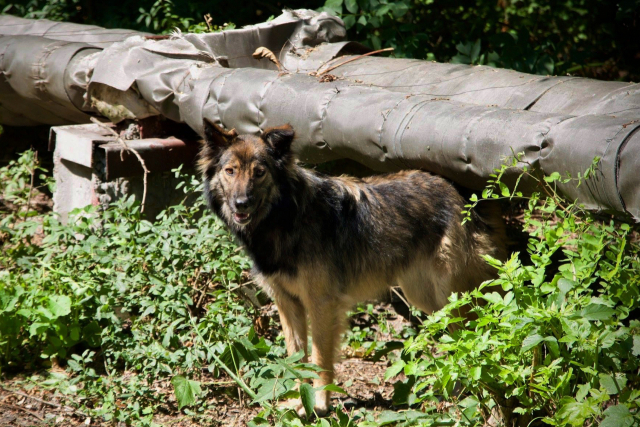
The scientific journal Science Advances published a paper on the 3rd (local time) titled "Dogs of Chernobyl: Demographic insights into populations living within the nuclear exclusion zone." The research team collected blood samples from 302 dogs living in this zone and analyzed their genetic structure.
The dogs of Chernobyl were found to possess genetic characteristics distinct from purebred dogs or other freely breeding populations.
Analysis of kinship revealed that the Chernobyl dogs consisted of a total of 15 family groups. Among these, the largest family was so numerous that it was found across all sample collection sites within the radiation exclusion zone.
The subjects of analysis were dogs from the Chernobyl nuclear power plant site, the accident location, and a city 15 km to the south.
The research team explained, "This is the first study to reveal the characteristics of domesticated species living in Chernobyl," adding that "it is important for genetically studying the effects of long-term low-dose ionizing radiation exposure."
Dr. Elaine Ostrander, corresponding author and co-lead author of the paper from the National Human Genome Research Institute (NHGRI) under the U.S. National Institutes of Health (NIH), told the AP News that this study is a foundational work to answer the key question: "How can they survive for 15 generations in such a harsh environment?"
Co-lead author Professor Timothy Mousseau of the Department of Biological Sciences at the University of South Carolina has conducted field research around the Chernobyl area since the late 1990s and began collecting blood samples from dogs in the region around 2017.
Based on this study, the research team plans to conduct follow-up research analyzing genetic changes due to radiation exposure.
The researchers said, "Although they have become feral, they still enjoy interaction with humans," adding, "especially when there is food."
The Chernobyl nuclear accident occurred on April 26, 1986, at the Chernobyl nuclear power plant in northern Ukraine, which was part of the former Soviet Union, when an explosion and fire caused a massive release of radioactive materials into the surrounding area. The 2,600 km² area around the accident site has been designated as the "Chernobyl Exclusion Zone."
© The Asia Business Daily(www.asiae.co.kr). All rights reserved.
![Clutching a Stolen Dior Bag, Saying "I Hate Being Poor but Real"... The Grotesque Con of a "Human Knockoff" [Slate]](https://cwcontent.asiae.co.kr/asiaresize/183/2026021902243444107_1771435474.jpg)
















