Listening to Rice GAP Challenges and Exploring Activation Measures
Gumi City, Gyeongbuk (Mayor Kim Jang-ho) held a meeting with representatives of the rice GAP cultivation complexes at the Seonsan Branch Office on March 2.
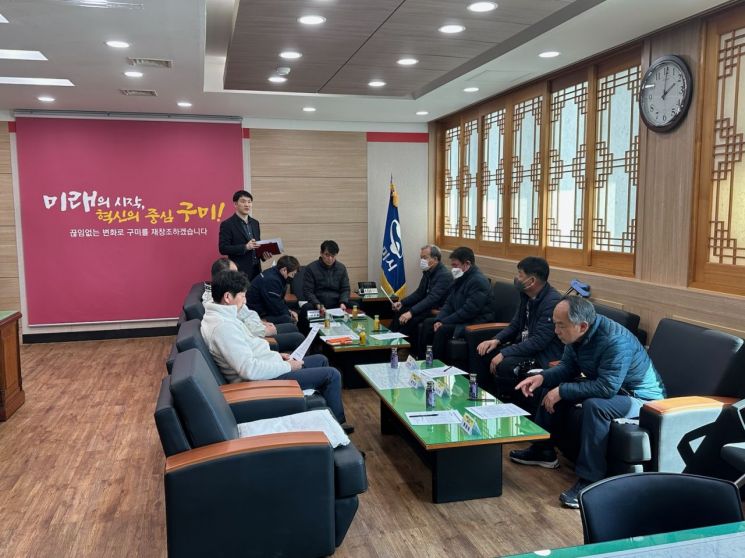
Currently, 562 rice farmers participate in cultivation complexes covering 528 hectares across four towns and townships?Seonsan-eup, Goa-eup, Mueul-myeon, and Dogae-myeon (9 locations). At the meeting, representatives from the nine cultivation complexes gathered to share the city’s ongoing projects and to discuss issues related to the operation of the cultivation complexes as well as ways to revitalize future projects.
The participants agreed on the necessity of expanding the rice GAP complexes but expressed concerns over the increasing tendency to avoid GAP certification due to the inconvenience involved and the market environment where certified rice is sold at prices similar to regular rice. They requested expanded administrative support.
Im Ho-won, Director of Agricultural Policy Division, stated, “Expanding rice GAP cultivation complexes is an essential task to enhance consumer trust, strengthen the competitiveness of our rice, and foster a representative brand. The administration will actively support farmers to ensure there are no difficulties in managing the complexes.”
The Good Agricultural Practices (GAP) system for agricultural products is an advanced safety management system aimed at providing safer agricultural products to consumers by enabling traceability through recording production and shipment information. It also pursues the preservation of the agricultural environment and the safety and welfare of agricultural workers.
© The Asia Business Daily(www.asiae.co.kr). All rights reserved.
![Clutching a Stolen Dior Bag, Saying "I Hate Being Poor but Real"... The Grotesque Con of a "Human Knockoff" [Slate]](https://cwcontent.asiae.co.kr/asiaresize/183/2026021902243444107_1771435474.jpg)
















