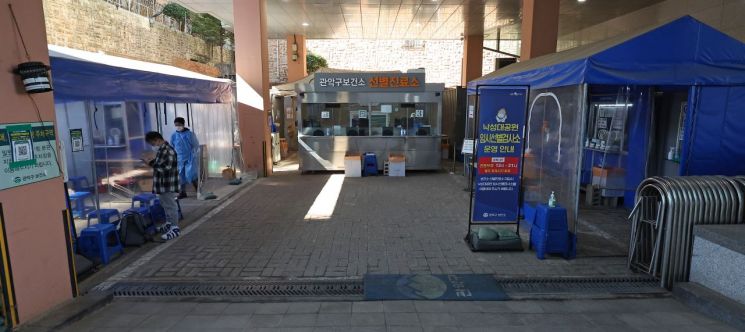
The government has begun discussions for a complete return to normal life, including lowering the COVID-19 crisis level and adjusting the infectious disease classification. This is due to the formation of antibodies among the population, which means there will no longer be large-scale COVID-19 outbreaks as before, and the COVID-19 fatality and severe case rates have also dropped significantly.
According to the Central Disaster and Safety Countermeasures Headquarters on the 3rd, the government will first start discussions to lower the domestic COVID-19 crisis level from the "serious" stage to the "caution" stage. The COVID-19 crisis level has been maintained since the first domestic outbreak in February 2020. However, compared to the fatality rate of 2.1% during the first wave in early 2020, the fatality rate during the most recent seventh wave was significantly lower at 0.08%. The scale of the winter outbreak was about half that of last summer’s outbreak. This means COVID-19 can now be adequately managed in daily life.
The adjustment of the crisis level will be implemented after a crisis evaluation meeting in accordance with the National Crisis Management Basic Guidelines and the Infectious Disease Disaster Crisis Management Standard Manual. A crisis evaluation meeting will be convened between late April and early May to comprehensively consider domestic and international situations and discuss the downgrade. If the crisis level is lowered to the "caution" stage, the Central Disaster and Safety Countermeasures Headquarters, currently headed by the Prime Minister, will be disbanded. Subsequently, the Central Accident Response Headquarters (Ministry of Health and Welfare) will take over the disaster crisis management system, and the level of inter-ministerial response will be partially eased. However, the government explained that "the inter-governmental support system (Ministry of the Interior and Safety) and the Central Disease Control Headquarters (Korea Disease Control and Prevention Agency) will be maintained to continue the response."
The adjustment of the infectious disease classification is expected to take place after the crisis level adjustment. The COVID-19 classification, which was once level 1, was downgraded to level 2 last April. The government’s goal is to further downgrade it to level 4, the same level as influenza. The government plans to gradually implement other quarantine measures such as testing, mandatory isolation, treatment support, and financial support for confirmed cases through consultations with relevant ministries and experts.
To prepare for lowering the crisis level and adjusting the infectious disease classification for a return to normal life, the quarantine authorities began reviewing revisions to the Crisis Management Standard Manual and the Infectious Disease Control and Prevention Act last month. According to the current Crisis Management Standard Manual, the "serious" COVID-19 crisis level cannot be lifted if nationwide spread continues. However, due to the decrease in fatality rates and improved response capabilities, the manual will be revised to allow adjustment of the level even during ongoing spread. Additionally, the Infectious Disease Control and Prevention Act will be amended to include diseases designated by the Director of the Korea Disease Control and Prevention Agency under level 4 infectious diseases.
© The Asia Business Daily(www.asiae.co.kr). All rights reserved.
![Clutching a Stolen Dior Bag, Saying "I Hate Being Poor but Real"... The Grotesque Con of a "Human Knockoff" [Slate]](https://cwcontent.asiae.co.kr/asiaresize/183/2026021902243444107_1771435474.jpg)











