Vacation Spots Followed by Tokyo 23 Wards Apartments Purchased
Sankei Expresses Concern: "Land May Belong to China in Case of Emergency"
As the craze for overseas real estate investment among Chinese continues, concerns about Chinese buying activity are rising in Japan as well. The sense of crisis is intensifying as there are signs of active purchases not only in resort areas but also in central locations such as Tokyo. In response, the Japanese media has urged the government to implement strong regulations.
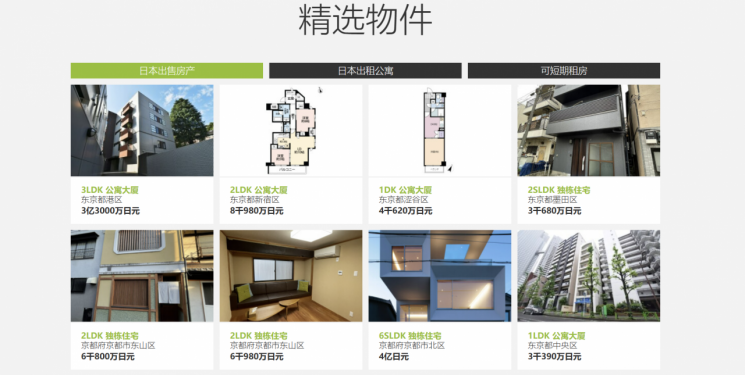 A Japanese real estate agency website targeting Chinese customers. It introduces properties mainly in Tokyo. (Photo by Real Estate Japan)
On the 2nd, 36Kr Japan, a Chinese tech media outlet, introduced the story of a 34-year-old Chinese woman who purchased an uninhabited island belonging to Okinawa, reporting that Japanese real estate investment is gaining popularity in China.
The woman bought Yanaha Island, located in the northern part of Okinawa Prefecture, under the name of a Chinese business consulting company based in Tokyo. The island is said to cover 380,000 square meters (114,950 pyeong), which is half of the total area. In January, she personally visited the island and posted a video on social media saying, "I bought the island for 100 million yen," attracting attention. However, concerns arose within Japan as Yanaha Island, adjacent to a U.S. military base in Okinawa, was acquired by foreign capital.
According to reports, Chinese capital has been steadily purchasing Japanese real estate, including land. The Japanese Forestry Agency, which functions similarly to Korea’s Forest Service, stated that the area of forest land acquired by foreign capital in Japan has been increasing continuously since it began publishing surveys in 2010. As of the end of 2020, the cumulative total was 4.2 times that of 2010. Including Hong Kong, Chinese investors purchased a total of 969 hectares, accounting for 40% of all land acquired by foreign capital, making it the largest share.
Chinese capital began entering Japanese real estate from 2015, before the pandemic. At that time, considering the increase in tourists visiting Japan, purchases of resort real estate were active. Especially, Chinese companies frequently bought land in Hokkaido, where ski resorts are located. The Chinese private conglomerate Fuxing Group acquired 'Hoshino Resort Tomamu' at the end of 2015 for 18.4 billion yen (approximately 179 billion won based on the 2015 year-end exchange rate). The acquisition price was the highest recorded in the Japanese real estate market from October to December that year. Furthermore, last year, Club Med, a subsidiary of Fuxing Group, opened its fifth resort facility in Hokkaido.
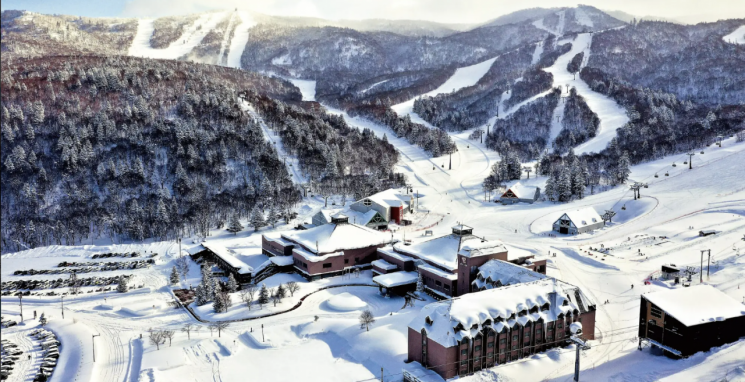 The 'Kiroro Peak' resort opened in Hokkaido by Club Med, a subsidiary of China's Fosun Group. (Photo by Club Med official website)
However, recently, Chinese capital has begun to extend its reach to central areas of Japan. Beyond resort areas, there is a buying frenzy for urban apartments in places like the 23 wards of Tokyo. In the Japanese real estate market, urban properties are popular because the annual returns on real estate in China or Taiwan are 1-3%, whereas in Japan they exceed 4%. Especially, apartment prices in Chinese cities other than Beijing and Shanghai have been declining for five consecutive months, increasing interest in overseas properties. Additionally, the fact that purchases can be made without permanent residency or visas, and that foreigners can inherit or gift properties, seems to have influenced the speculative frenzy.
In response, the Japanese government passed the Land Use Regulation Act in 2021, which restricts foreign land purchases under the pretext of military security. The law requires prior notification if foreigners purchase uninhabited islands near military facilities or border areas. However, criticism has continued that the law is ineffective as uninhabited islands in Okinawa, adjacent to Taiwan, have recently been sold to Chinese capital.
On the 26th of last month, the Sankei Shimbun editorial stated, "China has a National Defense Mobilization Law that allows the state to requisition land and facilities owned by Chinese nationals living abroad in emergencies," expressing concerns that real estate purchased by Chinese capital could be attributed to China in times of war or similar emergencies.
It further stated, "The Land Use Regulation Act is full of loopholes. The government must prepare measures to protect Japan," raising its voice.
However, the atmosphere suggests that the craze for Chinese purchases of Japanese real estate will continue for some time. Sankei reported, "The combination of the Japanese government's negative interest rate policy and the investment momentum in the real estate market means that the Chinese buying frenzy for Japanese real estate will persist."
© The Asia Business Daily(www.asiae.co.kr). All rights reserved.
![Clutching a Stolen Dior Bag, Saying "I Hate Being Poor but Real"... The Grotesque Con of a "Human Knockoff" [Slate]](https://cwcontent.asiae.co.kr/asiaresize/183/2026021902243444107_1771435474.jpg)
















