"Economic and Security Purposes Take Highest Priority"
Share Excess Profits with US Government if Receiving Over $15,000
Provision of Childcare Services for Factory Employees and Workers Also Required
The U.S. government has decided to prioritize national security interests when selecting companies to receive semiconductor production subsidies (grants). Additionally, to prevent tax waste, companies that generate excess profits will be required to share them with the U.S. government.
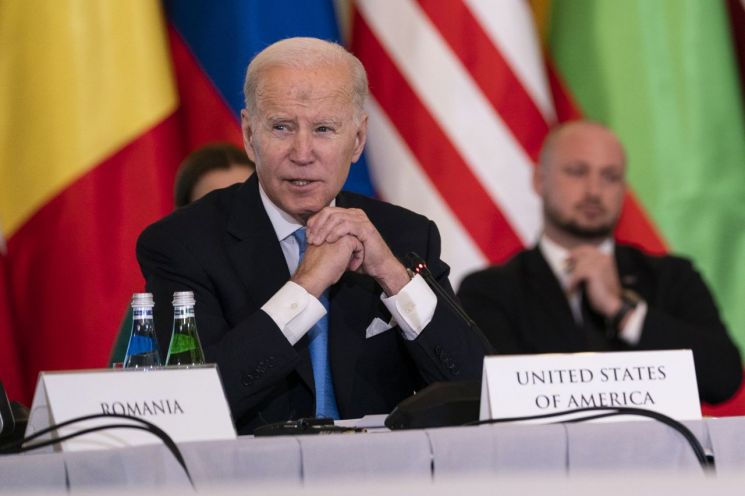
On the 28th of last month (local time), the U.S. Department of Commerce introduced these evaluation criteria while guiding the application process for semiconductor production subsidies under the Semiconductor Support Act.
The Department of Commerce stated that it will support projects that significantly expand semiconductor production within the U.S. and strengthen the global supply chain. It also emphasized supporting projects that enhance U.S. security interests, citing stable long-term semiconductor supply projects to national security agencies including the Department of Defense as examples. The Department highlighted that among the six evaluation criteria, achieving these economic and security objectives will carry the greatest weight.
The Department of Commerce also plans to examine the commercial viability of projects. This includes whether companies can operate factories long-term through continuous investment and upgrades. They will verify financial soundness through profitability indicators such as expected cash flow and returns, assess technical feasibility, and confirm whether companies are prepared to build factories by ensuring compliance with environmental and other relevant regulations.
The Department urged companies to also focus on employee skill levels and diversity, requiring submission of plans to hire economically disadvantaged groups. Specifically, companies applying for grants exceeding $150 million (approximately 200 billion KRW) must provide childcare services for factory employees and construction workers. The Department will also consider companies’ future investment intentions and contributions to local communities, including the use of U.S.-made construction materials.
Furthermore, the Department warned it will strictly monitor to prevent tax waste. Companies receiving grants over $150 million must share a portion of excess profits with the U.S. government if cash flow or profits exceed predetermined amounts. Additionally, companies are prohibited from using the subsidies for dividend payments or stock buybacks.
Detailed regulations on guardrail provisions designed to prevent subsidies from being used in ways that undermine national security will be disclosed later. The government reaffirmed its fundamental stance that companies must return the full subsidy if they engage in joint research or technology licensing with countries of concern such as China, and must not expand semiconductor production capacity in such countries for ten years.
U.S. government support will be provided in the form of direct grants, loans, and loan guarantees. While there is no cap on grants, most will cover 5?15% of the total capital investment for the project. The total support amount, including grants and loans, will not exceed 35% of the total capital investment, and applicants are encouraged to attract maximum private investment.
The Department of Commerce stated that the goal of the Semiconductor Support Act is to establish at least two large-scale, state-of-the-art logic (non-memory) semiconductor clusters in the U.S. by 2030. It also plans to expand production capacity for current-generation or mature semiconductor technologies.
The Department of Commerce plans to announce the application procedures for semiconductor materials and equipment production subsidies in late spring this year, and for research and development facilities in the fall.
© The Asia Business Daily(www.asiae.co.kr). All rights reserved.
![Clutching a Stolen Dior Bag, Saying "I Hate Being Poor but Real"... The Grotesque Con of a "Human Knockoff" [Slate]](https://cwcontent.asiae.co.kr/asiaresize/183/2026021902243444107_1771435474.jpg)















