US Supreme Court Begins Hearing Process
Growing Criticism of 'Moral Hazard'
The U.S. Supreme Court has begun formal hearings on the legality of the student loan forgiveness policy, which was a campaign promise of U.S. President Joe Biden. The total amount of student loans in U.S. universities reaches $1.6 trillion (approximately 2,118 trillion KRW). Amid concerns over moral hazard and massive budget expenditures caused by large-scale loan forgiveness, public opinion in the U.S. is sharply divided.
Republicans and Others Question "Does Biden Qualify for Forgiveness?"
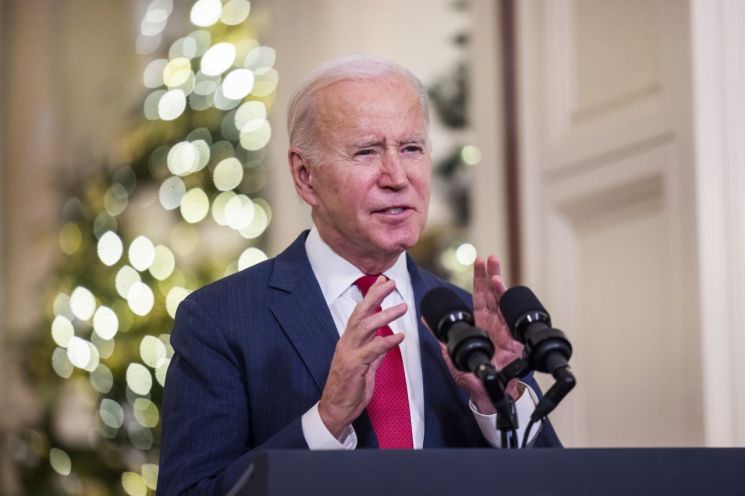
On the 28th (local time), the U.S. Supreme Court began hearings on the Biden administration's student loan forgiveness policy.
This policy exempts $10,000 of student loan repayment for individuals with an annual income below $125,000 (approximately 166 million KRW). For low-income groups, loan forgiveness can be up to $20,000. Previously, six states led by the Republican Party and two students participating in their individual capacity filed a lawsuit demanding the suspension of the policy's implementation.
The core issue in this lawsuit is whether the U.S. government has the authority to forgive student loans as an emergency measure in response to the COVID-19 pandemic. The U.S. Republicans argue that the Biden administration has abused its authority.
Court to Decide "Do Plaintiffs Have Standing?"
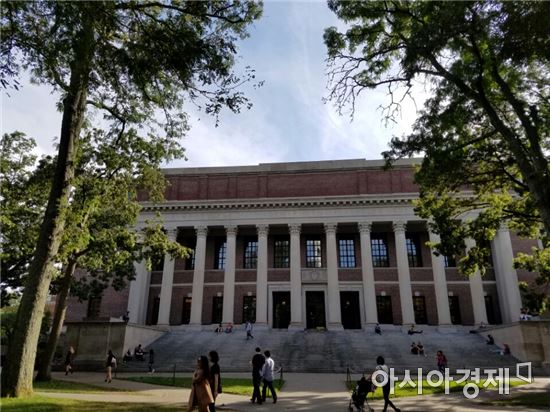 Library within Harvard University
However, before proceeding with full hearings, the court will first determine whether the plaintiffs have standing to sue. It must be confirmed whether the plaintiffs have suffered actual harm from the student loan forgiveness program. If the court finds that the plaintiffs lack standing, the lawsuit will be dismissed; conversely, if standing is recognized, the court will then decide on the key issue of whether the government abused its authority. The six states led by the Republican Party participating as plaintiffs claim that the loan forgiveness program has reduced state tax revenues. The Supreme Court's final ruling is expected as early as April or as late as June.
In the U.S., the debate over the Biden administration's student loan forgiveness policy is intensifying. Young people, Black, and Hispanic groups, who are expected to benefit from this policy, generally support it, while opposition is strong among Republican supporters.
In particular, criticism centered on the Republican Party highlights the moral hazard it creates. Senate Minority Leader Mitch McConnell has called President Biden a "socialist." Critics argue that loan forgiveness violates fairness with those who have already repaid their student loans and causes reverse discrimination by placing burdens on people with lower incomes who did not attend college.
The total amount of student loans in U.S. universities reaches $1.6 trillion. Currently, 26 million Americans have applied for student loan forgiveness, and the U.S. Department of Education has approved requests from 16 million of them. The Biden administration's student loan forgiveness is expected to cost about $400 billion (approximately 530 trillion KRW) over the next 30 years.
© The Asia Business Daily(www.asiae.co.kr). All rights reserved.
![Clutching a Stolen Dior Bag, Saying "I Hate Being Poor but Real"... The Grotesque Con of a "Human Knockoff" [Slate]](https://cwcontent.asiae.co.kr/asiaresize/183/2026021902243444107_1771435474.jpg)















