Increasing Influencer Promotion Products Lower Trust
Deinfluencer Popularity Prevents Unnecessary Purchases
The American society, once characterized by the virtue of consumption, is changing. Now, those who boldly say "Don't buy" and "Don't waste money" are gaining attention online.
This is the so-called 'de-influencer' phenomenon.
On the 24th (local time), the American daily The Washington Post (WP) introduced the recently spotlighted 'de-influencer,' saying, "The new TikTok trend is convincing people not to buy things."
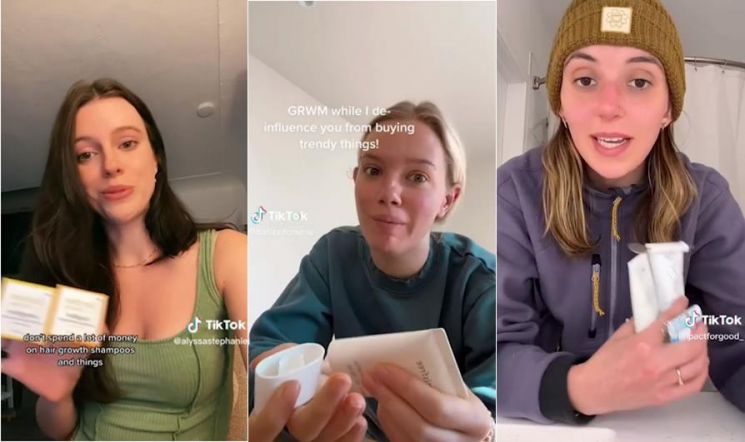
A de-influencer is a creator who produces content completely different from traditional influencers. Influencers often leverage their high recognition and popularity to engage in commercial promotions, advertisements, or direct product sales. As a result, their content is often considered untrustworthy and criticized for encouraging overconsumption and unnecessary spending.
Brendan Gehan, Chief Social Media Officer (CSO) of the advertising agency Mechanism, pointed out that this is a reaction to the overwhelming number of products promoted by influencers. He noted, "Hashtags have become synonymous with TikTok because of their overwhelming ability to create new products and boost sales."
On the other hand, de-influencers attract followers with honest and firm reviews such as "Don't buy overpriced items that aren't worth it" and "Buy other products with similar quality but lower prices." Now, even product brands are paying attention to their 'anti-influence.'
WP shared the story of Alisa Chromelis (26), who became a de-influencer herself after accidentally watching a 'de-influencer' video on TikTok. In January, she saw a TikToker describe a product as "overrated by paid influencers" and began creating videos honestly reviewing high-end cosmetics. Chromelis's videos have gained explosive popularity, with her first post receiving over 800,000 likes and 5.5 million views.
WP: "Consumers Have Become Wiser Amid Inflation"
WP cited experts saying, "This signals that traditional influencer marketing peaked at $16.4 billion (about 21.6 trillion KRW) last year and has reached an inflection point," adding, "As we enter an era of high inflation, consumers have become more frugal and wise."
Professor Ronald Goodstein of Georgetown University said, "Negative information feels more trustworthy, so I believe de-influencers will gain more followers," adding, "While the influence of de-influencers is growing, that of influencers is diminishing."
De-influencers also collaborate with the marketing industry like influencers do. However, they are much more selective and cautious about advertisers. Creating content that resembles advertising can instantly destroy the trust they have built as de-influencers. Therefore, some de-influencers engage in socially meaningful marketing by partnering with companies that produce recyclable clothing or nonprofits involved in climate-related activities.
© The Asia Business Daily(www.asiae.co.kr). All rights reserved.
![Clutching a Stolen Dior Bag, Saying "I Hate Being Poor but Real"... The Grotesque Con of a "Human Knockoff" [Slate]](https://cwcontent.asiae.co.kr/asiaresize/183/2026021902243444107_1771435474.jpg)















