[Asia Economy Reporter Byeon Seon-jin] As COVID-19 moves toward an endemic phase, a significant amount of stockpiled vaccines face disposal. This is because the expiration dates of vaccines stored in frozen warehouses will begin as early as about a month from now until September. Young people are indifferent to vaccination, and the vaccination trend among the elderly is also declining.
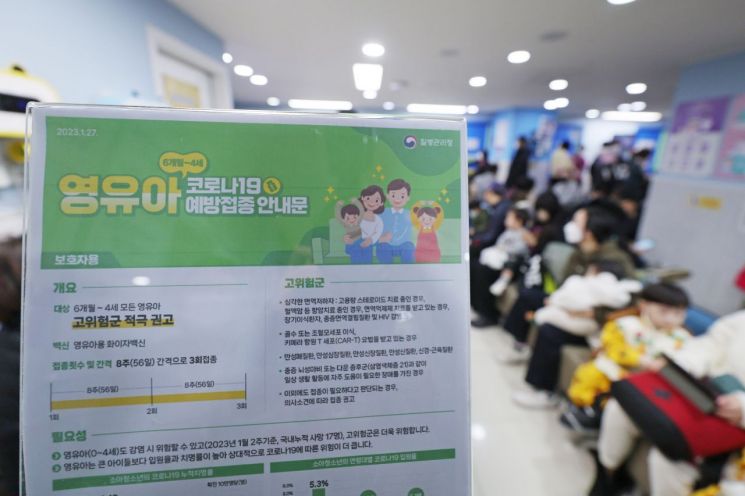
The COVID-19 vaccination rate for infants and toddlers aged 6 months to 4 years is extremely low. According to the quarantine authorities, as of 6 p.m. on the 22nd, a total of 275 infants and toddlers have been vaccinated. Considering that same-day vaccination for infants and toddlers started on the 9th, about 20 infants and toddlers have been vaccinated daily. The total number of eligible infants and toddlers is 1,131,393, resulting in a vaccination rate of only 0.02%. This is interpreted as due to the inconvenience of having to receive three doses at 8-week intervals and many parents' concerns about side effects rather than infection prevention. The Pfizer monovalent vaccine developed for infants and toddlers is used, and 400,000 doses were introduced into the country on the 12th of last month. The vaccine for infants and toddlers has a one-year shelf life. The quarantine authorities estimate that the expiration date will arrive in September, considering the manufacturing date.
The pediatric Pfizer vaccine used for children aged 5 to 11 will expire as early as April or at the latest June. Since 1,037,000 doses were introduced into the country in June last year, as of the 23rd, 634,000 doses remain, with only about 40% used for vaccination. Considering that only about 4,000 doses of the remaining vaccine were used in the recent week (16th to 23rd), large-scale disposal seems inevitable. The Pfizer monovalent vaccine used for primary vaccination (1st and 2nd doses) for those aged 12 and older recently extended its expiration period from one year to one year and six months. Because of this, about 3.8 million doses that were scheduled to expire last month can now be used until July. However, since 8 out of 10 citizens completed their primary vaccination in 2021?2022, the fate of disposal cannot be avoided. As of the 22nd of this month, only 5,992 people have received primary vaccination with the Pfizer monovalent vaccine.
The remaining stock of the bivalent vaccines targeting the Omicron variant amounts to a staggering 35,925,000 doses. The Moderna BA.1 vaccine, which was first administered in October last year, will expire by June at the latest, and the Moderna BA.4/5 vaccine will expire in August. The Pfizer BA.1 and BA.4/5 vaccines must also be used up by September. However, as COVID-19 has calmed down and the quarantine policy has shifted to normalcy, participation in winter vaccinations has significantly decreased. During the peak of the 7th wave last November, the maximum daily vaccination count exceeded 150,000, but recent three-day vaccination trends show about 12,055 on the 20th, 11,677 on the 21st, and 9,374 on the 22nd, hovering around 10,000.
The quarantine authorities stated, "As an alternative, we are considering overseas donations in consultation with related ministries such as the Ministry of Foreign Affairs." They plan to maximize use for primary and winter vaccinations but judge that vaccine disposal due to non-use is inevitable. So far, the government has provided a total of 10.24 million doses of vaccines to countries in regions with low vaccine accessibility such as Africa and Latin America.
© The Asia Business Daily(www.asiae.co.kr). All rights reserved.
![Clutching a Stolen Dior Bag, Saying "I Hate Being Poor but Real"... The Grotesque Con of a "Human Knockoff" [Slate]](https://cwcontent.asiae.co.kr/asiaresize/183/2026021902243444107_1771435474.jpg)















