Senggiyun-KAIST-Seoul National University Joint Research Team Develops
"Lighter and Better Performance than Harvard Exosuit"
Domestic researchers have developed a wearable assistive robot that stroke survivors can wear under their clothes to help them walk.
The joint research team from the Korea Institute of Industrial Technology, Korea Advanced Institute of Science and Technology (KAIST), and Seoul National University Hospital announced on the 23rd that they have developed a walking assistive robot that reduces volume, weight, and noise, allowing it to be worn discreetly under clothing. The wearable walking assistive robot, named ‘ASSIST,’ consists of a pneumatic backpack weighing 1.9 kg equipped with a small pneumatic generator and an ultra-lightweight assistive robot weighing 0.6 kg.
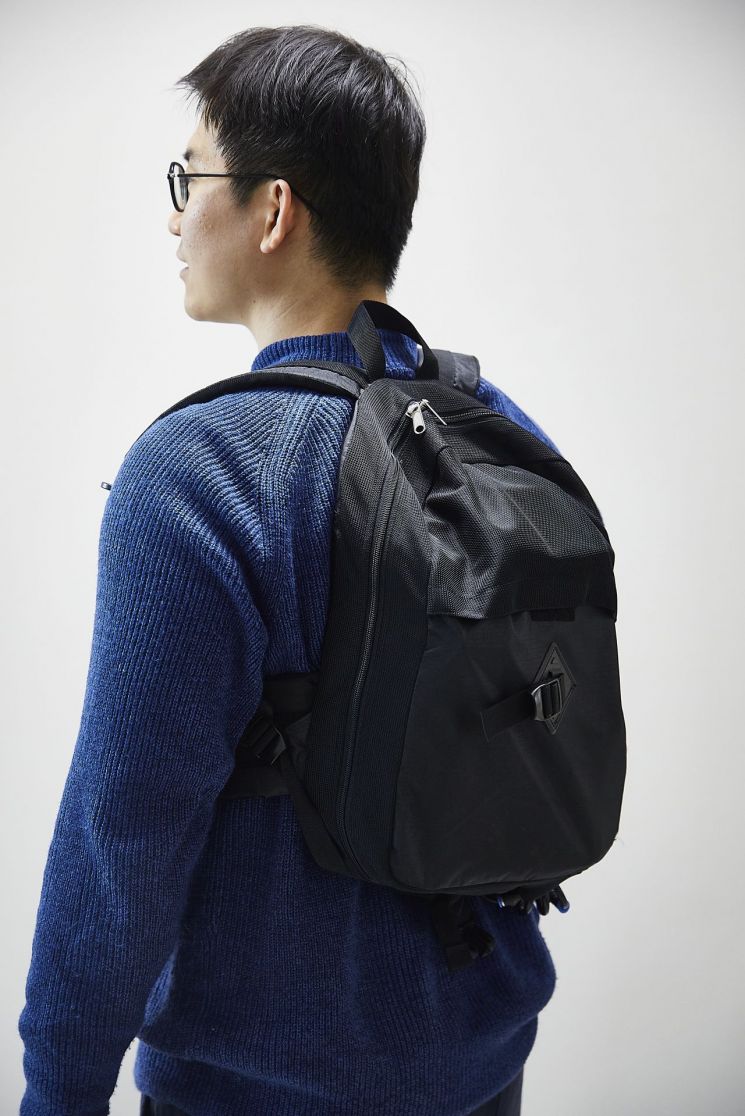
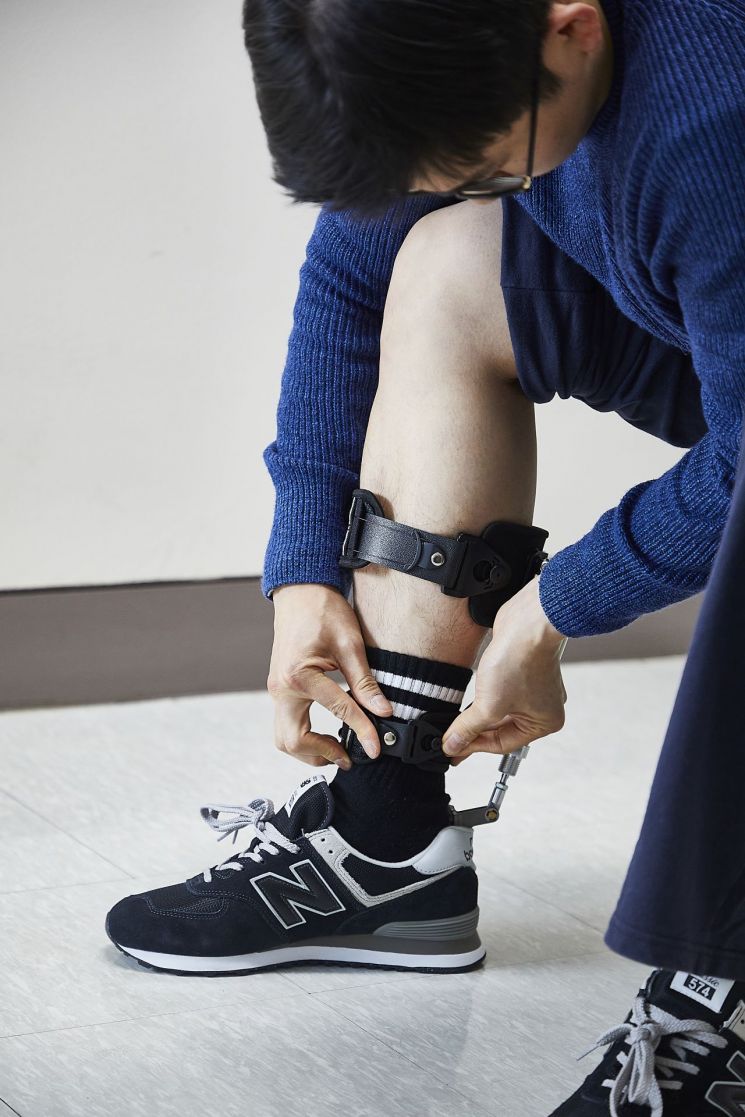
The walking assistive robot supplies mechanical force to help users walk according to their gait characteristics by delivering high-pressure air generated in the pneumatic backpack through tubes to the robot. By optimizing component design and using ultra-light materials, the device can be fixed to the ankle and shin inside the shoe and covered with clothing, making it invisible from the outside, while the pneumatic backpack is worn over the shoulders.
Professor Kim Jeong’s research team from KAIST’s Department of Mechanical Engineering developed the pneumatic backpack that supplies the force needed for walking assistance and the core technology of a ground reaction force sensor that helps the user’s gait by utilizing ground reaction forces, and produced a prototype for initial performance verification. Professor Lee Dong-yeon’s research team at Seoul National University Hospital conducted clinical evaluations targeting stroke patients with foot drop, a representative gait disorder.
The device is lighter than the 3.8 kg Exo suit walking assistive robot released by Harvard University and offers higher stability due to the flexibility unique to the pneumatic system, which does not use cable actuators.
Dr. An Beom-mo’s research team at the Korea Institute of Industrial Technology succeeded in reducing the total weight of the pneumatic backpack, composed of a pneumatic pump, controller, and battery, to 1.9 kg, enhancing portability. The assistive robot’s ankle and shin fixation parts apply a BOA system-based attachment and detachment function, allowing users to easily put on and take off the device without assistance. By making the footplate from carbon fiber material and optimizing the mechanical design, the assistive robot’s weight was reduced to 0.6 kg, enabling it to be worn inside shoes with a burden comparable to wearing regular hiking boots. Clinical evaluations showed that after wearing ASSIST, the ankle joint could be lifted up to 30 degrees during walking, and the left-right gait asymmetry angle was corrected to less than 5 degrees.
Dr. An stated, “Although walking assistive robots are considered a blue ocean market in the aging era, we focused on the significant burden on users caused by various auxiliary devices and volume issues and developed an assistive robot that can be worn under clothing.” He added, “Based on achievements such as developing a small pneumatic backpack that can replace large pneumatic compressors and lightweight technology using carbon fiber materials, we are currently conducting research on walking assistive robots using high-performance motor actuators.”
According to the ‘Health and Disease Information’ published by the Korea Disease Control and Prevention Agency in 2020, 4 out of 10 elderly people aged 85 or older in Korea suffer from walking disabilities. Even those who are not elderly may experience reduced walking ability due to various causes such as disease, accidents, or muscle loss, and in the case of stroke, which affects more than 100,000 patients annually, 71% experience walking difficulties even after treatment.
The demand for assistive devices that can help with walking in daily life is increasing, and the release of wearable walking assistive robots combined with robotic technology is also growing. Wearable walking assistive robots consist of a ‘power generator’ that produces power and an ‘assistive robot’ that helps walking using the delivered power. However, existing walking assistive robots have been avoided due to their large volume, noise, and poor wearability.
© The Asia Business Daily(www.asiae.co.kr). All rights reserved.
![Clutching a Stolen Dior Bag, Saying "I Hate Being Poor but Real"... The Grotesque Con of a "Human Knockoff" [Slate]](https://cwcontent.asiae.co.kr/asiaresize/183/2026021902243444107_1771435474.jpg)
















