Washington Think Tank Analysis
Earlier Than CBO Forecast
[Asia Economy Reporter Yujin Jo] As U.S. President Joe Biden and the Republican Party continue a standoff over debt ceiling negotiations, warnings have emerged that if the debt ceiling is not raised, the United States could face a default as early as July.
According to the New York Times (NYT) on the 22nd (local time), the bipartisan think tank Bipartisan Policy Center (BPC) in Washington released an analysis stating that the federal government's cash reserves will run out this summer. The BPC said that if the federal government's debt ceiling is not raised, the "X-date," when cash runs out, will come this summer or at the latest in the fall, noting that the exact date may vary depending on tax revenue amounts.
Shai Akabas, Director of Economic Policy at BPC, said, "There is a possibility that the federal government's cash reserves will be nearly depleted between early and mid-June," adding, "Given the considerable uncertainty in the current economic outlook, it is impossible to know exactly when the X-date will arrive." He also pointed out that considering the aftershocks a federal default would have on the U.S. and global economies, the political sphere must work bipartisanly to raise the debt ceiling.
This warning comes earlier than the Congressional Budget Office's (CBO) previous prediction that the X-date would occur in the fourth quarter of the current fiscal year, between July and September. The CBO had warned that "the timing of cash depletion depends on the timing and amount of revenues and expenditures," and "if April income tax revenues fall short of estimates, special measures could be exhausted sooner, and the U.S. Treasury's funds could be depleted before July."
The debt ceiling is a limit set by Congress on the amount of money the U.S. government can borrow, currently set at $31.381 trillion. Since the debt ceiling system was introduced in 1917, the U.S. has avoided default crises by raising the debt ceiling rather than cutting spending. At the end of 2021, when default concerns arose, the debt ceiling was raised from $28.9 trillion to the current level.
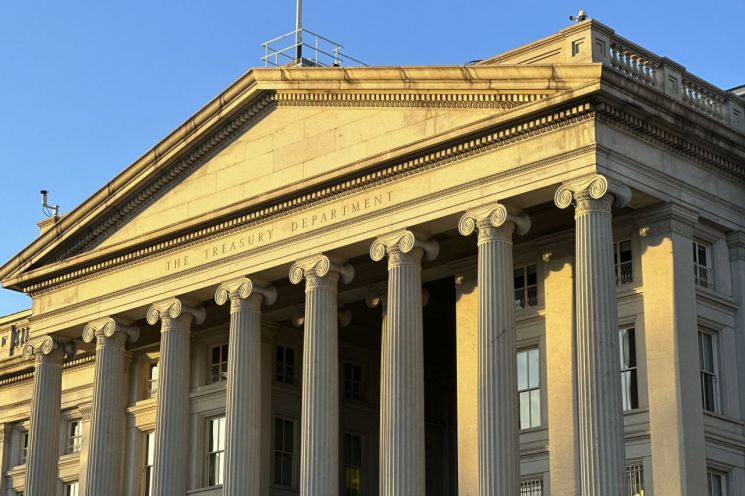
Earlier, the U.S. government requested Congress to raise the debt ceiling, but the Republican majority in the House strongly opposed it, using it as a political tool. When the debt ceiling was reached on May 19, the Treasury Department implemented special measures such as suspending new contributions to the Civil Service Retirement and Disability Fund (CSRDF). These special measures, which delayed public sector investments or used government-held cash to cover urgent needs, helped avoid a default. At that time, Treasury Secretary Janet Yellen explained that these were temporary measures to prevent default until June 5.
The Republicans demanded government spending cuts in exchange for agreeing to raise the debt ceiling, but President Biden insisted on raising the debt ceiling unconditionally. Biden and House Speaker Kevin McCarthy, a Republican, held face-to-face negotiations at the White House last month, but the talks ended with only disagreements confirmed.
The U.S. government pays interest on U.S. Treasury bonds with borrowed funds, so if the limit is not increased, it could face a default. Economic experts warn that if the two parties fail to reach an agreement and negotiations continue past the June deadline, the U.S. credit rating could be downgraded, and a repeat of the 2011 crisis, when global stock markets panicked, could occur.
© The Asia Business Daily(www.asiae.co.kr). All rights reserved.
![Clutching a Stolen Dior Bag, Saying "I Hate Being Poor but Real"... The Grotesque Con of a "Human Knockoff" [Slate]](https://cwcontent.asiae.co.kr/asiaresize/183/2026021902243444107_1771435474.jpg)
















