Record High Import Volume Last Month
Chinese Refiners Enjoy Solid Refining Margins
Windfall from Western Economic Sanctions
[Asia Economy Reporter Haeyoung Kwon] China's imports of Russian crude oil last month reached an all-time high. This was largely due to Russia, facing Western economic sanctions over its invasion of Ukraine, selling crude oil at low prices to open new markets. China is believed to have focused on purchasing Russian crude oil in large quantities, anticipating increased oil demand following the resumption of economic activities after abandoning its strict "Zero COVID" policy.
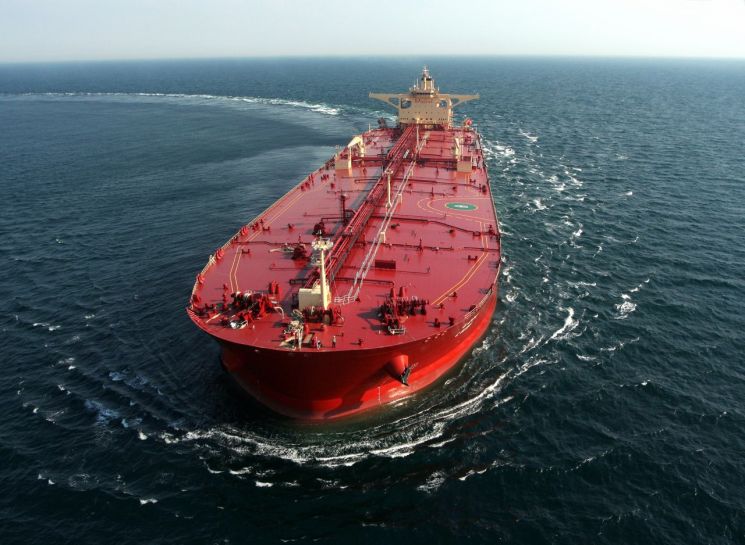
On the 21st (local time), Bloomberg News, citing market research firm Kpler, reported that Russia exported 1.66 million barrels of crude oil and fuel oil per day to China last month. This is a record high, surpassing the previous record of 1.6 million barrels in April 2020.
The impact of Russia discounting the prices of crude oil and other products was significant. Recently, Russia has been selling oil at discounted prices to countries like China and India. As Western countries such as Europe and the United States imposed sanctions including price caps on crude oil to cut off Russia's war funding, Russia lowered prices to diversify its export destinations. The price of Russian Ural crude oil was $43.3 per barrel as of the 1st of this month, about half the price of Brent crude from the UK North Sea ($82.8). After Russia invaded Ukraine in February last year, the US banned imports, widening the price gap with international oil prices, and the price dropped further after the European Union introduced a price cap at the end of last year.
Chinese refiners are fattening their profits by purchasing Russian crude oil at bargain prices. They buy crude oil cheaply and sell petroleum products at higher prices, earning substantial refining margins (profits from the difference between petroleum product prices and crude oil costs). Western economic sanctions are thus turning into a windfall for Chinese companies. Previously, even last year when energy consumption decreased due to COVID-19 lockdowns, China increased imports of Russian liquefied natural gas (LNG) and resold it to Europe for profit. Mia Gang, a consultant at energy consulting firm Fact Global Energy (FGE), analyzed, "Since the end of last year, Chinese private refiners have increased fuel imports at attractive prices," adding, "The recent increase in purchases appears to be because significant profits can be made through (oil) processing."
India has also been importing cheap Russian crude oil since last year, refining it, and reselling it to the US and Europe. While Europe sanctions imports of Russian crude oil, it does not consider refined products made from Russian crude oil by third countries as Russian-origin. The US bans imports of Russian crude oil through third countries, but India is reportedly circumventing sanctions by concealing the origin. Analysts say these loopholes in sanctions are intentional rather than accidental. Bloomberg explained, "The West wants to cut off Russia's war funding but at the same time wants to keep international oil prices in check."
In the market, China's increased imports of Russian crude oil are being interpreted as a sign that the Chinese economy is starting to revive with the 'opening' (resumption of economic activities). It is believed that China is purchasing cheap Russian crude oil in preparation for increased oil demand due to reopening. The International Energy Agency (IEA) forecasted in last month's report that global oil demand will reach a record high of 101.7 million barrels per day this year, with more than half of the increase attributed to China's reopening. Afshin Zaban, OPEC's representative for Iran, recently predicted that international oil prices could surpass $100 per barrel this year due to China's reopening.
© The Asia Business Daily(www.asiae.co.kr). All rights reserved.
![Clutching a Stolen Dior Bag, Saying "I Hate Being Poor but Real"... The Grotesque Con of a "Human Knockoff" [Slate]](https://cwcontent.asiae.co.kr/asiaresize/183/2026021902243444107_1771435474.jpg)















