Seoul City Acquisition Prescription Claim Rejected, Original Judgment Overturned
[Asia Economy Reporter Choi Seok-jin, Legal Affairs Specialist] The Supreme Court has ruled that even if a possessor of real estate, presumed to have autonomous possession, fails to actively prove the source of possession while claiming acquisition by prescription, that circumstance alone does not overturn the presumption of autonomous possession.
Autonomous possession (自主占有) refers to possession with the 'intention of ownership,' distinguished from possession on behalf of another (他主占有), such as a tenant who possesses without ownership intent. Under civil law, whether possession is autonomous or on behalf of another significantly affects acquisition by prescription and other matters. Article 197(1) of the Civil Act states that "a possessor is presumed to possess in good faith, peacefully, and publicly with the intention of ownership," establishing a presumption of autonomous possession for the possessor.
The Supreme Court holds that the criterion of 'intention of ownership,' which distinguishes autonomous possession from possession on behalf of another, should not be determined by the possessor's internal intention at the time possession began, but rather objectively and externally based on the nature of the title that caused the acquisition of possession and all circumstances related to the possession.
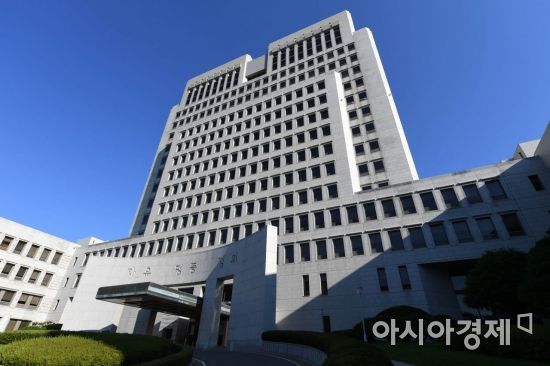
According to the legal community on the 16th, the Supreme Court's Second Division (Presiding Justice Min Yoo-sook) recently overturned the lower court's ruling in a final appeal case where Seoul City sued the heirs of the deceased landowner Mr. A for ownership transfer registration of part of a public elementary school site, claiming acquisition by prescription. The Supreme Court accepted the defendants' counterclaim, ordered Seoul City to register the transfer of shares according to the heirs' inheritance ratios, and remanded the case to the Seoul High Court.
The court stated, "The lower court's judgment that the plaintiff's presumption of autonomous possession was overturned involved a misinterpretation of the legal principles concerning the presumption of autonomous possession, which affected the judgment," as the reason for reversal and remand.
The disputed land in Gwangju-gun, Gyeonggi Province, owned by Mr. A (2,823 pyeong), had been used as part of the elementary school site since November 1942 and was allocated to the school during the farmland distribution process starting in 1950.
Seoul City, which acquired the land as educational property under the Education Act and Local Education Autonomy Act abolished in 1997, filed a lawsuit in 1964 against Mr. A and other registered owners of the elementary school site, claiming ownership transfer registration based on donation of the site in 1942.
Mr. A died in 1965 during the first trial. His wife, who inherited the land with their children, also passed away in February 2019, leaving only the remaining heirs as defendants in the appeal and final appeal stages.
Meanwhile, Seoul City implemented the Garak Land Readjustment Project in the Songpa-gu area of Seoul in 1982 under the Land Readjustment Act and issued land readjustment disposition. The disputed land, originally located in Garak-ri, Jungdae-myeon, Gwangju-gun, Gyeonggi Province, was sequentially reclassified through administrative district reorganizations to Seongdong-gu, Gangnam-gu, Gangdong-gu, and finally Songpa-gu in Seoul.
In the first trial, which initially claimed ownership transfer registration based on donation, the procedure proceeded by public notice delivery to Mr. A, and after witness examination, Seoul City won. Subsequently, Seoul City registered the ownership transfer based on the first trial's favorable ruling.
However, the second trial proceeded following the heirs' supplemental appeal. The second trial court judged the appeal to be valid, considering that although the heirs appealed long after the appeal period, the defendant Mr. A died before the first trial judgment was announced, the heirs only became aware of the first trial judgment in March 2020, the lawsuit procedure was suspended upon Mr. A's death, and the appeal period could not proceed until the heirs received the first trial judgment copy.
The second trial court overturned the first trial's ruling in favor of the plaintiff.
The court first rejected the donation claim Seoul City primarily asserted, noting that unlike the first trial, which accepted the donation based solely on witness B's testimony, there was no material to verify B's identity or specific testimony, and the fact that ownership transfer claims against other school site owners were partially accepted did not suffice to recognize the donation.
In the second trial, Seoul City additionally claimed ownership transfer registration based on acquisition by prescription, arguing that from November 22, 1942, when the land began to be used as an elementary school site, or from December 23, 1988, the day after the land readjustment disposition announcement under the Land Readjustment Act, it had possessed the land peacefully and publicly with the intention of ownership for 20 years, thus completing acquisition by prescription on November 22, 1962, or December 23, 2008.
However, the court rejected Seoul City's claim, stating that Seoul City did not meet the autonomous possession requirements necessary for acquisition by prescription.
The court reasoned that if the elementary school under Seoul City were the true owner, it would have naturally proven the acquisition cause and proceeded with ownership transfer registration rather than receiving farmland distribution under the Farmland Reform Act. This behavior, unusual for an owner, indicated that it was difficult to regard the possession as autonomous with ownership intent.
Additionally, the court noted that although the school was listed as a distribution recipient during farmland distribution, Mr. A was recorded as the compensated party; land registers and related documents from around 1950 listed Mr. A as the landowner; thus, the farmland distribution proceeded assuming Mr. A's ownership, and the plaintiff, as a co-distributee, was aware of this.
Furthermore, the court cited a Supreme Court ruling that an elementary school, as a facility or structure for child education without legal capacity, was not qualified to receive farmland distribution, rendering the distribution to the school null and void. Seoul City was deemed aware of this invalidity, so it could not be considered to have autonomously possessed the land.
The court also rejected Seoul City's claim of acquisition by prescription after the land readjustment disposition announcement, stating that possession of the land to be readjusted should be regarded the same as possession of the original land, and the nature of possession after readjustment should not be viewed differently.
Instead, the court accepted the defendants' counterclaim, ordering Seoul City to register the transfer of shares according to the inheritance ratios.
The Supreme Court found the second trial's judgment on autonomous possession, a requirement for acquisition by prescription, to be incorrect.
The court first presented Supreme Court precedents on the presumption of autonomous possession.
Previously, the Supreme Court stated, "When the nature of the real estate possession title is unclear, under Article 197(1) of the Civil Act, the possessor is presumed to possess in good faith, peacefully, and publicly with the intention of ownership. This presumption applies equally when the possessor is the state or local government managing cadastral records," and added, "Therefore, even if the state or others claiming acquisition by prescription fail to submit documents regarding the acquisition procedure of the land, if considering the circumstances of possession, usage, whether the registered owner in cadastral records attempted to exercise ownership after possession began, and the use or disposition of other divided lands, it cannot be denied that the state may have lawfully acquired ownership through public property acquisition procedures, and the presumption of autonomous possession should not be denied to recognize unauthorized possession."
Based on this precedent, the court stated, "Considering the reasons for the lower court's judgment and the facts in the record in light of the above legal principles, even if the plaintiff fails to sufficiently submit documents regarding the acquisition procedure of the old land (before readjustment), considering the circumstances and usage of the plaintiff's possession of the old land and the disposition of other lands used as school sites together, it is difficult to regard the plaintiff's possession as unauthorized or that the presumption of autonomous possession is overturned."
The court cited as grounds that the plaintiff appeared to recognize possession based on donation of the elementary school site; the elementary school principal in 1963 prepared an asset survey stating that the old land was donated by Mr. A when the school relocated; the plaintiff took necessary actions as an owner by filing a lawsuit in 1964 against Mr. A and other original owners for ownership transfer registration based on donation; the customary civil law in effect in 1942 did not require registration for ownership transfer, unlike the formalistic civil law enacted in 1960; the farmland distribution was conducted by the state, but the elementary school affairs were managed by the Gyeonggi Gwangju-gun Education District, a separate legal entity, so the farmland distribution procedure assuming Mr. A's ownership did not imply recognition of ownership by the public entity managing the school affairs; the invalidity of farmland distribution to the elementary school similarly did not affect the presumption of autonomous possession; and neither Mr. A nor his heirs raised objections or claimed land use fees against the public entity managing the school or the plaintiff after the land was used as a school site.
For these reasons, the Supreme Court overturned the lower court's ruling on the plaintiff's preliminary claim based on acquisition by prescription and the defendants' counterclaim for inheritance share registration and remanded the case to the Seoul High Court.
However, the Supreme Court upheld the lower court's dismissal of Seoul City's primary claim for ownership transfer registration based on donation and rejected Seoul City's final appeal on that part.
A Supreme Court official explained, "Regarding acquisition by prescription, the ruling emphasized that the presumption of autonomous possession by the state or others should not be overturned merely because the claimant failed to actively prove the source of possession, applying existing precedent to the specific facts of this case. The court also found that the circumstances of this case do not overturn the presumption of autonomous possession."
© The Asia Business Daily(www.asiae.co.kr). All rights reserved.
![Clutching a Stolen Dior Bag, Saying "I Hate Being Poor but Real"... The Grotesque Con of a "Human Knockoff" [Slate]](https://cwcontent.asiae.co.kr/asiaresize/183/2026021902243444107_1771435474.jpg)











