Completion of Wheat with Reduced Carcinogens Using CRISPR
Commercialization of Gene-Edited 'GE Crops'
Potential Savior Against Pests and Climate Change
Well-toasted bread makes an excellent breakfast meal, but there is one concern. The blackened parts of the bread contain the carcinogen 'acrylamide.'
However, this worry might soon be a thing of the past. A so-called 'super wheat' that eliminates carcinogens through gene editing has been successfully developed. Could gene editing technology become a new savior for the challenges of food security?
Commercialization Countdown for Gene-Edited Wheat with Reduced Carcinogens
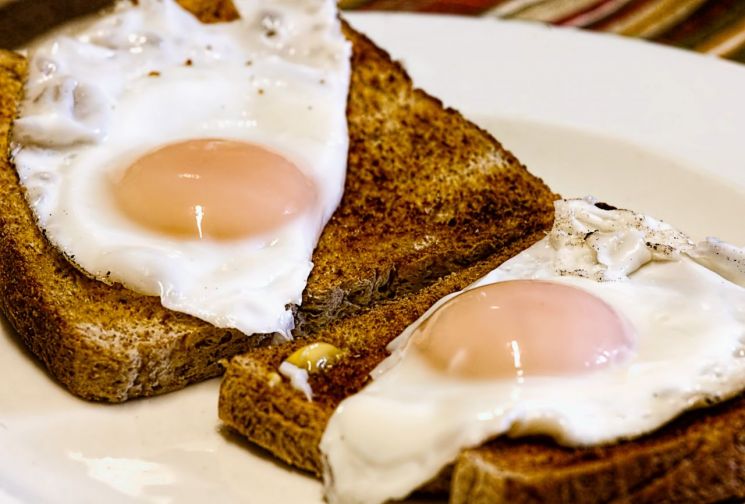 The darker the burnt areas on baked bread, the higher the content of acrylamide, a suspected carcinogen. / Photo by Pixabay
The UK daily newspaper The Times reported on the 13th (local time) that a new gene-edited wheat variety could be supplied to British food companies. According to the media, this wheat was developed by the Rothamsted Research Institute in Hertfordshire and contains less of the amino acid 'asparagine' than regular wheat.
Asparagine can transform into acrylamide when exposed to excessive heat. Acrylamide is classified as a Group 2A carcinogen (probably carcinogenic to humans) by the International Agency for Research on Cancer (IARC), a branch of the United Nations (UN). It is known that the darker the burnt parts of toast, the higher the acrylamide content. The new wheat developed by Rothamsted Research Institute reportedly "significantly" reduces this carcinogenic risk.
The commercialization of this wheat is currently in the final stages. However, even if sales approval is granted, it is expected to take several years to cultivate the wheat on a large scale, mill it, and supply it to food companies.
'CRISPR'?Cutting and Editing Genes
After Brexit (the United Kingdom's withdrawal from the European Union), the UK has been abolishing or modifying many regulations introduced during its EU membership. One of these is the EU's notably strict regulation on genetically modified organisms (GMO) foods.
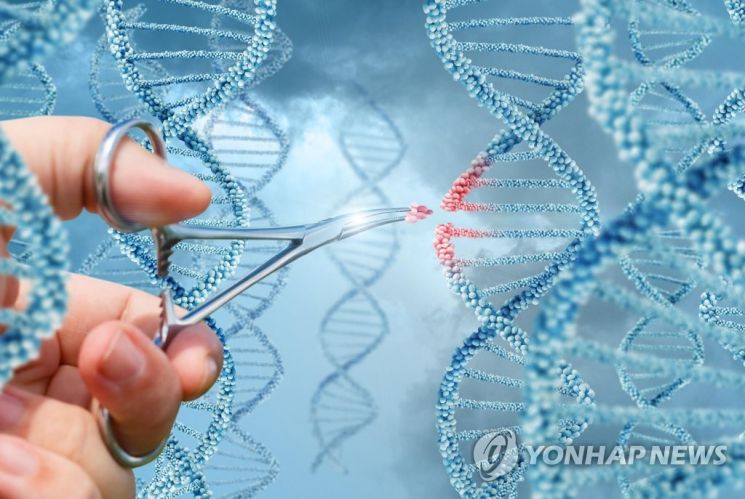
The EU bans the import of all GMO foods with genetic modifications, and UK domestic law, which inherited EU law, follows the same rule. However, the UK plans to permit the sale and import of foods edited with the so-called gene scissors 'CRISPR' as a different category called 'gene-edited (GE) foods,' distinct from traditional GMO foods. The new wheat developed by Rothamsted Research Institute also uses CRISPR.
CRISPR is a tool that uses specific enzymes to cut genome sequences at targeted binding sites. This method allows for the removal of certain genome sequences or the insertion of new genes.
Two scientists who played a pivotal role in developing this technology, Professor Emmanuelle Charpentier and Professor Jennifer Doudna, were awarded the Nobel Prize in Chemistry in 2020. CRISPR is regarded as a 'core technology' for creating cutting-edge gene medicines, pest- and disease-resistant plants and animals, and foods free from carcinogen concerns.
Growing Crops Resistant to Pests and Climate Change
Since the advent of CRISPR, governments worldwide that were once skeptical about gene editing have gradually shifted their stance. The UK is not alone in aiming to become a leader in gene editing by easing GE food regulations. Japan passed a law in 2019 exempting safety tests for GE foods that do not add new genes. In some major agricultural countries like the United States, gene-edited grains are already being cultivated.
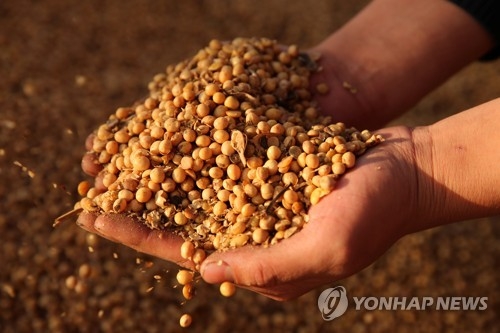
Gene editing is also considered a potential savior for food security amid rapid climate change. Due to successive abnormal droughts and floods, the production of staple crops such as wheat, soybeans, rice, and coffee beans, which have fed humanity for thousands of years, is gradually decreasing. Using CRISPR, crops that can withstand harsh climates can be developed. For example, India exempted some GE crops from existing regulations in March last year and allowed the cultivation of gene-edited open-field crops. China also plans to relax related regulations to boost food self-sufficiency.
However, concerns about food safety remain significant. Pakistan recently decided to regulate the import of gene-edited soybeans. Because of this, the U.S. Department of Agriculture (USDA) warned that Pakistan's supply of plant-based proteins for 2022-23 could face major disruptions.
Will GE Foods Appear on Domestic Tables?
Could GE foods also appear on domestic tables? Currently, the domestic Food Sanitation Act regulates genetically modified grains through the 'GMO food labeling standards.' However, a bill is being promoted to apply lower levels of regulation to GE foods edited using CRISPR and similar technologies compared to GMO foods.
In July last year, the Ministry of Trade, Industry and Energy submitted a bill to the National Assembly to amend the 'Act on the Transboundary Movement of Genetically Modified Organisms' (GMO Act). This bill includes provisions to simplify approval for GE crops that do not use methods involving the introduction of external genes.
However, reaching consensus with civic groups strongly opposed to GE crops is expected to be difficult. In August last year, a coalition including the National Action Against GMOs, the National Food Solidarity, and the Federation of Environment and Agriculture Organizations issued a statement condemning the bill, saying, "(If the GMO Act amendment passes) GMOs could be imported without safety assessments," and "It is obvious that domestic GMO imports will increase, making it even harder for citizens to have healthy meals free from GMOs."
© The Asia Business Daily(www.asiae.co.kr). All rights reserved.
![Clutching a Stolen Dior Bag, Saying "I Hate Being Poor but Real"... The Grotesque Con of a "Human Knockoff" [Slate]](https://cwcontent.asiae.co.kr/asiaresize/183/2026021902243444107_1771435474.jpg)


















